
Need for heat aid in Minnesota higher this year

Economy has led to a rising number of first-time jobless customers seeking help from the energy assistance program.

December 21, 2009 at 6:52PM
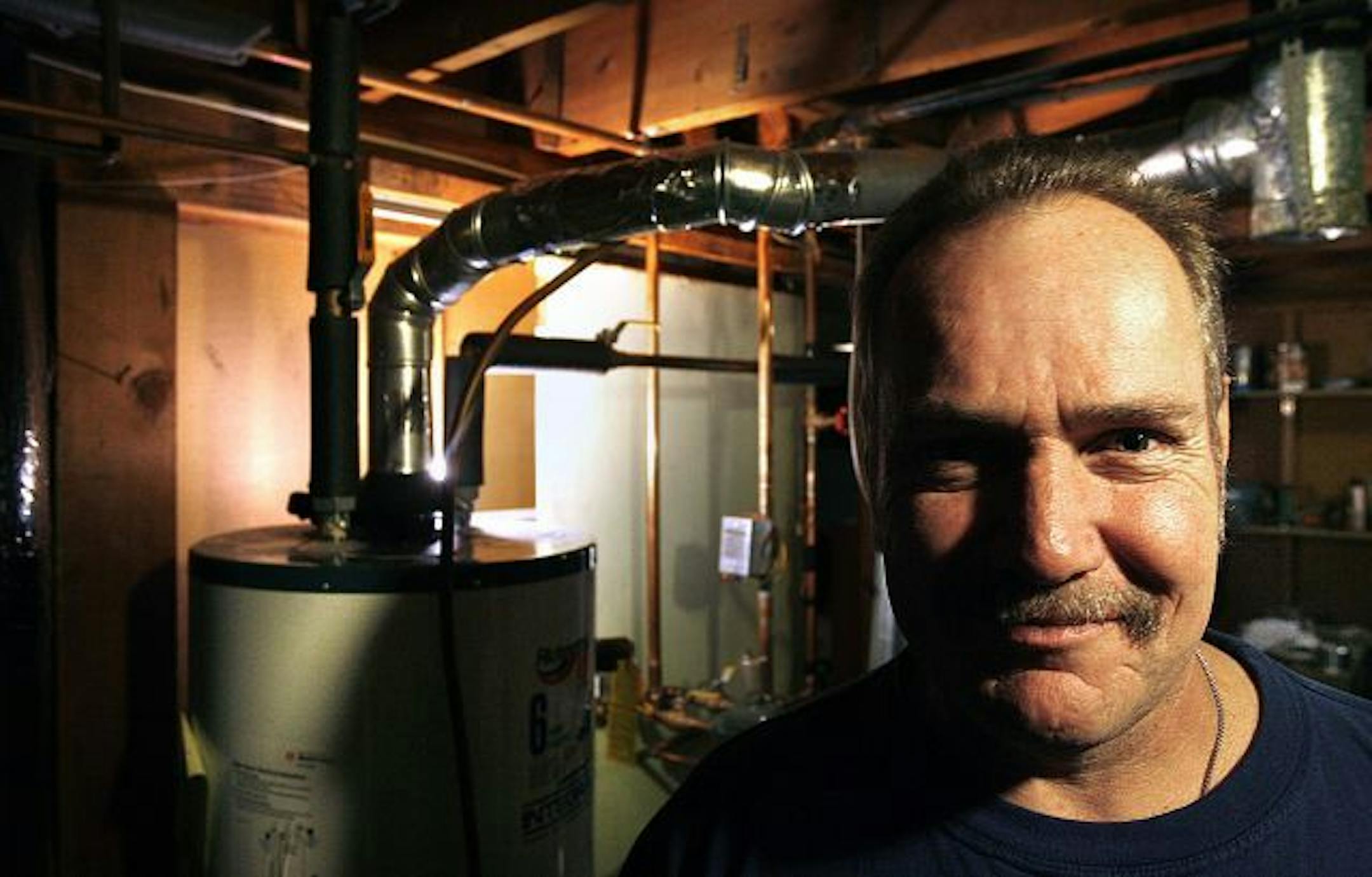
Art Swanson is one of more than 4500 residents in Anoka County who are receiving help with their heating costs through the US Department of Energy. Also, through a federal weatherization program, Swanson was able to get a new vent for a wood-burning stove in his home as well as for his furnace and water heater.
Art Swanson is one of more than 4500 residents in Anoka County who are receiving help with their heating costs through the US Department of Energy. Also, through a federal weatherization program, Swanson was able to get a new vent for a wood-burning stove in his home as well as for his furnace and water heater. (Star Tribune/The Minnesota Star Tribune)

This winter, Art Swanson is thankful to be part of a group he'd just as soon have avoided.

The Anoka County resident represents the newest trend among the more than 125,000 Minnesotans who have applied for federal heating assistance since Oct. 1 (the start of the fiscal year): At 50, he's a first-time customer. He was laid off in January from his job as a union glazier, installing windows and doors mostly in new commercial buildings, and work this year has been inconsistent at best.

Statewide, the number of applicants to the Low Income Home Energy Assistance Program (LIHEAP) is up 8 percent from this time last year, and 19.5 percent from December 2007. Administrators point to a growing number of families dealing with unemployment or underemployment for the first time.

In the metro area, program participation has jumped in a number of places, including:

• 12 percent in Anoka County, to 4,509;

• 11 percent in Ramsey and Washington counties, to 15,300;

• 18 percent in suburban Hennepin County, to 10,361;

• 11.5 percent in Scott, Carver and Dakota counties, to 5,973;

• 33.6 percent in Minneapolis, to 11,692.

LIHEAP is available to families at or below 50 percent of the state's median income. The average yearly grant, almost always paid directly to the utility, is about $600, but can vary according to need and energy bills.

Swanson, of East Bethel, was hooked up with the program this fall while getting job leads and training at the county's Workforce Center. The center shares a building with the Anoka County Community Action Program (ACCAP), which administers LIHEAP in the county and also provides other assistance.

ACCAP workers helped to weatherize Swanson's home, for instance, and LIHEAP and other aid covers payments for his heat, which he supplements with a wood stove in the basement of his 1960s rambler.

"It means a lot," he said. "I'm lucky I got in there."

Fueling the applications

"This program tends to get applications based on if fuel prices are high, if the economy isn't doing well, if the weather's cold and federal funding," said John Harvanko, director of energy assistance programs for the state Department of Commerce. "I don't think any one factor dictates the demand, but when two or three factors play in, you've got to think that tends to dictate demand."

In Ramsey and Washington counties, workers see as many as 100 people a day, who often walk in carrying not only an application but a bill or a shutoff notice, said Catherine Fair, director of energy assistance programs for Community Action Partnership of Ramsey and Washington Counties.

During the entire 2007-2008 heating season, she said, 438 participants relied on unemployment insurance as a primary income source; that number climbed to 1,225 last winter, and has already reached 880 this fiscal year.

That number, she said, doesn't include people with decreased hours on their jobs, or whose wages have fallen enough to make them eligible.

"Unemployment is huge," said Scott Zemke, director of program operations for the Community Action Partnership of Suburban Hennepin. "That's the main driving force behind the increase we're seeing. They don't have enough money to make ends meet. ... You couple job loss with the foreclosure crisis and everything else and there's just a ton of people struggling out there."

Administrators said they've added staff and approved overtime to quickly get through the glut of applications that invariably come with a cold snap. They asked folks to be patient, noting that status calls slow the process overall.

Susan Hilla, director of outreach and emergency assistance for Scott-Carver-Dakota Community Action Program, said families are coming in need of not just heating assistance, but food and Christmas gifts for their children, and predictably they're often stressed out and frustrated.

"Navigating the system is a lot," she said, adding that staff is trained and counseled to take short tempers with a grain of salt. "We tell staff when you do get someone that is agitated or more verbal or even more negative, it's because they're afraid, and they don't know where to go. Just try to remember that. If you've ever had to walk it it's not a very pleasant walk."

Maria Elena Baca • 612-673-4409

about the writer

about the writer

MARIA ELENA BACA, Star Tribune