

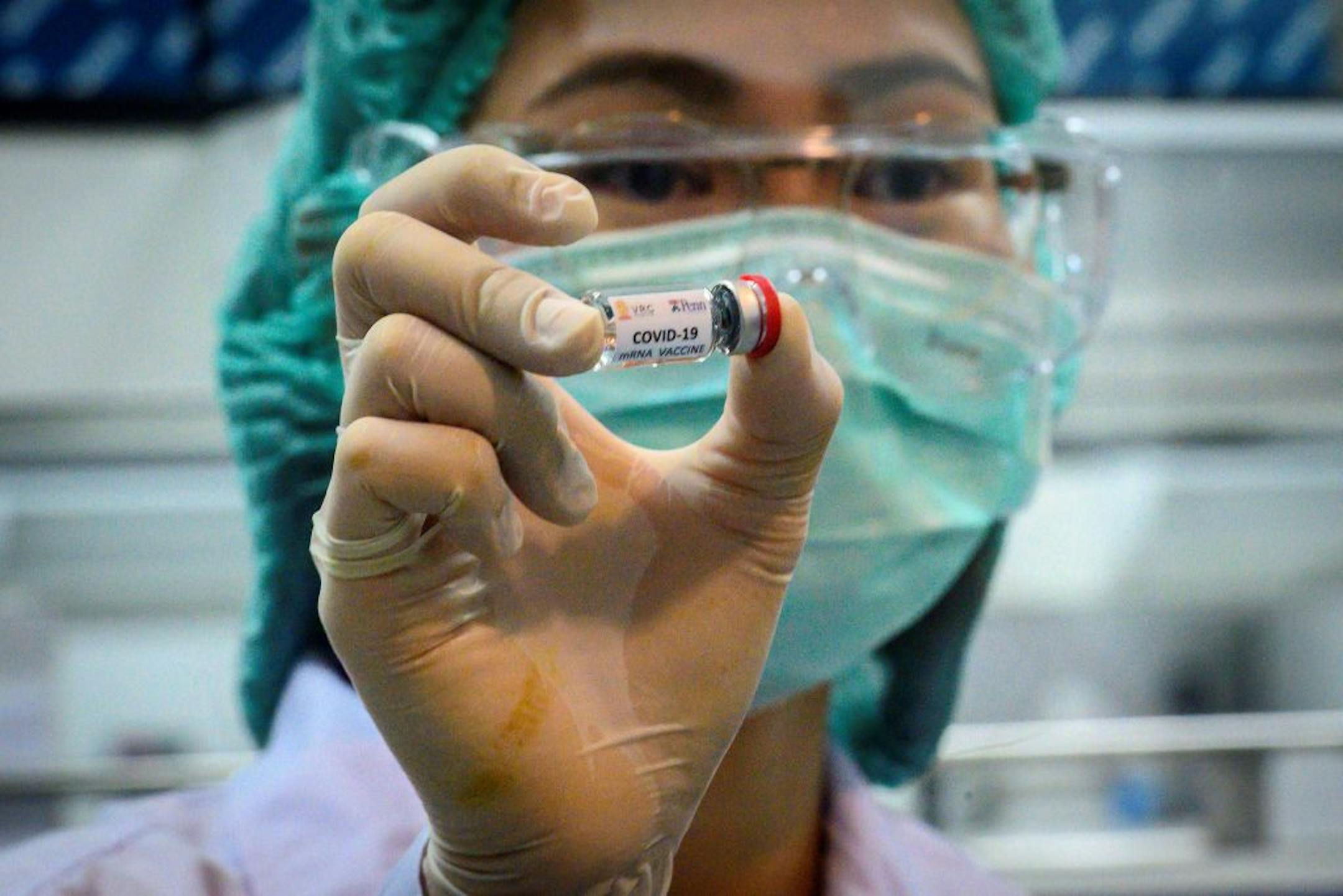
Nearly 160 COVID-19 vaccine candidates are in development. Although all approaches are distinct, they are based on a few simple strategies. Here's a closer look at how they work.
Traditional approaches
Some researchers are attempting to use the entire SARS-CoV-2 coronavirus to induce a broad immune response, knowing that minor viral infections can inoculate patients against more serious disease. An advantage of these methods is their proven efficacy. They have helped defeat polio, hepatitis A, rabies and other diseases. But working with a live virus is risky, these vaccines are challenging to create, and production is time-consuming.
Live attenuated virus vaccine
Developed in 1937 by virologist Max Theiler to create a yellow fever vaccine, this protocol takes a live virus and introduces it to mice, chicken embryos or other nonhuman species. As the virus becomes more successful at replicating in nonhuman cells, it loses its ability to replicate in human cells. When introduced back into the human body, attenuated viruses still trigger an attack by the immune system. Such vaccines provide protection against measles, mumps, rubella, chickenpox and one type of rotavirus.
Inactivated virus vaccine
This protocol, pioneered by Jonas Salk in the early 1950s, takes live viruses and kills them so they can't replicate. The inactivated, or dead, virus is injected into the body, which prompts the creation of antibodies. Inactivated virus vaccines often require periodic booster shots. This protocol was used to create Salk's injectable polio vaccine, and the hepatitis A and rabies vaccines.
Newer approaches


