
Nearly 100 African migrants died of thirst in Sahara

Nearly 100 migrants apparently died of thirst in the Sahara, underscoring the dangers of illegal migration.

November 1, 2013 at 2:48AM
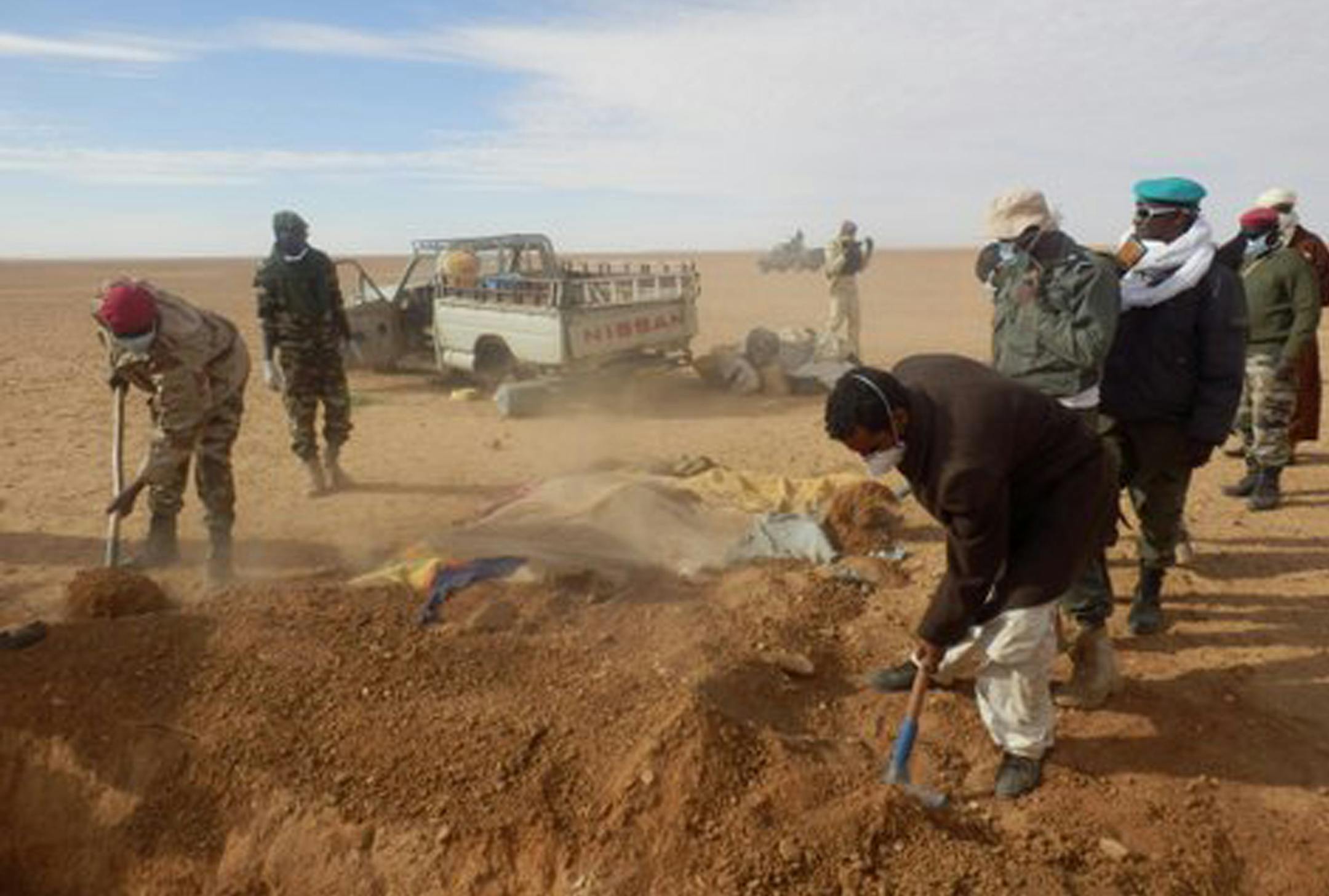
In this Wednesday, Oct. 30, 2013 photo, volunteers and officials dig graves to inter the bodies of migrants who died of thirst after their the truck they were traveling in, seen rear, broke down while attempting to cross the Sahara Desert north of Arlit, Niger. Nearly 100 African migrants hoping to escape crushing poverty met a grisly end in the desert, officials said Thursday, dying of thirst under the baking sun after their truck broke down in Niger not far from the Algerian border. It took we
Volunteers and officials dug graves to inter the bodies of migrants who died of thirst after the truck they were traveling in, seen at rear, broke down while attempting to cross the Sahara Desert north of Arlit, Niger. “This is a true tragedy,” the governor said. (The Minnesota Star Tribune)

DAKAR, Senegal – Nearly 100 African migrants hoping to escape crushing poverty met a grisly end in the desert, officials said Thursday, dying of thirst under the baking sun after their two trucks broke down in the middle of the Sahara before reaching Algeria.

It took weeks for authorities to learn of the incident and for teams to reach the distant site, where they found a gruesome scene including the remains of 52 children and 33 women.

"It was horrific. We found badly decomposing bodies and others that had been eaten by jackals," said Almoustapha Alhacen, the head of a nonprofit organization in northern Niger that helped bury the bodies. "We found the bodies of small children who were huddled beside their dead mothers."

The victims were spread out across a 12-mile radius, suggesting they had set off on foot but failed to head in the direction of the Algerian border just 6 miles away, he added.

It is the latest incident to shed light on the perils of illegal migration. In early October, at least 365 migrants drowned when a boat capsized near the Italian island of Lampedusa, which is closer to North Africa than to the European mainland.

The migrants in Niger had begun their journey late last month in two trucks and were being smuggled along a well-established trafficking route to neighboring Algeria, said Col. Garba Makido the governor of Niger's Agadez province, south of where the bodies were found. From Algeria, many continue on in hopes of crossing into southern Europe.

While nearly all who take this desert route are economic migrants, it was not immediately clear why so many women and children were among the victims. Officials were alerted to the deaths only when a lone woman managed to stumble out of the desert into the Nigerian town of Arlit earlier this month.

The next day, a father walking with his two young daughters also arrived. But his children died of thirst just a few miles outside Arlit, Makido said. A total of 92 people died and 21 survived.

"This is a true tragedy," the governor said. "The prosecutor has opened an investigation and we plan to do everything we can to find the truck drivers."

First word of the disaster came Monday when officials reported that 35 people died but the death toll rose when more bodies were recovered from the desert. The tract of land that runs across the continent just south of the vast Sahara desert has for decades been the province of smugglers and criminals, including the local chapter of Al-Qaida. Tens of thousands of West African migrants attempting to reach Europe each year have tapped into this perilous route, after authorities cracked down on sea routes via the Atlantic Ocean.

They travel from countries across West Africa to the Nigerian city of Agadez where they pay smugglers as much as $3,000 for transport to Europe. Migrants are ferried across the ocean of sand in rickety trucks, braving one of the harshest landscapes on earth for a chance at reaching Europe.

They are willing to risk death because few meet the criteria for even a tourist visa much less have the money to travel to Europe by plane. Once in Europe, they hope to work illegally and eke out a living with enough left over to send money back to their families in Africa. The landlocked nation of Niger is one of the poorest countries, and ranks last on the 2013 Human Development Index that measures criteria such as life expectancy and income.

about the writer

about the writer

KRISTA LARSON and RUKMINI CALLIMACHI Associated Press

More from No Section

See More
FILE -- A rent deposit slot at an apartment complex in Tucker, Ga., on July 21, 2020. As an eviction crisis has seemed increasingly likely this summer, everyone in the housing market has made the same plea to Washington: Send money — lots of it — that would keep renters in their homes and landlords afloat. (Melissa Golden/The New York Times) ORG XMIT: XNYT58
Melissa Golden/The New York Times

It’s too soon to tell how much the immigration crackdown is to blame.