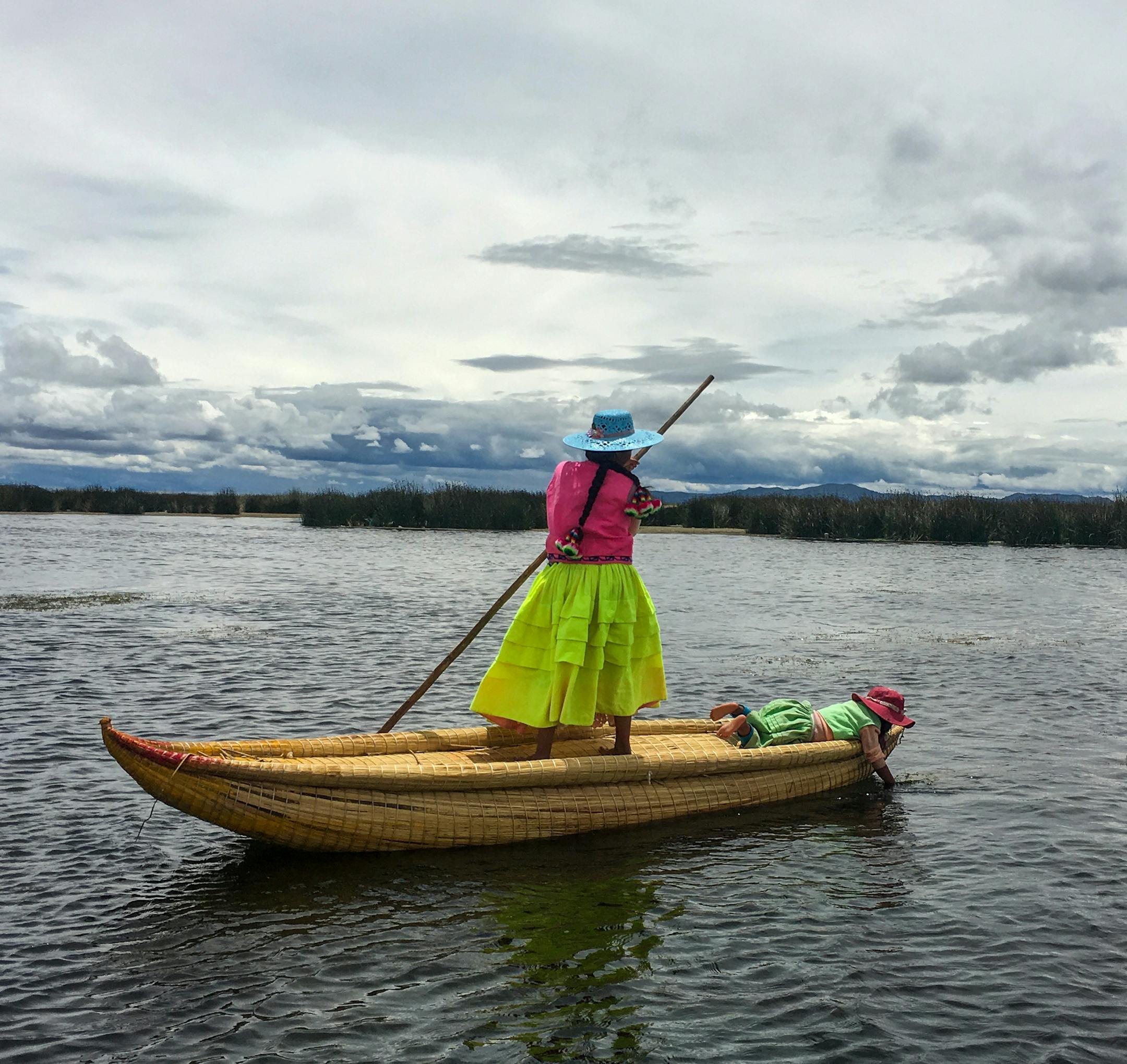
In the beginning, there was a lake cradled in the mountains of a high plateau in the Andes. How it got here was simple: The universe cried, and its tears flooded the world. Mankind had disobeyed the gods, and the gods sent in pumas. Lake Titicaca — literally, pumas of stone — is proof, tragedy burnished into beauty.
Standing on a quay in Puno, Peru, a city on the lake's western shore, my wife, Margie, and I stared at its cerulean expanse, an autumn sun reflecting off what has been called the eye of God. Not a breath of wind stirred the water, the Donald Duck and Goofy paddle boats imperturbable.
Our Peruvian itinerary had included Machu Picchu, but this morning vista surpassed the splendor of those ruins, whose images on calendars and coasters, snow globes and refrigerator magnets are burned so deeply in the mind that the reality seemed almost derivative.
There was no mistaking the originality of Lake Titicaca, straddling Peru and Bolivia.
It seemed less terrestrial than something borrowed from the sky, and on that morning it held the world in its grasp, its mirrorlike stillness soon rolling in the wake of a water taxi.
Our destination was Luquina Chico, less than 90 minutes from Puno, where I, along with students and professors from the Southern California university where Margie teaches, would stay with local families for two nights.
The students were promised the opportunity to "explore the Peruvian leadership approach to community development," but the lessons were greater than this.
The residents of Luquina, increasingly dependent on visitors like us, know that unregulated tourism — an easy temptation in a region as beautiful and undeveloped as this — can tear communities apart.