

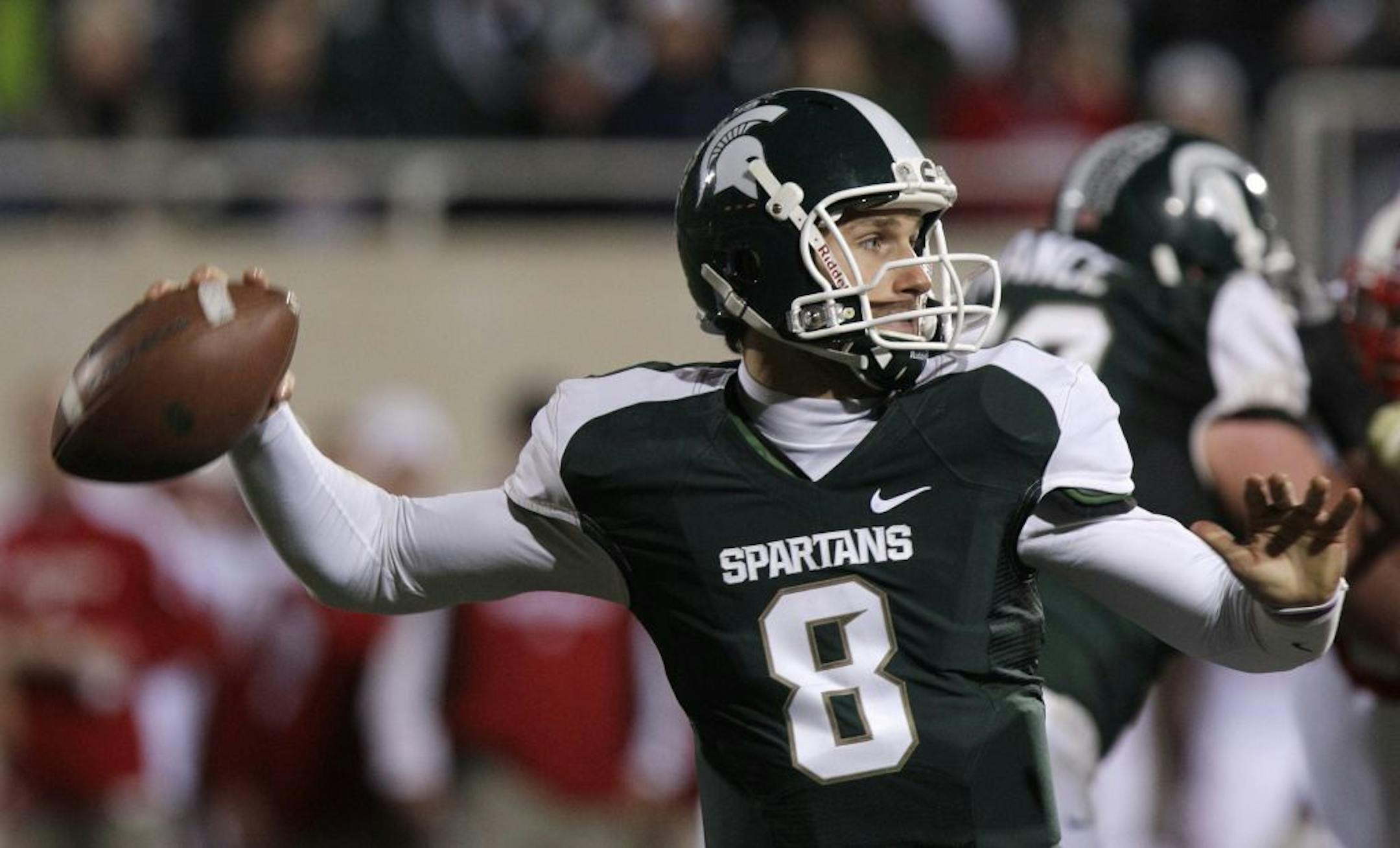
Michigan State quarterback Kirk Cousins appreciates the fact that his full-ride scholarship will save his parents more than $100,000. But like many college students, Cousins is forced to "count pennies" at the gas pump when money gets tight.
Being a college athlete has become a year-round commitment that doesn't allow Cousins to find a part-time job to pay for his expenses. He finds irony in that whenever he stops at a particular campus gas station.
"You look across the street and your jersey is on a mannequin in a store," he said. "You say, 'Something is wrong here.' But what am I going to do about it? I just try and voice it to you guys."
College athletes around the country soon will have more money in their pockets, beyond their scholarships. The NCAA Division I Board of Directors on Thursday approved a proposal that will allow conferences to increase scholarships by about $2,000 so that athletes can have spending money. Scholarships currently cover tuition, fees, room and board and books.
NCAA President Mark Emmert stressed that the extra money is a stipend -- based on the limited opportunities college athletes have for jobs -- not a pay-for-play system.
The full-cost scholarship proposal has both supporters and critics, and it raises concerns about whether it will create a larger divide between the haves and have-nots. Some question whether even all schools in BCS conferences can afford it, and what the trickle-down effect might be if the proposal is passed.
Emmert and the proposal's supporters say the previous model was outdated and needed reform. Big Ten Commissioner Jim Delany said studies show an average athlete spends more than $2,000 annually in personal expenses.
"When we played, the scholarship was worth room, books, board, tuition, fees and $15 a month," said Barry Alvarez, the Wisconsin athletic director and former Badgers football coach. "Now that's back in the '60s. That $15 now is probably worth $100. To do something like that with players, I have no problem with that."


