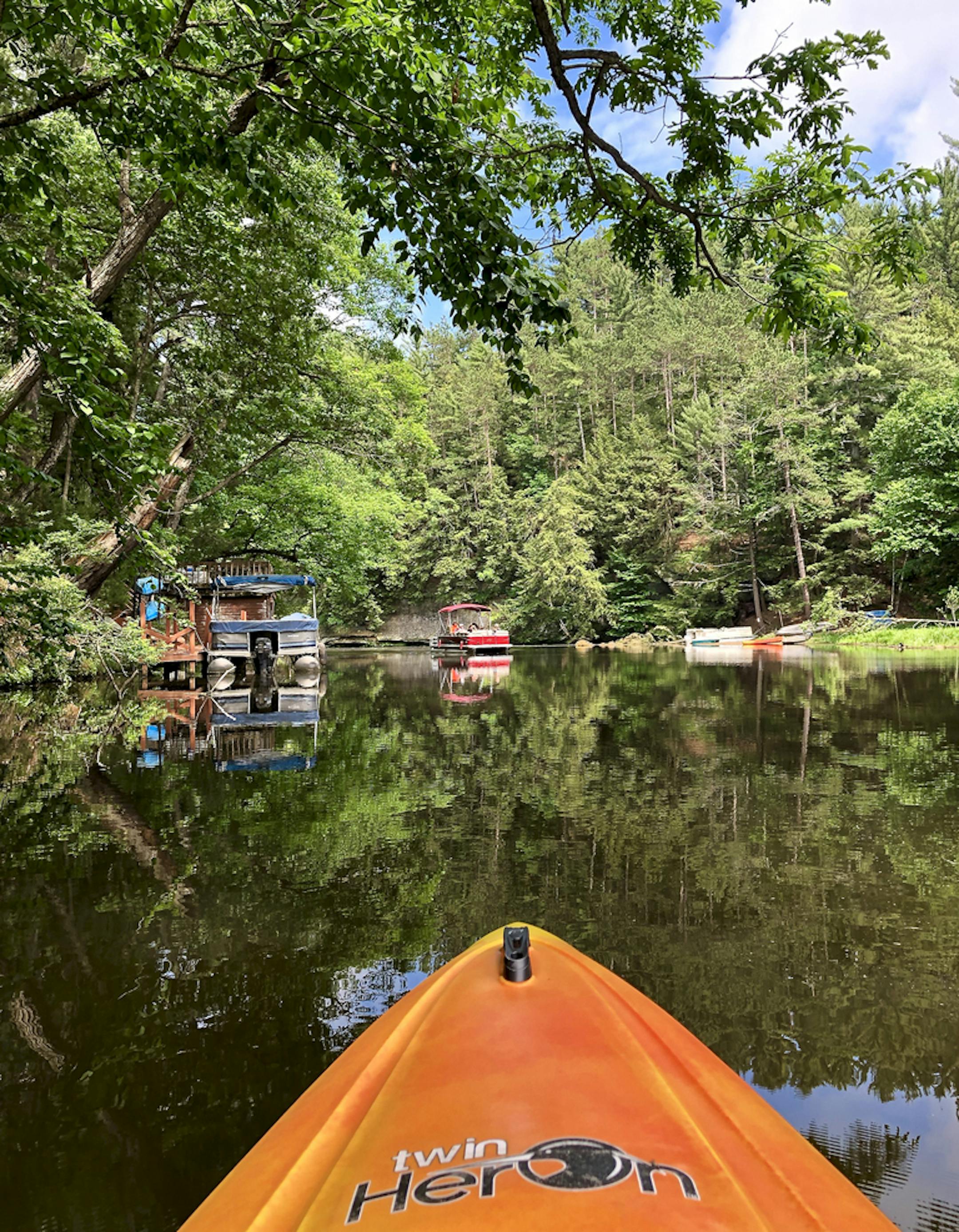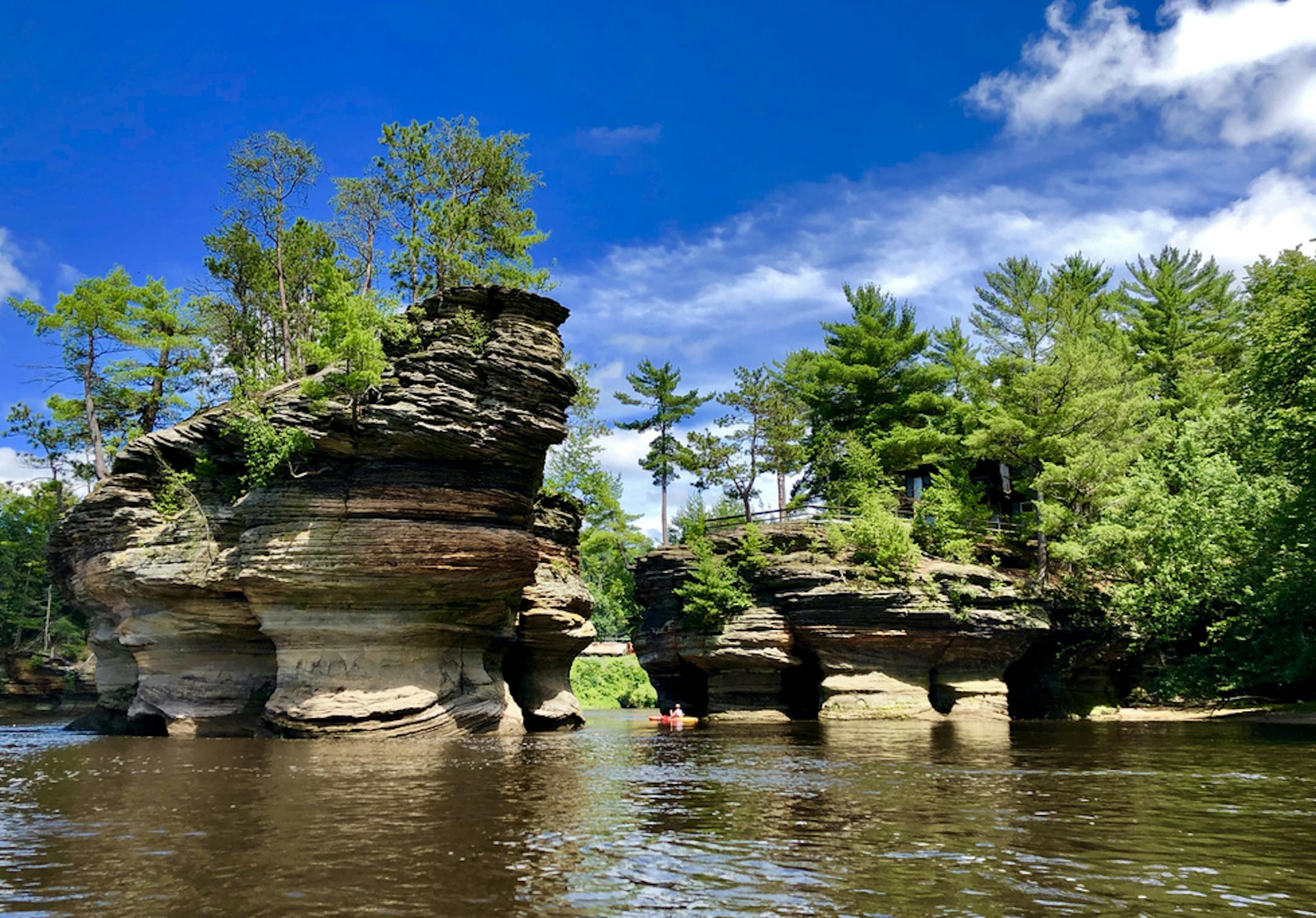
Our kayak bobbed on the water as my husband, Ed, tried to maneuver it into a tiny cave while I barked directions.
"To the right! To the right! Wait, now to the left!"
With a deft maneuver of his paddle, Ed sent us gliding into the cave's cool, dark interior. I reached out and touched the intricately carved sandstone walls, then asked Ed to hold us steady. Our outlet back into the Wisconsin River was just a few paddle strokes away, and I wanted to savor this experience. We were sitting inside one of Wisconsin Dells' famous rock formations, something millions of visitors probably don't even realize is possible.
After a minute, I signaled to Ed that we could continue, and soon our kayak popped out of the cave and back into the main channel of the river.
Wisconsin Dells is one of the Midwest's most popular vacation destinations, with more than 4 million annual visitors. Its popularity is largely due to its many water parks, which is why the town's booster dubbed it the Waterpark Capital of the World. The nation's first indoor water park opened here in 1989, and today this community of just 5,500 is home to more than 200 waterslides.
But Dells tourism wasn't always centered around water parks.
Tourists first began streaming to this town in south-central Wisconsin in the late 1800s, due to the alluring photography of a man named H.H. Bennett. One of the 19th century's top landscape photographers, he was captivated by the region's Cambrian sandstone formations, found in just three other spots around the globe.
He was especially intrigued by the intricately carved bluffs, cliffs, canyons and gorges lining the Wisconsin River for 5 miles, and they became the focus of his craft. As his photographs began circulating around the country, people were similarly enthralled. Soon, they began descending upon the area, eager to see these rugged, magical formations in person.