

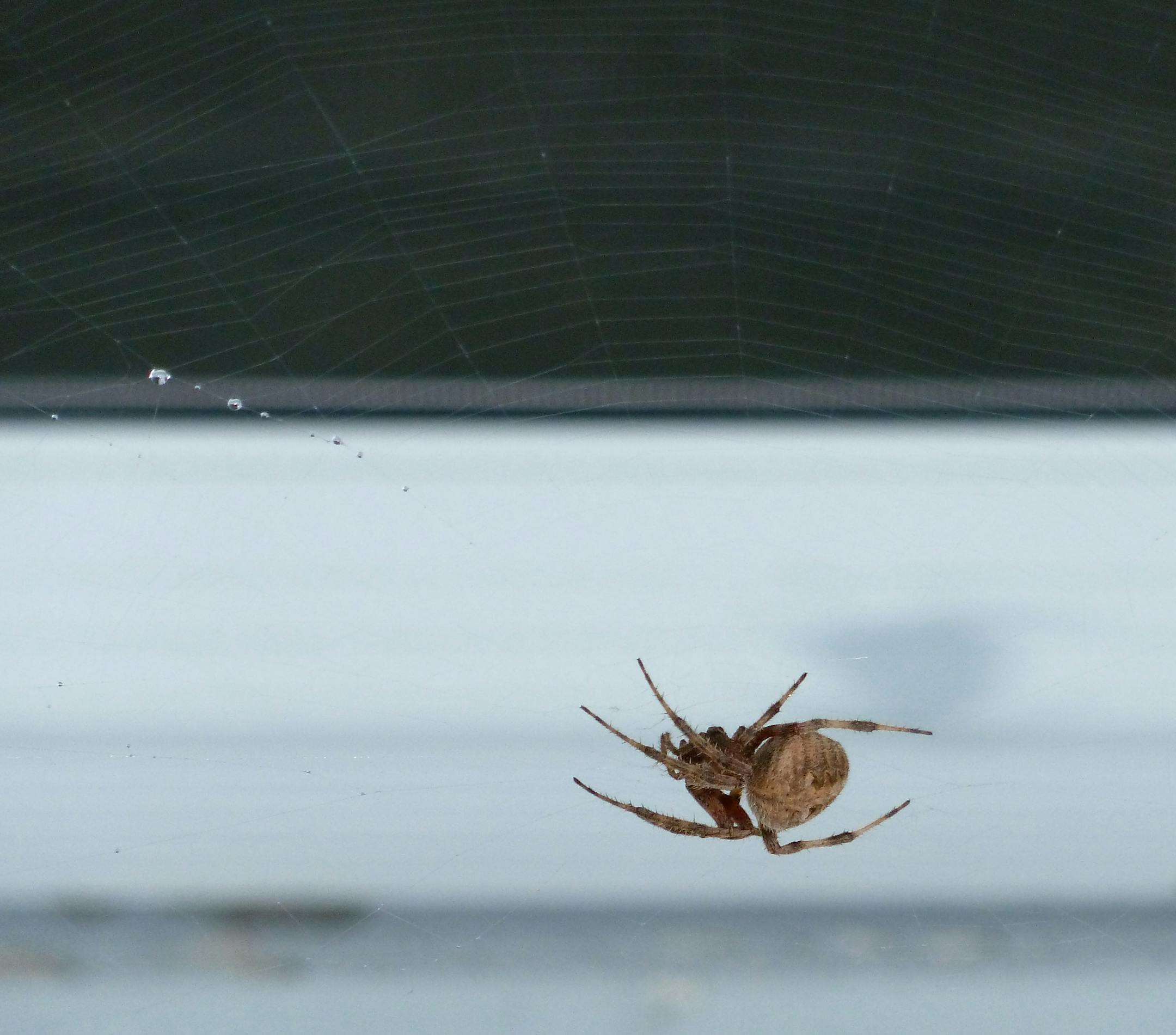
When spiderlings begin life on their own, they go ballooning — that is, they drift off into the air on "balloons."
In reality, these are long, trailing filaments of silk called gossamers that are lifted high by the slightest breeze or convection current. Spiders can travel great distances, until the silk gets caught or the breeze dies and deposits them on the ground. Ballooning silk can often be seen in the autumn.
Several different species go ballooning. They take off on warm, sunny days. The spider clings to a fence post or tall grass, faces into the breeze, raises its abdomen, and releases a line of silk from its spinnerets. The wind catches the silk. The pull heightens as more and more silk is spun. Finally, under a strong wind, the spider will release itself and drift off.
By ballooning away, spiders scatter. Gossamers and spiderlings have landed on ships more than 100 miles out from shore. However, most journeys are to nearby sites.
A gossamer may cling to your clothing or hundreds may adhere to the bare branches of a deciduous tree in your backyard. It's quite easy to see them in the late-afternoon sunlight of Indian summer days. The tiny strands of silk, many times finer than a strand of human hair, glisten by reflected light. Check it out.
Jim Gilbert's Nature Notes are heard on WCCO Radio at 7:15 a.m. Sundays. His observations have been part of the Minnesota Weatherguide Environment Calendars since 1977, and he is the author of five books on nature in Minnesota. He taught and worked as a naturalist for 50 years.


