

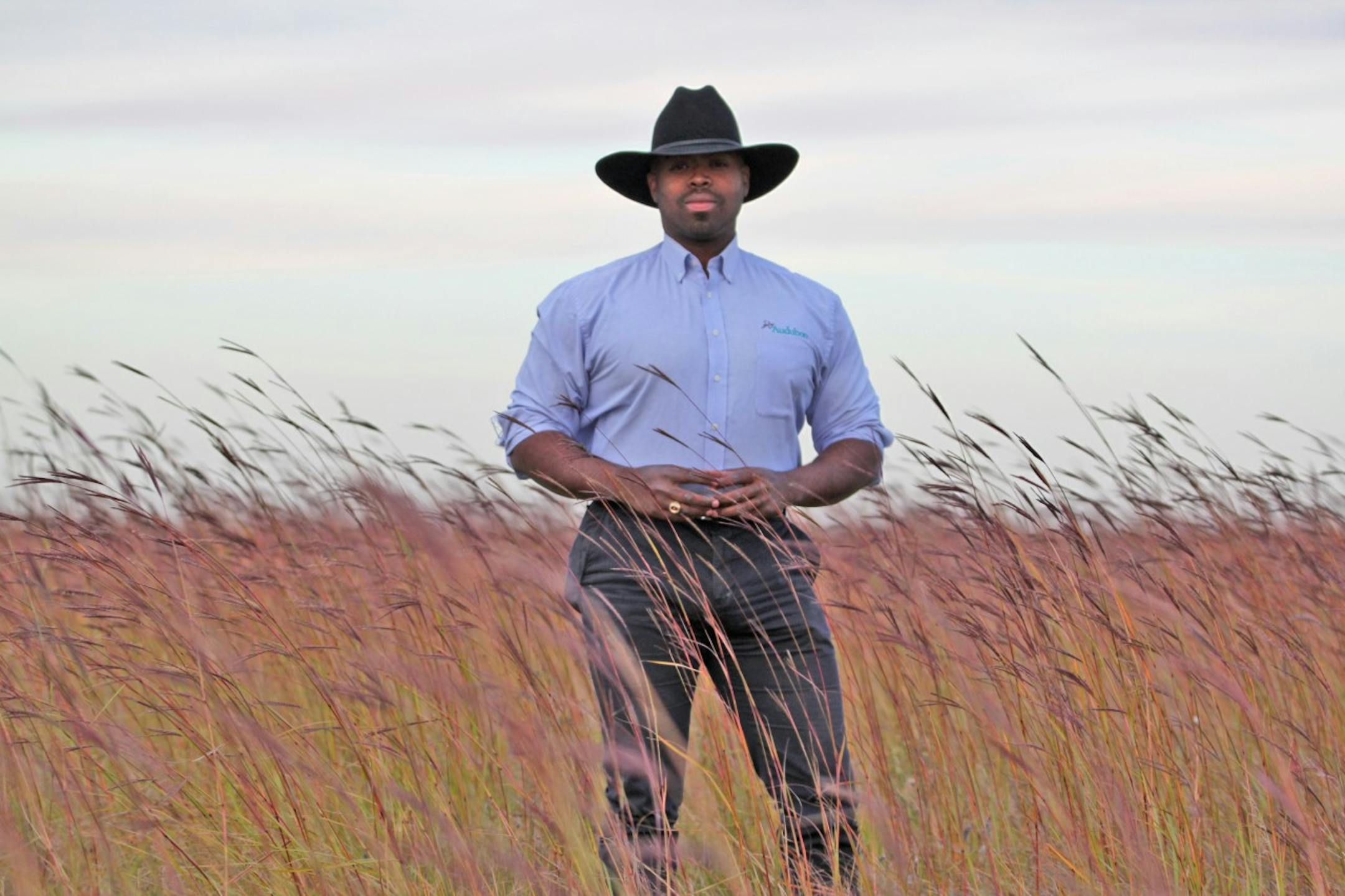
Beneath his signature cattleman's hat, Marshall Johnson is always thinking, particularly about ranchers and farmers, who he believes will play — must play — critical roles in restoring grassland bird populations in Minnesota and beyond that have declined in staggering numbers.
And the message hasn't changed since his time as vice president-executive director at Audubon Dakota and up the ranks to his new job as the National Audubon Society's conservation chief.
The conservation ranching ethos Johnson energized in the Dakotas connecting food production with birds has grown a wider audience with his ascent at Audubon, which is recognizing ranchers for regenerative practices such as timing and targeting their livestock grazing to help cultivate rather than diminish habitat birds need to survive. Grassland species such as the prairie chicken and the bobolink have declined by 40% since 1946, according to Audubon, and are among the most vulnerable of any species. Audubon's Conservation Ranching Initiative has almost 4 million acres activated in 16 states and is looking to expand.
What's in it for ranchers and farmers? Recognition as a bird-friendly beef producer to an environmentally conscious consumer. A message of partnerships tracks with Johnson's appearance in Minneapolis last week to speak at Northrop Auditorium on the University of Minnesota campus about climate solutions. It was familiar ground — Johnson is a Minnesota Crookston business alum and former systemwide student senator.
"Birds are imploring us to take action on climate now," he said by phone ahead of his presentation. "… Maybe it is because I am a millennial, but I am bullish on our agency and ability to affect change."
In the interview below, Johnson talked about conservation farming and its new place in the Audubon playbook, which has traditionally focused its grassland strategy on volunteer protection, and other topics.
You and Audubon have a big constituency from ranchers to hunters to businesses to policymakers, and you want to even the playing field in the birding community and have more people of color see themselves as partners and participants. How do you approach such a large task?
My mentor, Dr. John Challey, would always tell me, "Marshall, focus is the main component of genius." I think we all have a role to play. For Audubon, our focus on climate change and biodiversity loss, we have a focus around helping drive bird-friendly siting of renewable energy and committing to a proactive goal of helping meet the goals around renewable energy. We need 300 gigawatts of renewable energy in the coming years and we want to be part of that deployment.


