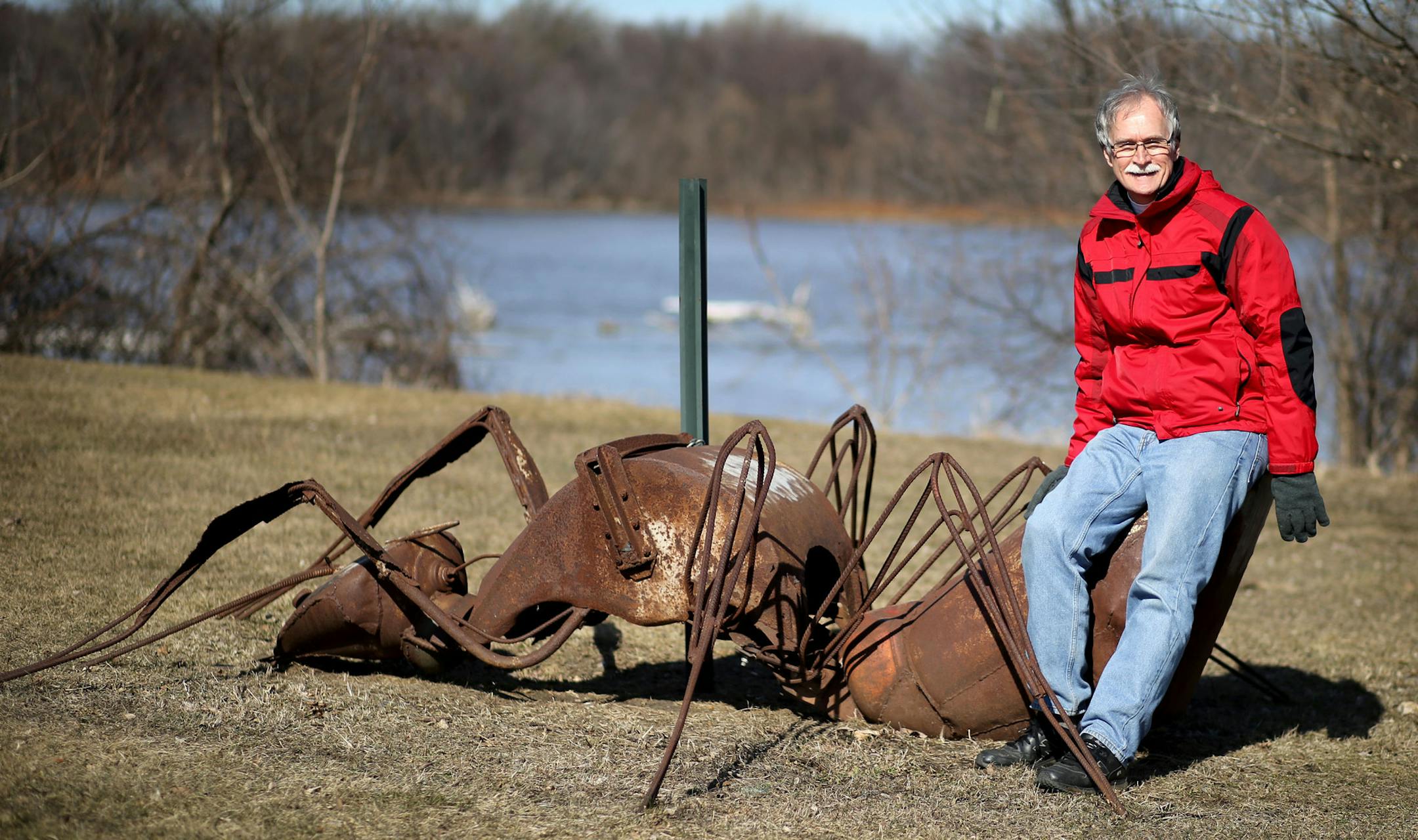
Paul Nordell's life as a conservationist started as a kid going on walks in the woods with his dog in Worthington, Minn.
By the 1960s, he was guiding trips through the Boundary Waters Canoe Area Wilderness, advocating for hauling out garbage, rather than burying it or sinking it in the lakes as once was customary.
"I gained an appreciation for the outdoors early on," he said. "It was just the freedom of exploration and the chance to be impressed by and fascinated with God's creation."
His inclination toward the natural world led to a nearly 35-year career working for the Minnesota Department of Natural Resources, from which he retired in January. His biggest assignment came 10 years into that career, in 1991, when he was appointed to establish the Adopt-a-River program. Since that time he has facilitated the cleanup of 6.5 million pounds of waste by 100,000 volunteers from 11,000 miles of public waters.
He still counsels the program, and said he is hopeful it will continue to make an impact long after his tenure. In a recent interview, Nordell, 67, reminisced about the effect and legacy of Adopt-a-River.
On the long struggle to clean up the Mississippi River
Before the first waste treatment plant opened on the Mississippi in the 1930s, people were starting to move away from the river because it was more of a sewer than a resource. The "toilet" was getting plugged every time they built a new dam, so once the natural flushing of the river stopped, it made a big, frothy mess at the dam. I think because of that, other things started to get dumped because no one could stand to be down there anyway. I've talked to people who as kids in the early 1960s would go down to the river flats at the gorge in Minneapolis and their idea of recreation was riding dirt bikes in and out of large appliances along the riverbanks. It sounds puzzling in this day and age, but disposal of things was a problem.
On the program's impact
The birthing moment for Adopt-a-River was probably the (Gov. Rudy) Perpich-driven cleanup down in Lilydale in St. Paul in 1988. Lilydale was definitely the first, but another area that has dramatically turned around was Bruce Vento Nature Sanctuary. In 2003, it was an abandoned rail yard that became a dumping area like Lilydale. Fences had fallen down and no one was watching, so dumping was piling up. When the deed went over to the city, I was able to mobilize the Minnesota Four Wheel Drive Association to do a service project. Later, a whole bunch of other people came along and shaped it into what it is today. A wildlife easement now goes through there. It's kind of revolutionary for the DNR to pick up an old industrial property, but there was enough interest in cleaning it up, reshaping it, and turning it into a nature sanctuary right under the nose of downtown St. Paul.
(Editor's note: During the initial four-hour cleanup, the MN4WDA removed tires, beds, water heaters, car batteries and more, including 3,040 pounds of recyclable metal, 39,500 pounds of general rubbish and 54,000 pounds of demolition debris).