

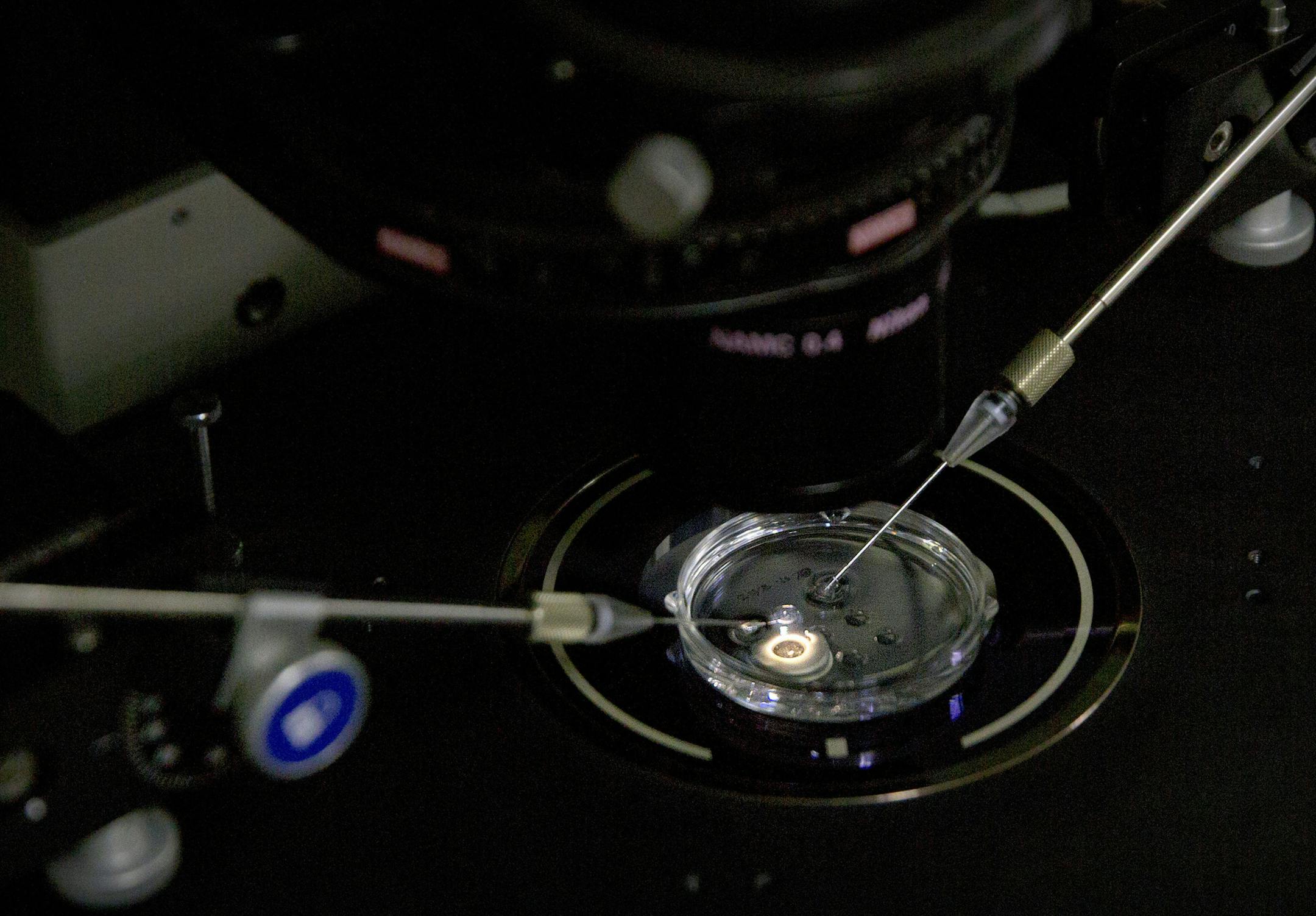
The genetic mutation that a Chinese researcher claimed he used on a human embryo to create HIV-resistant twins may be linked to a shorter life span, new research said.
The findings from scientists at University of California Berkeley, published in the journal Nature Medicine, will likely intensify criticism that the researcher carried out an experiment on humans long before the science was ready.
In November, Shenzhen-based scientist He Jiankui said he had edited the CCR5 gene of an embryo to create a mutation that also can occur naturally. The naturally formed mutations protect against HIV, the virus that causes AIDS.
But a new analysis of more than 400,000 genomes and health records in the UK Biobank found that people with copies of a similar mutation from both parents had a significantly higher death rate between ages 41 and 78 than those with one or no copies. The mutation, the Berkeley researchers found, is associated with a 21 % increase in mortality later in life.
"An important thing to consider is the fact that a mutation doesn't just have one effect," said Rasmus Nielsen, a UC Berkeley biologist and author of the paper. "So even though a mutation might fix one problem, it might create other problems."
Previous studies have shown that two mutated copies of the CCR5 gene are associated with an increase in death after a case of the flu.
The newly published research Monday didn't conclude why the mutation affected life span. Nielsen said there could be many possible explanations. The protein that the CCR5 gene codes for no longer works in people with two copies of the mutated gene, and that protein is involved in many functions in the human body.
"There both seems to be some beneficial effects of the mutation and some negative effects," Nielsen said. "I can't imagine a scenario right now where Crispr editing in embryos is the best option for anything."


