

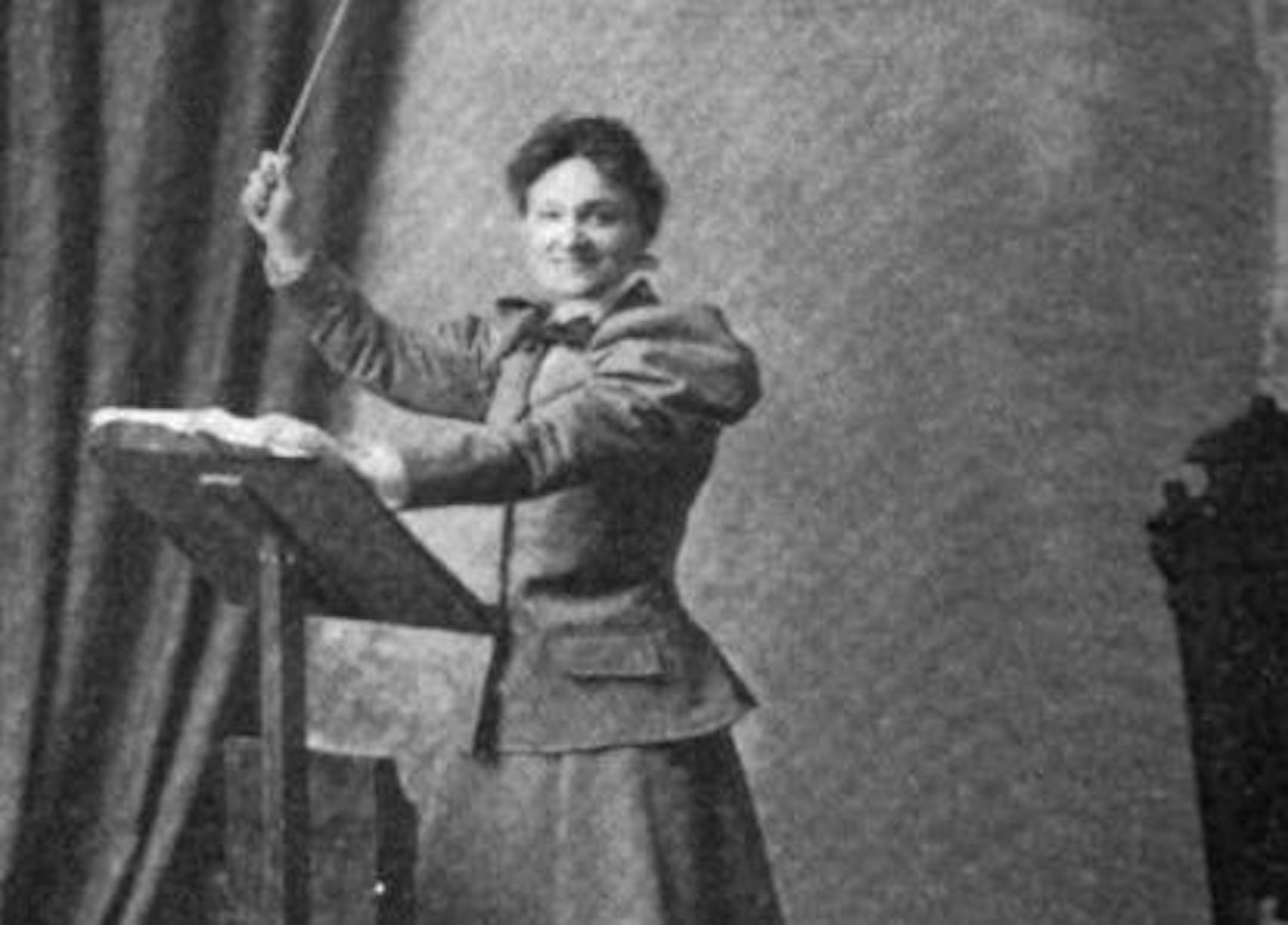
Her early years featured both a silver spoon and a golden voice that carried Anna Schoen-René from wealthy German roots to a successful singing career. As a late-1800s soprano, she graced European stages from Milan to Paris to London before winding up as a voice instructor on the faculty at the ballyhooed Juilliard School of Music in New York City.
But Schoen-René insisted she was most proud of the 16 years she spent in Minneapolis between Europe and Juilliard. Not yet 30, her health was deteriorating when she arrived in Minnesota in 1893. She regained her strength and became a force in the local music scene as a voice teacher, university choral creator and concert impresario at the turn of the 20th century.
"When I first reached Minneapolis — a skeleton weighing only 98 pounds — I was ill and tired," Schoen-René wrote, at 77, in a 1941 memoir published a year before her death.
One doctor told her she had tuberculosis and wrote her off as a "hopeless consumptive." She sought a second opinion, and another expert in Chicago "pronounced my lungs quite sound" — and determined she'd suffered a "complete severe nervous breakdown," she wrote.
As her health improved in the "beautiful cold winters" of Minneapolis, she began her tireless work elevating the classical music sensibilities of a rough-hewed lumber and milling town in the 1890s.
Her poor health had scuttled her singing career — "a bitter blow … the crumbling of all my hopes and dreams," she wrote. "… No doubt it was all for the best, however, for otherwise, I should never have gone to Minneapolis to become one of the 'musical pioneers' in America. I am more proud of my right to use this title than of almost anything else in my whole career."
The youngest of eight children, Schoen-René was born into German aristocracy in 1864. Her father served as a royal court councilor and minister of agriculture and forestry for the king of Prussia, Wilhelm I.
With his help, and assistance from the queen of the Netherlands, Schoen-René attended a French boarding school before nailing her audition for entry into the Royal Academy of Music in Berlin. By 1893, the dazzling soprano was in New York City to sing at the Metropolitan Opera. That's when her health bottomed out and she moved in with her older sister, Marie, who was teaching German at the University of Minnesota.


