

Music lightens the load, from Brooklyn to France to Liberia

Three inspiring tales of music making a difference around the world.

May 11, 2020 at 10:20AM
In this Wednesday, April 15, 2020 photo, musician Paul Stein, who has played the accordion since he was eight, entertains neighbors with an "Emergency Accordion Stoop Extravaganza" (EASE) concert from the top step of his stoop in the Sunset Park neighborhood of Brooklyn in New York. "Music…lifts people's spirits and brings them together," Stein says. "We need to keep our spirits up. We need hope now. That's what we need to get through this difficult period." (AP Photo/Kathy Willens)
Paul Stein entertained neighbors with an “Emergency Accordion Stoop Extravaganza” (EASE) concert. (The Minnesota Star Tribune)

N.Y. accordionist hits the stoop

NEW YORK – Paul Stein felt useless — stuck in his Brooklyn brownstone apartment, watching his neighbors suffer deprivations as COVID-19 swept the city.

Then, on television, the retired public-sector lawyer and political activist saw people around the world rallying: "I saw people in France and Italy banging pots and pans out their windows, clapping and singing from balconies."

He knew what he had to do. He took out his accordion, and he played.

His stage is the stoop in front of his building. "For as long as people have been hanging out on their stoops and socializing with their neighbors, they've been doing it from their stoops," he said. "The natural acoustics of the narrow street bring the music to my neighbors."

He regularly sings and plays during the nightly 7 p.m. rounds of applause for health care and front-line workers. Over the past few weeks, he has played four 45-minute concerts.

Stein had played on his block before: scary music for the children on Halloween while his partner, Elena, handed out candy. This time, he alerted the neighbors with a telephone call. At 71, he's in a high-risk group. So, he didn't want to encourage a get-together at close distance.

Stein calls his impromptu concerts the "Emergency Accordion Stoop Extravaganza," or "EASE." The accordion is not an instrument beloved by all; it has been the butt of many jokes (What's the difference between an accordion and a concertina? It takes longer to burn an accordion.) But Stein loves it, and has been playing since he was 8.
"I'm doing mostly instrumentals … a polka, a tango, the 'Hokey Pokey,' and other fun things," he said. "People like up-tempo things."

His neighbors seem to appreciate his efforts.

Madeline Chang, who just retired after 20 years teaching in New York City's schools, and partner Tim Sozen danced on a tiny concrete patch in their front yard.

"We were inspired because the music is so wonderful," Chang said.

Kathy Willens, Associated Press

'Bolero' pulls out all the stops

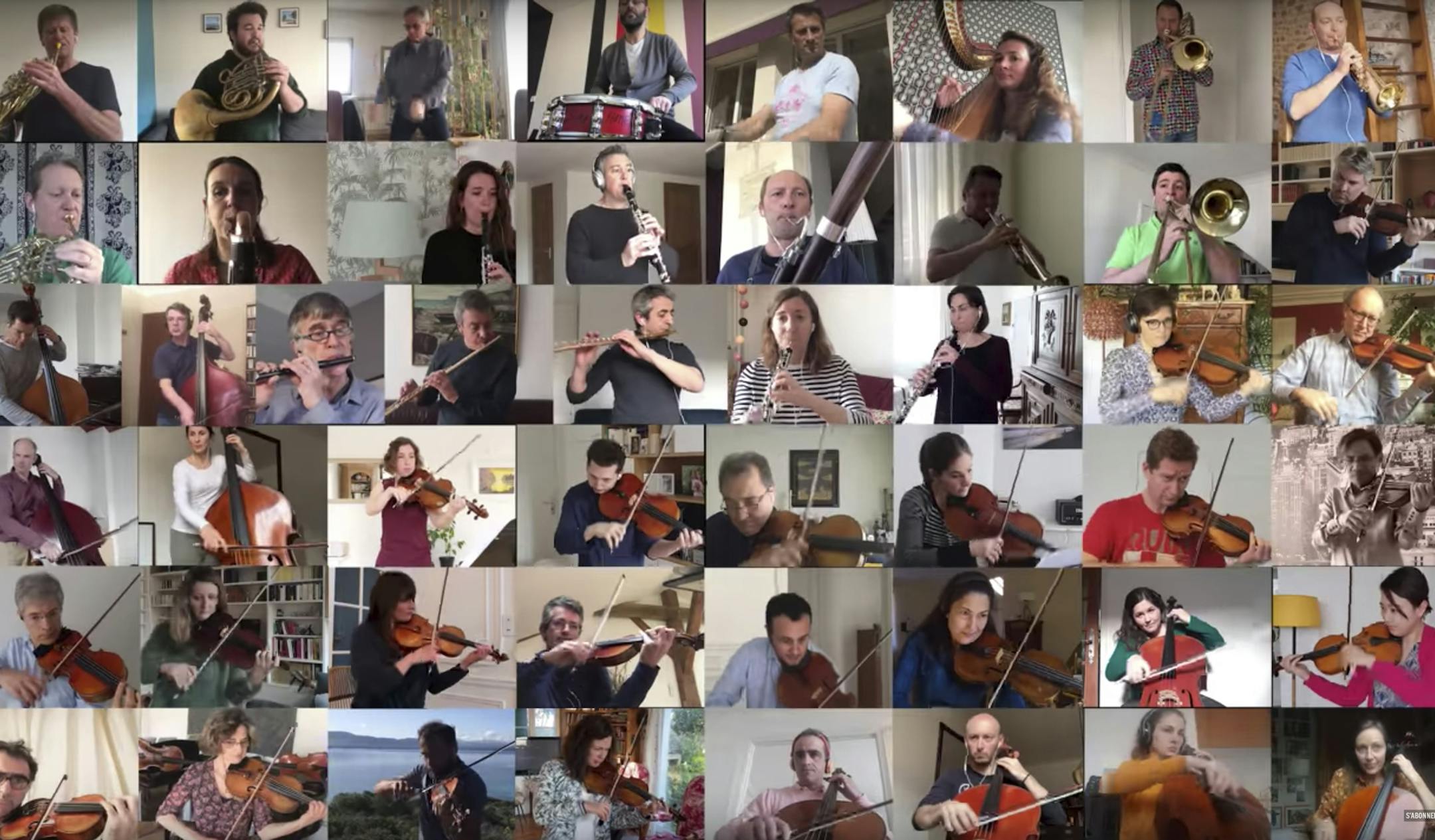
LE PECQ, France – Look closely: The kettle drum player has a wooden spoon in one hand, a ladle in the other, and doesn't even have his drums.

But, hey, cutting a few corners can be forgiven of an orchestra that managed the remarkable feat of performing "Bolero" while its musicians are scattered far and wide under coronavirus lockdowns.

Like building a musical jigsaw puzzle, the National Orchestra of France used the magic of technology to weave together the sight and sounds of its musicians, who filmed themselves playing alone in their homes, into a seamless, rousing whole.

Posting a video of their stitched-together performance on YouTube was a way of keeping in touch with each other and with audiences they sorely miss playing for.

"For us, the public is essential. Without the public, we don't really exist," said Didier Benetti, the kettle drum player.

The performance starts with three musicians: a cellist, a violinist and a percussionist with "Stay home" written on his red drum. A flutist joins, haunting, bewitching, seemingly playing in his lounge.

The musical tension and power builds as more and more join, until they are an orchestra of 50.

Benetti rearranged French composer Maurice Ravel's work, chopping it down from the usual 15 minutes to a social media-friendly length of just under 4 minutes.

The musicians got their scores by e-mail. They also got an audio track to listen to through headphones as they played. That audio included a previous recording of the music and the ticking sound of a metronome, to help them keep time.

The musicians filmed themselves over four days in the final week of March. One violinist played outside, with a beautiful seascape as his backdrop.

Dimitri Scapolan, a video producer and sound engineer, burned the midnight oil to stitch together the musicians' self-shot footage into a coherent musical and visual patchwork.

Performing for the video was "very therapeutic," but still felt like second-best compared to being all together on stage, Benetti said.

JOHN LEICESTER, Associated Press

'Save our family and our country'

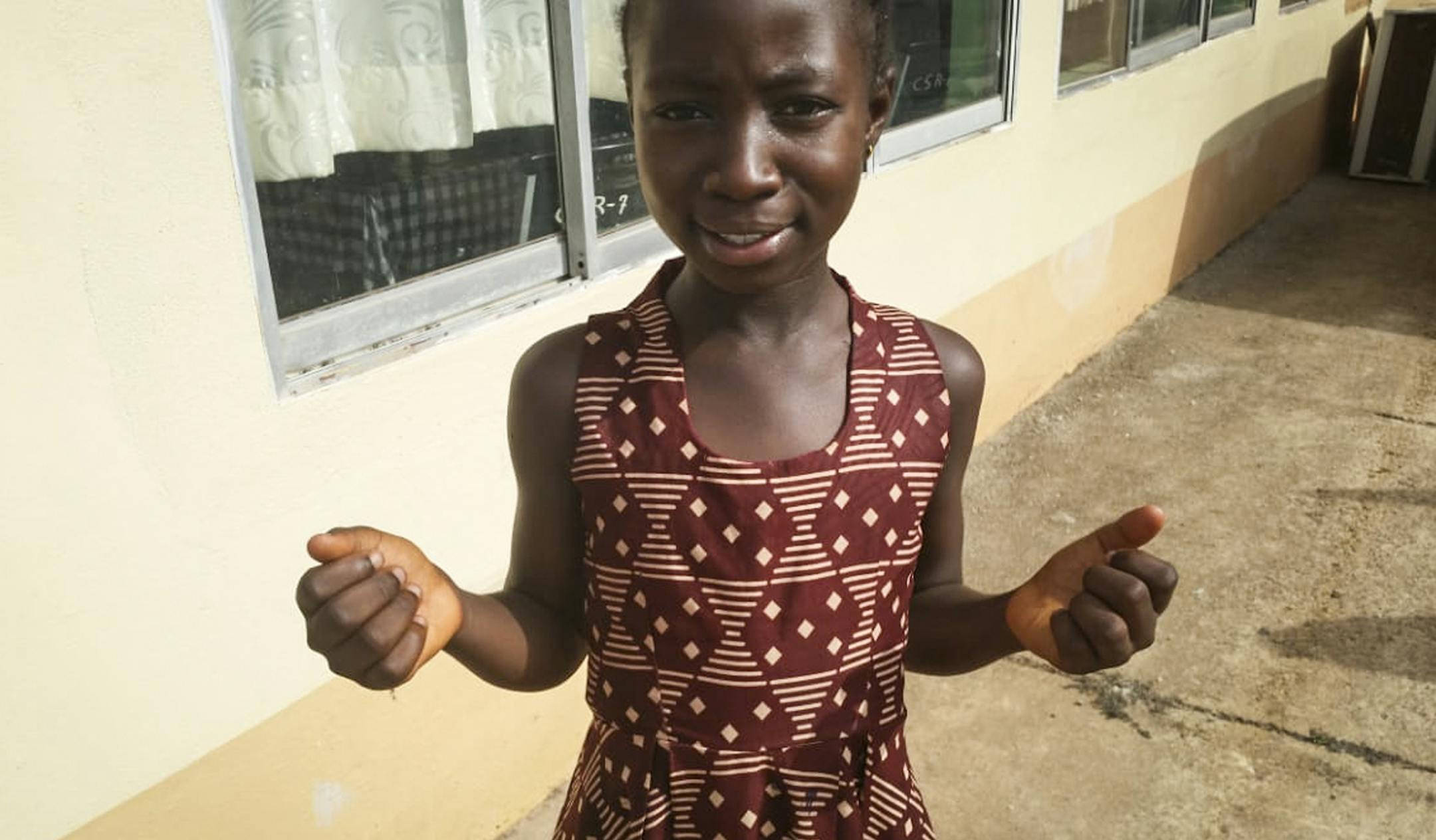
MONROVIA, Liberia – The voice is strong, and the words are resolute: "Let's protect ourselves to save our family and our country; let's stop the public gatherings."

The singer? She's 9 years old.

Joselia Kollie's song has been getting airplay on Liberian radio, and praise from health officials. She said she wanted to do her part to stop the spread of COVID-19 because "whenever bad things happen, we, the children, will always suffer."

At least 16 people have died since Liberia's first confirmed case on March 16, and the West African country is still rebuilding its public health sector after the Ebola epidemic killed 4,810 people between 2014 and 2016.

"I believe this song will help fight the virus because the song says prevention. We need to prevent ourselves from coronavirus by washing our hands, not shaking hands and not sneezing on one another," she said by phone from her home in Gbarnga, 112 miles from the capital.

Joselia began singing at age 3, and recently told her mother she wanted to do a song about fighting coronavirus.

"God called her to certain things and she wants to fulfill her destiny," said Amanda T. Kollie, herself a popular gospel singer.

Her mother helped her write the song, which was recorded in a local studio and then sent out to radio stations.

The song reminds Liberians of how much the country has been through: "Some years back, we suffered from a civil war, we suffered from Ebola that took away many lives," she sings. "This time around, it's coronavirus — coronavirus is so terrible."

Joselia has already accomplished more than many adults: She was just 6 when her parents helped her set up a charity to allow friends to stay in school when their families faced financial difficulties. The charity, Build My Future Foundation, or BUFF, is currently helping five girls and two boys in rural Liberia.

Dr. Francis Kateh, Liberia's chief medical officer, said he was "overwhelmed with gratitude" for Joselia's effort. And veteran DJ Patrick Okai offered high praise for the girl's song.

"The message is powerful," he said, "especially with the chorus line that says 'prevention is better than cure."'

JONATHAN PAYE-LAYLEH, Associated Press

In this handout photo provided by the National Orchestra of France on Wednesday April 1, 2020, musicians from the National Orchestra of France are shown in the screenshot as a patchwork, each performing parts of "Bolero" alone in lockdown. The musicians recorded themselves over several days in March for this video posted by the orchestra on March 29. With the magic of technology, their individual videos were woven together to create a rousing orchestra-like sound for the famous piece of music by
The scattered National Orchestra of France recorded a 4-minute version of Ravel’s “Bolero” and posted it for music-lovers. (The Minnesota Star Tribune)
In this photo taken Thursday, Feb. 20, 2020, Joselia Kollie, who is the daughter of a popular gospel singer, explains how she desires to spread developmental messages through music with a song reminding Liberians of how much the country already has been through, in Gbarnga, Liberia. Liberian radio stations are getting the word out about how to prevent coronavirus, and one tune here is especially gaining praise: The person singing it is only 9 years old. (AP Photo/Jonathan Paye-Layleh)
Nine-year-old Joselia Kollie explained how she’s using song to spread a public-service message in Liberia. (The Minnesota Star Tribune)
about the writer

about the writer

Wire Services