

Music: A different stroke

Fatherhood and sobriety may be new, but Strokes singer Julian Casablancas promises to get back to his old band after his current solo outing.

August 17, 2012 at 9:04PM
(Margaret Andrews/The Minnesota Star Tribune)

As the conversation bounced from babies to sobriety to how great it is making music by yourself, a small dog that yipped suspiciously like a fluffy poodle could be heard in the background.

It all sounded so un-Julian-Casablancas-like.

One of the most iconic rock stars of the '00s, the leather-wearing, chain-smoking, über-urban Strokes singer, 31, called last week from his apartment in New York. Later that night, he played a hometown gig with the band touring behind his new solo album. They're making their way to Minneapolis for a show Thursday at First Avenue.

"It's been really great, man," he said, mumbling in that unmistakable way. "I'm not going to lie -- I've been having a good time."

Still, his chipper comments might be hard to believe. For one thing, Casablancas and his wife, former Strokes assistant manager Juliet Joslin, have a month-old baby, an age at which parenting is about as fun as hornets in the pants (at least for the nanny-less).

Casablancas' enthusiasm for his solo career also rang a little hollow. He is repeatedly on record as saying he didn't want to do his own thing.

It wasn't until the Strokes neared their fourth year of inactivity that he became the fourth of the band's five members to make an album outside the group. Many would have bet on him being first, but guitarist Albert Hammond Jr. has two under his own name, while drummer Fab Moretti recorded as Little Joy and bassist Nikolai Fraiture as Buffalo Eye.

Casablancas' "Phrazes for the Young," crammed like a Manhattan apartment with New Wavey synth-pop parts and electronic beats, came out in November to respectable reviews. The fact that he waited till after the rest of the guys supports his claim that he really didn't want to do it.
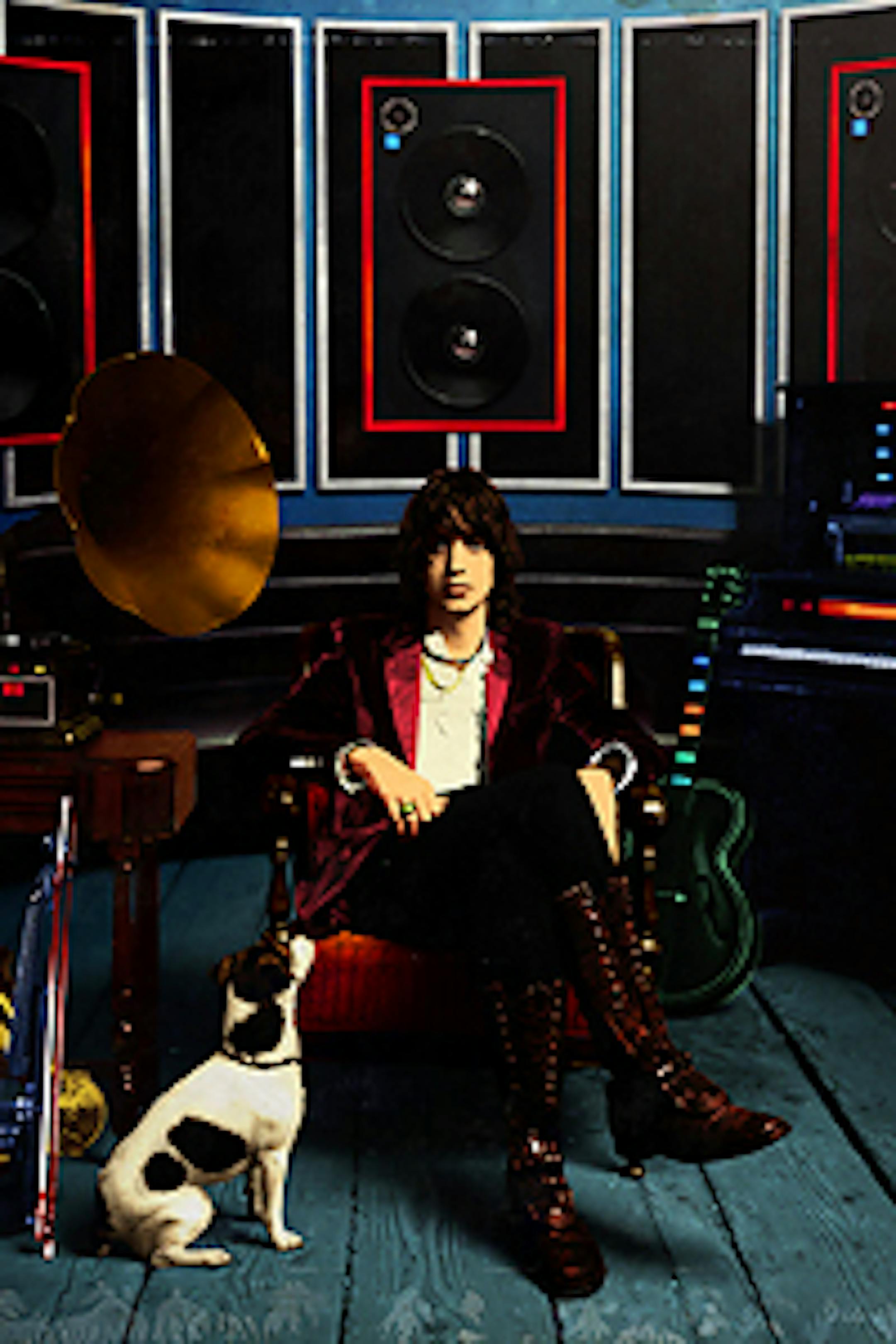
"There was a part of me that wanted so badly for [the Strokes] to be the best band around; that was my entire focus," he said. "I understand now that it can be good to work outside the circle."

Here's what else Casablancas had to say, talking around the dog yips.

Q: People might have a hard time imagining Julian from the Strokes as a dad. How are you getting by so far?

A: It's pretty early yet. Wait until he's grown to see what he's like. But I'll try to be loving, encouraging, but strict enough so he'll have a good head on his shoulders. He's such a cool little guy -- just someone who looks up and smiles at you when you walk in the room. That's pretty cool. It probably will be hard going on tour now. We just went to Providence [R.I.] last night for a show, and even just that felt weird.

Q: What took you so long to release a solo album?

A: I think mine was a little more a reaction to the other solo records. I wanted to do a Strokes record right after our last Strokes tour. One person wasn't ready then, so we decided to take X amount of time off. Then when we got back together, people's heads weren't really into it, probably because they were all doing their solo records. So that's when I kind of decided to do it.

Q: How did you like your bandmates' other records?

A: Uh ... hmm ... [long pause]. I don't know. They're all pretty different. I guess my initial feeling was, "Why wouldn't they want to just bring these songs to the band first?" But I quickly kind of understood and respected their decision to go outside the Strokes circle. After that, I thought they were good records.

Q: How was making this album different for you, vs. a Strokes disc?

A: Writing the record was no different, really. Making the record was the difference. I did it mostly alone, and I messed around with a lot of different, weird sounds. I did know I wanted to have it packed with complex percussion stuff and different melodies kind of intertwining as background. I kind of threw the whole kitchen sink in there, and then I kind of scaled it back to acceptable levels. It's still pretty dense, but I kind of did that on purpose to make it different.

Q: Compared to your bandmates' records, yours probably sounds the least like a Strokes album, although it's clearly still you singing.

A: I was talking to someone once about big '80s music, like Michael Jackson or Queen, and how I really liked the big production in that stuff. And the person was like, "You know, even if you sang 'Thriller,' it would still sound like 'Thriller' being done by the Strokes." That actually kind of bummed me out, the idea that making that kind of music wasn't really a possibility.

Q: You recorded part of the record in Nebraska with [Bright Eyes producer] Mike Mogis. How did Mr. Cool of New York fare in cold Omaha?

A: [Laughs] It was great, a lot of fun. It was definitely not as barren as I thought it'd be. I thought it'd be this recording complex in the middle of nowhere, a prairie kind of thing. But Omaha is a real city, you know, and it's a cool little city, too.

Q: The lyrics on "Phrazes for the Young" are pretty noticeably jaded and disillusioned. Now that you're a proud papa and seem pretty happy with this record and the Strokes again, do you think you would write similar songs?

A: Even if you're past something mentally, sometimes musically you still have to get it out of your system. I don't know if I am past it musically yet. If I do another solo thing, it's definitely weirder stuff. This record, I went on the safer side more in writing, because I was worried people would think it was just some kind of vanity project, or some kind of avant-garde, intentionally bizarre thing. I mean, I wasn't trying to write pop hits, but it's safer, big-chorus, and less close to my personal musical aesthetic. I don't think I'd write songs like that right now.

Q: You open up about your alcohol problems in "Ludlow Street" ["Everything seems to go wrong when I start drinking"]. How are things different now?

A: "Ludlow Street" is really mainly referring to hangovers. The thing is, I never wrote music while I was drinking. You know, the drinking and partying was more for celebration after a job well done, not while I was working. If anything, the main way going sober has affected me is I have a lot more time now.

Q: You sang the Strokes' "I'll Try Anything Once" on some of your fall solo dates. Why that one?

A: That one was one that I had done alone, and we had never played it live. I hope it felt like it was something special to hear, or I wouldn't have done it. I think on this tour we'll play a little more Strokes stuff. We played "Hard to Explain" last night.

Q: I understand the Strokes finally started recording again in January. Did you just pick up where you left off, or are things noticeably different?

A: I think we're still in the process of figuring that out. We're right around being halfway done. We're crawling along. We recorded some stuff that was specifically one part of our vibe, and now I think we're going to record stuff that could be pretty different. I'm just hoping that everyone feels like they contributed, and they feel happy with the end result. I think next January is when the record will be out.

Q: If the band's troubles are behind you, then how do you look back on them?

A: It's tough. I always feel like I try to be objective so we are at our best, and I expect people to push themselves. I guess maybe other people in the band weren't digging that vibe so much, and some of what I consider objective critiquing, they didn't see it that way. But it wasn't just me, though. The whole band is a pretty strict music jury. It's pretty hard for me to bring a song in there and make it work, too. I think they maybe didn't realize that until they brought in their songs. So I understand why they wanted to work outside the circle, and now maybe it's given them more confidence. Now they'll come back, and they can write stuff for the Strokes. Which is good.

Q: How do you feel about "Is This It?" [the Strokes' 2001 debut] winding up at or near the top of so many best-of-the-decade lists?

A: Yeah, I was psyched about that. It kind of blows my mind when I think about it, though. It's like, "Is there no middle ground?" People go from being like, "They're full of crap," to naming the album the best of the decade. But I'll take it. It's obviously an amazing compliment. I don't know if it's true or not, but nice to hear it.

Julian Casablancas
Julian Casablancas (Margaret Andrews/The Minnesota Star Tribune)
about the writer

about the writer

Chris Riemenschneider

Critic / Reporter

Chris Riemenschneider has been covering the Twin Cities music scene since 2001, long enough for Prince to shout him out during "Play That Funky Music (White Boy)." The St. Paul native authored the book "First Avenue: Minnesota's Mainroom" and previously worked as a music critic at the Austin American-Statesman in Texas.

See Moreicon