

BAGHDAD
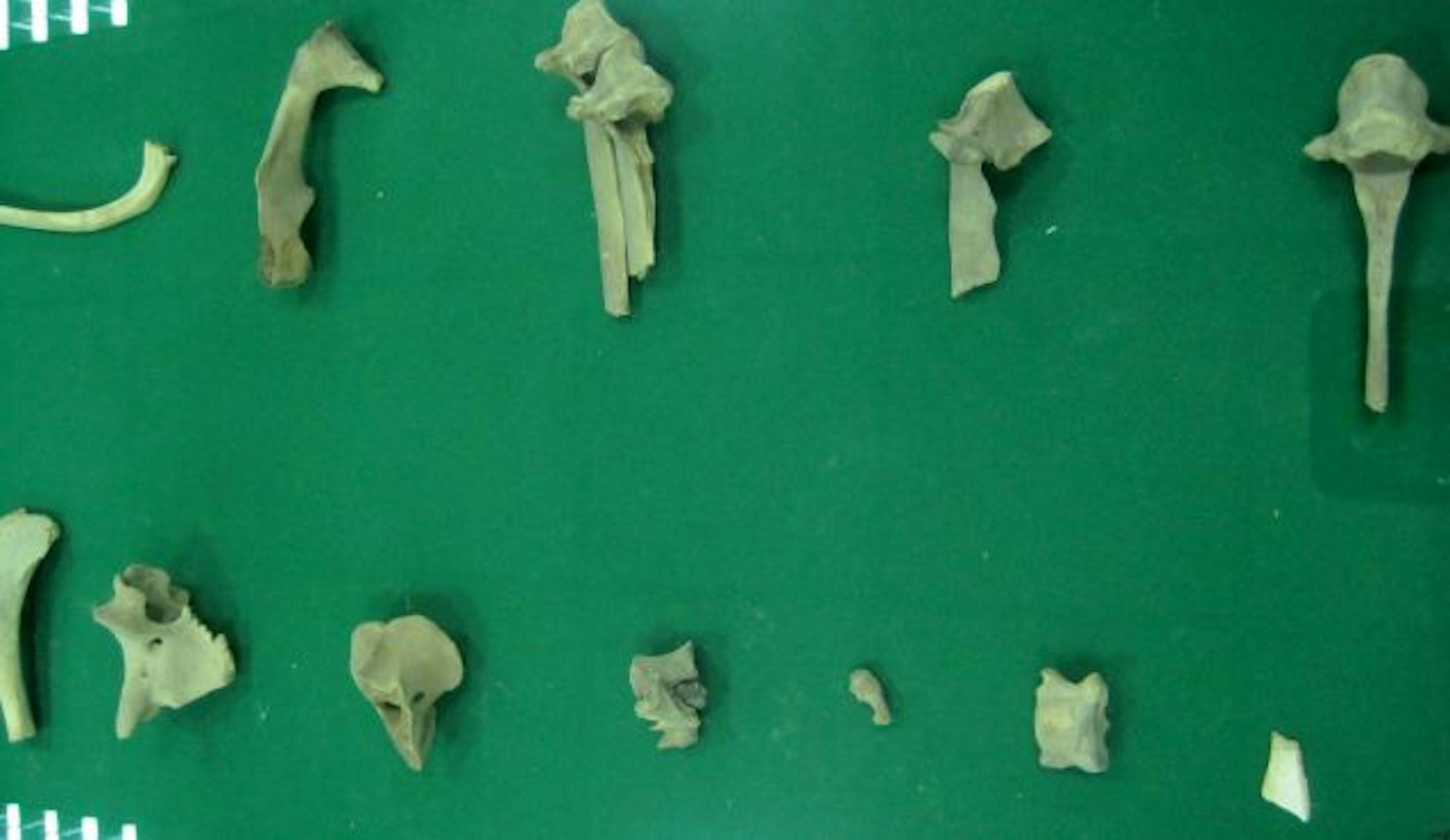
Deep inside the walled-off Green Zone, in an air-conditioned room watched by around-the-clock security, is a particularly grisly collection of Iraqi memorabilia: leg irons, bone fragments, a hangman's noose and photographs of skeletons unearthed from mass graves, some still wearing their clothes.They are relics of the most brutal periods of the Saddam Hussein era, collected by U.S. and Iraqi investigators as evidence in the dictator's trial for crimes against humanity. He was executed on Dec. 30, 2006.
The Iraqi court official who holds the only key to the evidence room says it will open to the public as a museum sometime in 2011. It would mark an extraordinary addition to the historical record of this wobbly young democracy, whose new leaders so far have been eager to scrub out nearly all signs of Saddam's three decades in power.
"This is a very long period of our history," said the court official, Sattar Jabbar. "Other generations have to know what the old regime did and what crimes were committed in Iraq."
The facility housed at the Iraqi High Tribunal, the special court set up to try Saddam and other members of his regime for atrocities, has not been named yet, but Jabbar has a suggestion: the Saddam Criminal Museum. That alone would be unique. Four years after his death, even Saddam's name, which had been affixed to countless mosques, neighborhoods and public buildings, has practically vanished from Iraq.
The history textbooks in the public schools now abruptly end in 1958, making no mention of the revolutions in 1963 and 1968 that propelled Saddam's Baath Party to power. In fact, teachers say, the words "Saddam" and "Baath" aren't mentioned once.
The evidence room, however, is lined with row upon row of official documents bearing Saddam's name and signature, always in precise red ink. One of the documents, a guide explained, is a letter from the dictator congratulating soldiers who carried out a 1982 massacre in the mostly Shiite northern town of Dujail, killing nearly 150 men and boys. It was that incident for which the tribunal sentenced Saddam to death in 2006.
Enlarged photographs


