

Governance crises cross democracies and dictatorships alike.
In Germany, voters may soon return to the polls because Chancellor Angela Merkel — the de facto leader of Europe who has governed during great growth — cannot form a coalition government.
In Venezuela, most voters just hope that democracy survives President Nicolas Maduro's political and economic destruction of what should be a relatively wealthy, thriving democracy.
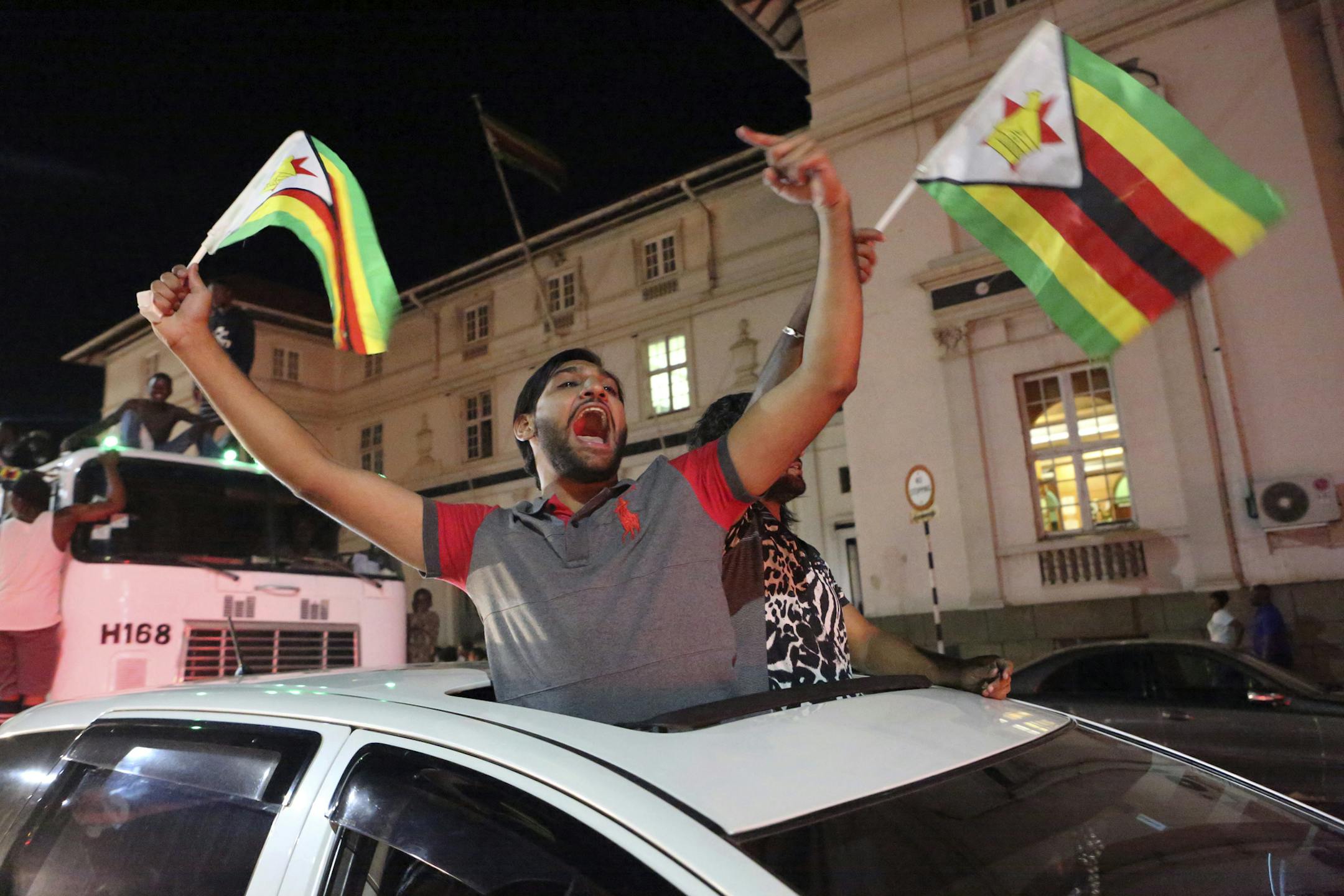
Other examples abound. So it's notable, and encouraging, when a country can overcome its crisis through relatively peaceful means. That's the case in Zimbabwe now that President Robert Mugabe has resigned after 37 years of ruinous rule.
Mugabe's presidency started out more promising: He was widely viewed as a hero in his country, throughout Africa and even by some in the West when he led an independence struggle against the white minority-rule government of what was then called Rhodesia. But soon, like far too many postcolonial leaders throughout the developing world, Mugabe turned to increasingly authoritarian methods to cement his Zimbabwe African National Union-Patriotic Front (ZANU-PF) party's rule.
The abuses continued, and escalated, for years, as evidenced in the most recent U.S. State Department Human Rights Report, which stated: "The most important human rights problems remained the government's targeting members of non-ZANU-PF parties and civil society activists for abduction, arrest, torture, abuse and harassment; partisan application of the rule of law by security forces and the judiciary; and restrictions on civil liberties, including freedoms of expression and assembly."
Among those enforcing this misrule was Emmerson Mnangagwa, vice president until he was recently fired by Mugabe in a move that triggered a military takeover. Parliament had begun impeachment proceedings after Mugabe stunned the country by refusing to yield power, so there was a legitimate political process in place to oust Mugabe.
Semantically, Mnangagwa's backers are avoiding calling what has transpired a coup due to the potential regional repercussions. But there is no doubt that forces siding with Mnangagwa in a power struggle with those loyal to Mugabe (and Grace, his wife, who was to be his successor) took control.


