

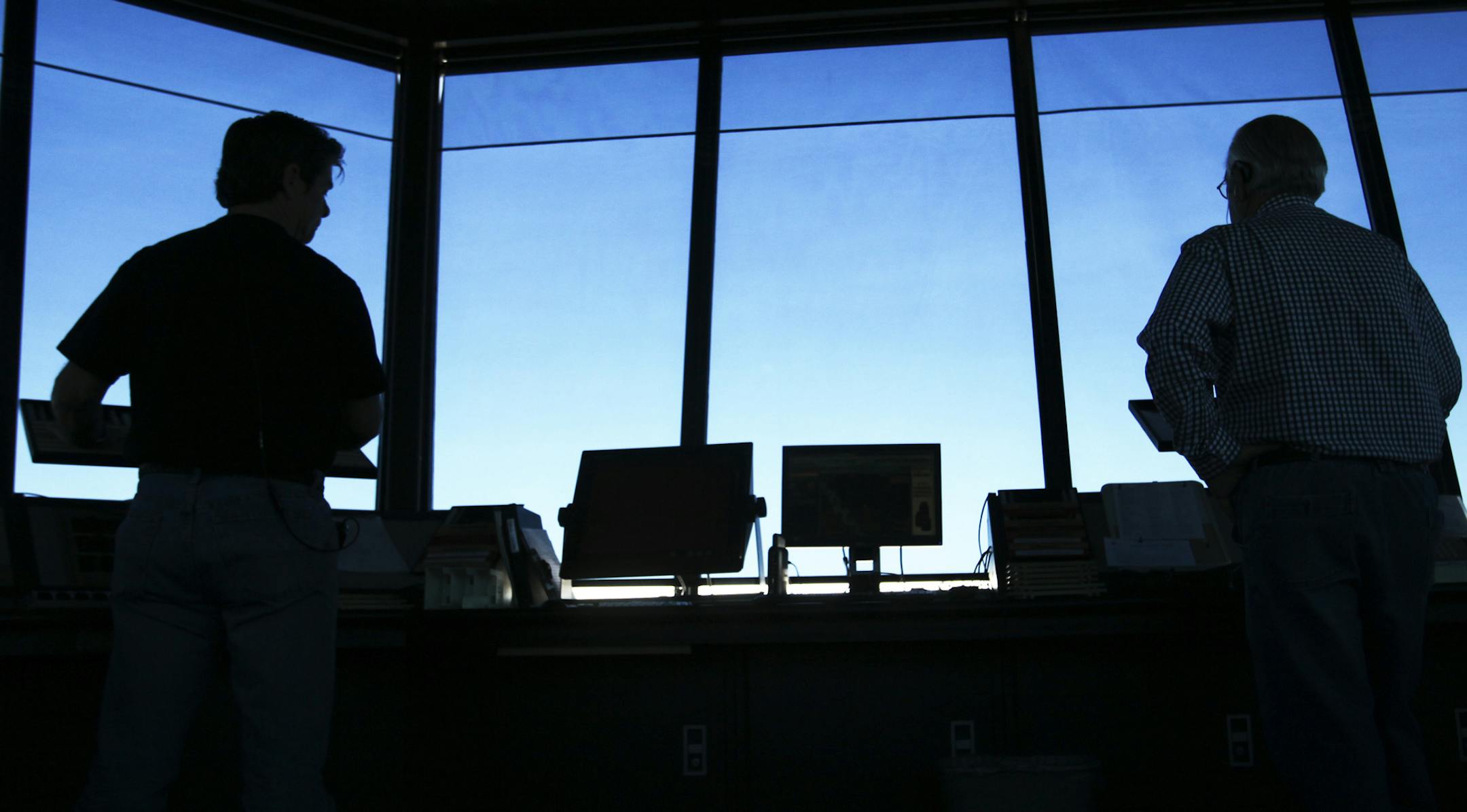
The latest and most comprehensive report of air traffic control problems reveals that planes flew too close to each other more often around Minneapolis-St. Paul International Airport than at most of the nation's busier airports.
Minneapolis-St. Paul ranked 13th in plane traffic but saw more problems than nine of the 12 busier U.S. airports.
The incidents were discovered by a new safety system that stresses greater use of automation and voluntary reporting to detect and document air traffic control problems. Nationwide, reported incidents more than doubled under the increased scrutiny.
The Federal Aviation Administration (FAA) withheld details of problems at each airport when it announced the overall numbers last September. The FAA recently released a breakdown in response to a Freedom of Information Act request by the Star Tribune.
The agency didn't offer a specific reason for the higher numbers at the Minneapolis-St. Paul tower.
"Each airport has a unique set of operational procedures and runway configurations, which may be further complicated by flight paths from surrounding airports, local noise procedures and a high density of operations," FAA spokeswoman Laura Brown said when asked about MSP.
But current and former air traffic controllers say the airport's layout, urban location and heavy reliance on two runways can create a more challenging environment than airports with more room to maneuver.
"It's more of a downtown airport, that makes it more complicated," said William Schroeder, who teaches air traffic control at the University of North Dakota's School of Aerospace Sciences.


