

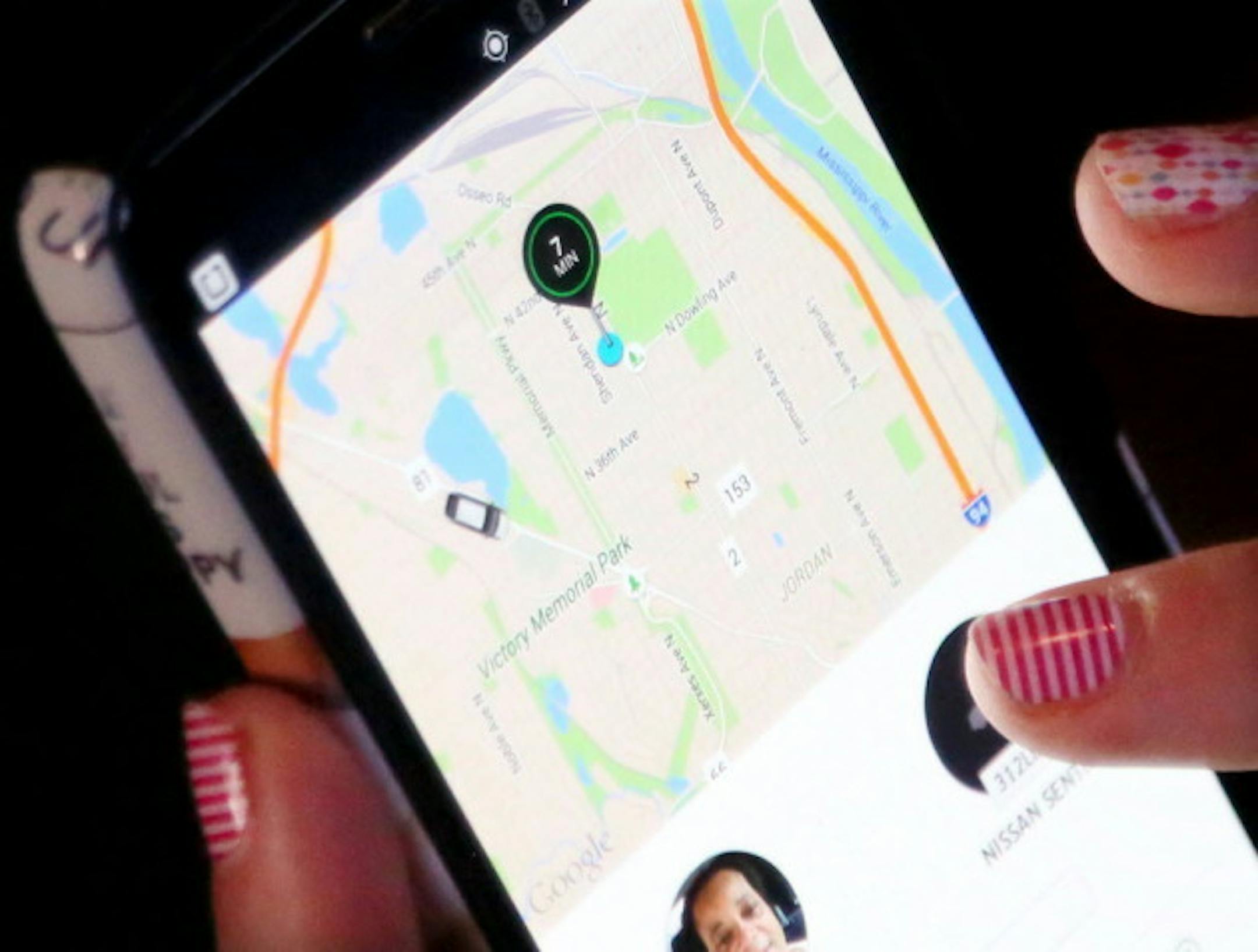
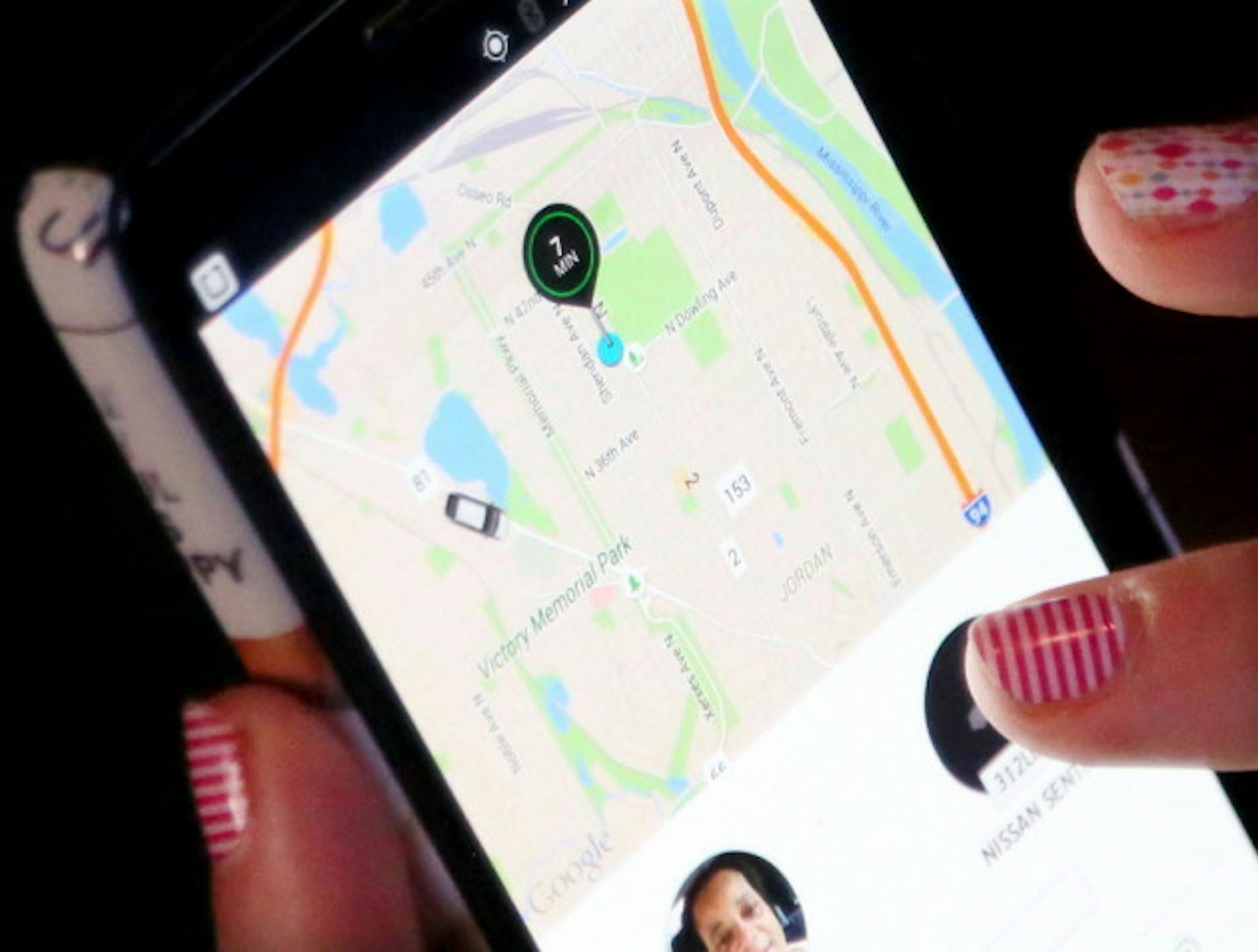
A year after Minneapolis approved ride-sharing services Uber and Lyft, city officials say they've fielded no complaints over peak-hour price surges or failures to pick up people who have requested a ride.
Minneapolis was one of the first cities in the country to legalize the businesses, which allow drivers to use their own vehicles and require passengers to summon a ride using smartphone apps.
In a City Council committee meeting Tuesday, a licensing official said the city is pleased with how Lyft and Uber have operated, including in terms of how quickly they pick up passengers.
A recent Star Tribune review of pickup data submitted by the services showed that drivers tended to stick to the highest-traffic areas of the city and were more likely to avoid certain neighborhoods, including some in north Minneapolis.
But Pat Hilden, a city district licensing supervisor, said regulators recently ran a "secret shopper" operation on the north side, putting in four requests for Uber and four more for Lyft rides at different times of the day and night. On average, the inspectors heard back from drivers in a minute and were picked up in five minutes. The longest wait for a ride was 12 minutes.
In a separate series of inspections, city staff members summoned 10 rides and found a number of violations. The most common were failing to comply with "trade dress" — meaning that the driver didn't have the required stickers in car windows (or, in the case of Lyft, a pink moustache officially referred to as a "cuddlestache.")
Other violations included those for drivers who couldn't come up with proof of insurance or an inspection sheet for the car.
Hilden said the city is confident all of those issues will be fixed.


