

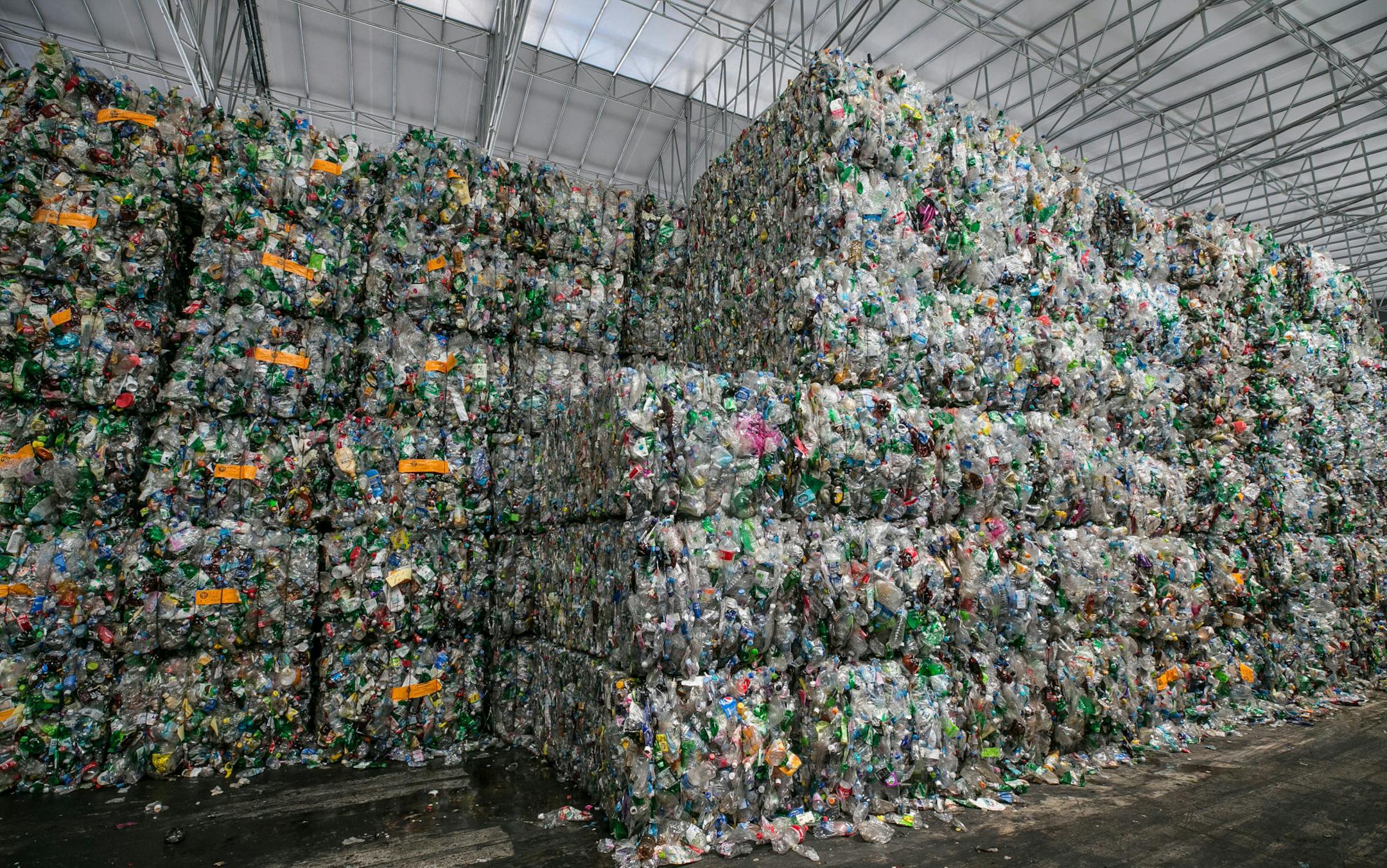
Plastic recycling is evolving. The next step will be more like reincarnation.
At least 60 chemical companies are racing to develop technology that can return trash to its original hydrocarbon ingredients. The process — call it the unmaking of plastic — creates clean, virgin resin that can be used for new products, avoiding the need to pump oil for endless fresh batches.
The stakes couldn't be higher for an industry under attack for producing a ubiquitous material that has grown notorious for choking the world's oceans and killing its animals. Resin makers and consumer brands are trying to head off a global backlash that's already eroding demand for their products.
"If they don't play an active role in this, they're going to see brands and customers de-select plastics," said Ellen Martin, a vice president for Closed Loop Partners, an investment firm. "It's a threat to their overall business." A $120 billion market opportunity for recycled materials awaits successful technologies, Closed Loop said.
Old-fashioned recycling, sometimes called "chop and wash," is a relatively crude, mechanical system that can't handle most varieties of resin and can't get rid of all the contaminants, resulting in dirty plastic with limited uses. So, yogurt tubs are sent to the landfill and milk jugs are made into plastic lumber.
Less than 10 percent of plastic in North America gets recycled, generating one pound of recycled plastic for every 15 pounds of demand, Closed Loop found in its study. That falls woefully short at a time when manufacturers like Coca-Cola Co. are committing to using more recycled plastic.
Pressure is rising on plastic makers to come up with new solutions.
"We won't be able to get there unless we're able to do something that goes beyond the traditional mechanical recycling systems we have today," said Tim Dell, vice president of corporate innovation at Eastman Chemical Co.


