

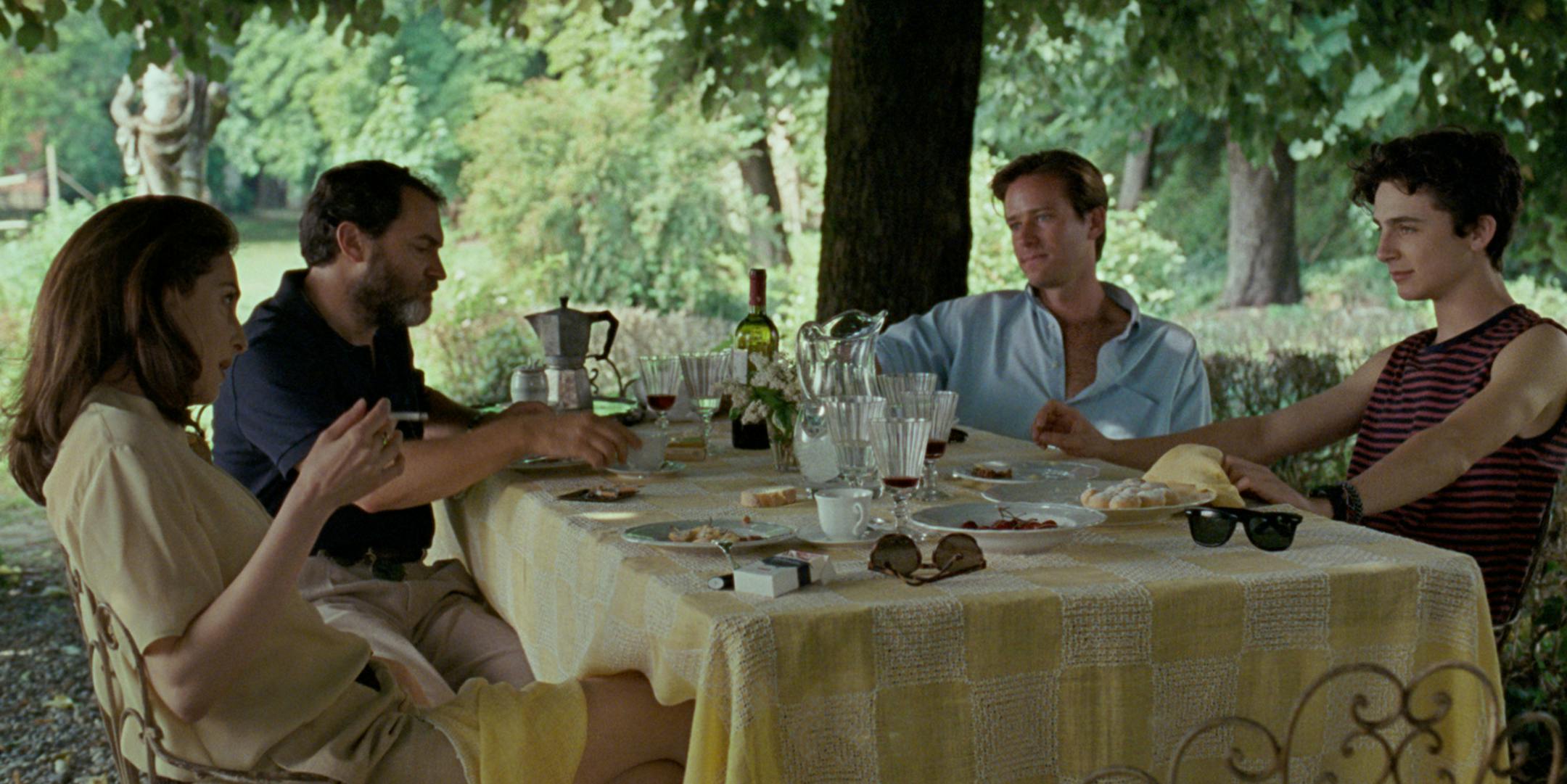
"Remember," a father says to a son. "Our hearts and our bodies are given to us only once. … And before you know it, your heart is worn out. And as for your body, there comes a point when no one looks at it, much less wants to come near it. Right now, there's sorrow. Pain. Don't kill it, and with it the joy you've felt."
If the Luca Guadagnino movie "Call Me by Your Name" wins an Academy Award, it will be in part because of that unspeakably tender scene wherein a father, a father with his own struggles and regrets, tries to tell his gay, 17-year-old son that he is not alone.
Although the screenplay to the movie is by James Ivory, this piece of dialogue comes pretty directly from the 2007 Andre Aciman novel upon which the film is based. It's pretty much a restatement of a philosophy often associated with the English romantic poet John Keats, who wrote in the poem "Ode on a Grecian Urn":
Bold Lover, never, never canst thou kiss
Though winning near the goal yet, do not grieve;
She cannot fade, though thou hast not thy bliss,
For ever wilt thou love, and she be fair!
In other words, among the many paradoxes of life is the truth that you cannot feel joy without also knowing sorrow. One invariably accompanies the other. Both are better than feeling and experiencing nothing, or even just operating within a risk-free middle ground. This is what most of us want to teach our children.


