
Advertisement

Mourning 101: Paying your respects

When it comes to memorial services, there are many questions to answer, such as whether you should even go.

Chicago Tribune
February 1, 2012 at 4:31PM
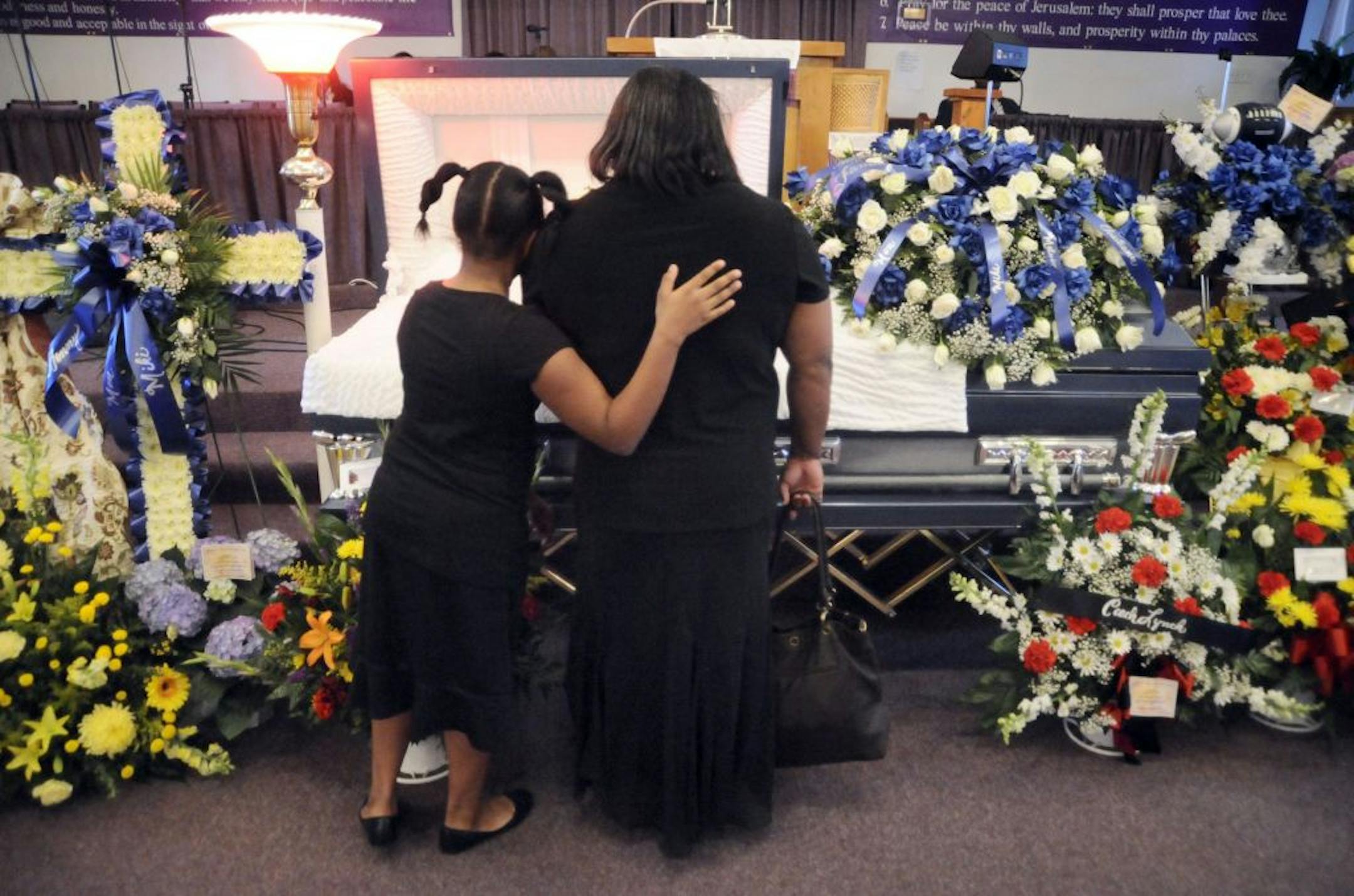
Lynette Hinton, right, is comforted by Jariah Pack while looking at the casket of miner William Roosevelt Lynch of Oak Hill, W.Va.
Lynette Hinton, right, is comforted by Jariah Pack while looking at the casket of miner William Roosevelt Lynch of Oak Hill, W.Va. (Associated Press - Ap/The Minnesota Star Tribune)
Advertisement

There will be a time, many times actually, when a friend, co-worker or casual acquaintance will face the death of a loved one.

There will be mourning. There might be a visitation or memorial service, perhaps reflecting religious, family, cultural and regional traditions.

You will wonder whether to attend one of these social gatherings -- or you should -- whether the deceased is a cousin you haven't seen in five years or a co-worker's parent whom you've never met.

"If it was your mother's [service], would you expect to see your co-workers? If you can answer 'yes' to that question, then you should go," said funeral director James Olson, a spokesman for the National Funeral Directors Association and owner of the Lippert-Olson Funeral Home in Sheboygan, Wis.

Such gatherings "are about the living and giving them a chance to express their grief -- or it may be an expression of joy for a life well lived," he said. "For the person who is mourning, it is very important to know there are people who support them. But it also gives the greater community an opportunity to share in that grief."

Olson answered a few more questions:

Do I have to dress up? "Out of respect for the family, put a little effort into getting ready," he said, and wear something more dressy than shorts and a T-shirt.

What do I do at the gathering? "Sign the guest book to let them know you're there," he said. "Then wait in line and express your condolences. You don't have to stay, [but showing up] at least lets the family know you were thinking about them in their time of need."

Advertisement

What do I say? "The best thing: 'I am truly sorry for your loss.'" Also, if you can, Olson suggested mentioning something about the deceased: "I really loved your mother's garden and her beautiful flowers," or, "I loved how your dad was always washing his cars."

"Keep it simple," he advised. "Stick to what you know."

Are there things I shouldn't say? Refrain from asking probing questions about the illness or death. A grieving family member might not want to keep repeating unpleasant details of her mom's final days.

Also, don't say things such as, "I know how you feel. I lost my mom, too." Your loss is different from someone else's loss, and it's not about you. "At that particular moment, to be honest," Olson said, "someone doesn't want to hear about someone else's loss."

What about cultural/religious/regional differences? "It's my experience that families are not there at that time to judge you," Olson said, adding that the funeral director is usually present to provide guidance to visitors.

Can't I just fill in comments on the funeral home's website? Online guest books are conveniences, especially for those who live far away, Olson says, "but those [websites] shouldn't be the opportunity to opt out of attending a visitation or memorial service."

Advertisement

Do I have to go to the funeral? "Unless you're a family member or particularly close to the family, it's not expected," he said.

Anything else? Turn off your cellphone. "There should be nothing more important than what we're there to do," Olson said, recalling a minister at a local church who, when someone's phone rang in the middle of a service, stopped and said, "That better be God calling."

about the writer

about the writer

JUDY HEVRDEJS

Advertisement