

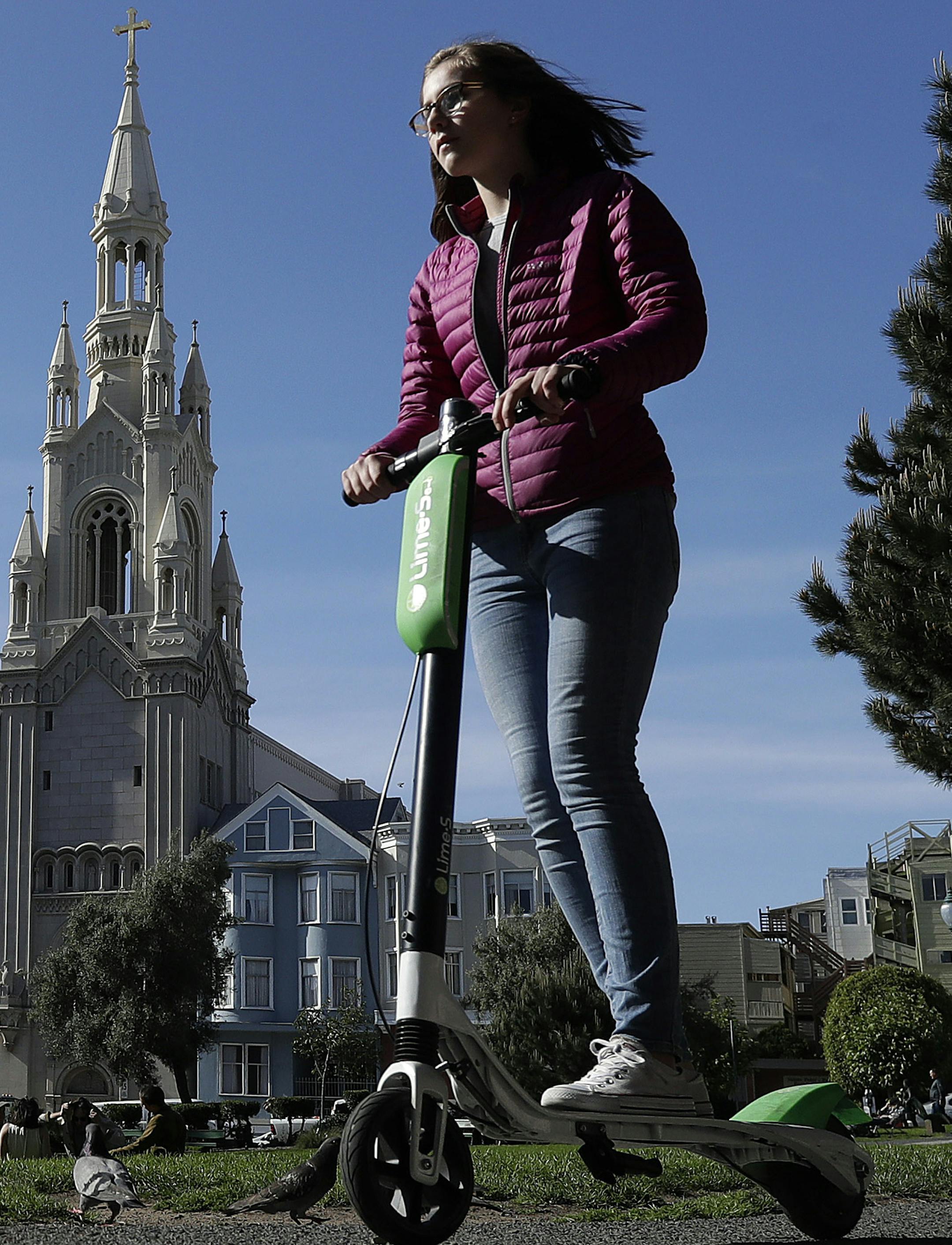
A lawsuit targeting electric scooter-sharing companies seizes on the dangers of zipping around town on two wheels and brings gory detail to one of the more polarizing technology trends to emerge over the last year.
Nine people injured by electric scooters filed a class-action suit on Oct. 19 in Los Angeles County Superior Court. It accuses startups Bird Rides and Lime, and their manufacturers Xiaomi and Segway, of gross negligence, claiming the companies knew the scooters were dangerous and deployed them in a way that was certain to cause injuries.
In the U.S., hundreds of riders and pedestrians have landed in the hospital with injuries ranging from severe gravel rash to knocked-out teeth, ripped out toenails and detached biceps.
Three people died in September while riding scooters in Dallas, Cleveland and Washington, D.C.
There is no official tally on the number of scooter-related injuries in the country since hospitals code their patients based on the type of injury they are admitted with, rather than what caused it. But one metric Bird and Lime have been closely tracking is the number of rides their scooters have handled: more than 20 million combined and growing daily.
Electric scooters have appeared in more than 100 cities worldwide with the startups aiming to usher in an environmentally friendly era of micro transportation. After a remarkable one-year ascent, Bird and Lime are now two of the youngest startups to earn unicorn status in Silicon Valley with valuations of $2 billion and $3 billion or more, respectively.
The rapid rise of the scooter revolution has been plagued by controversy, complaints and concussions. Citing fears over public safety, some cities, including San Francisco, have temporarily banned electric scooters and filed criminal complaints against the companies behind them for operating without a business permit. "These companies are putting profit over safety," said Catherine Lerer, the personal injury lawyer at McGee Lerer who represents the plaintiffs.
Bird and Lime say safety is a top priority.


