Q: Do birds re-use their old nests? After watching how hard they work to build a nest, it seems it would make sense for them to use it again.
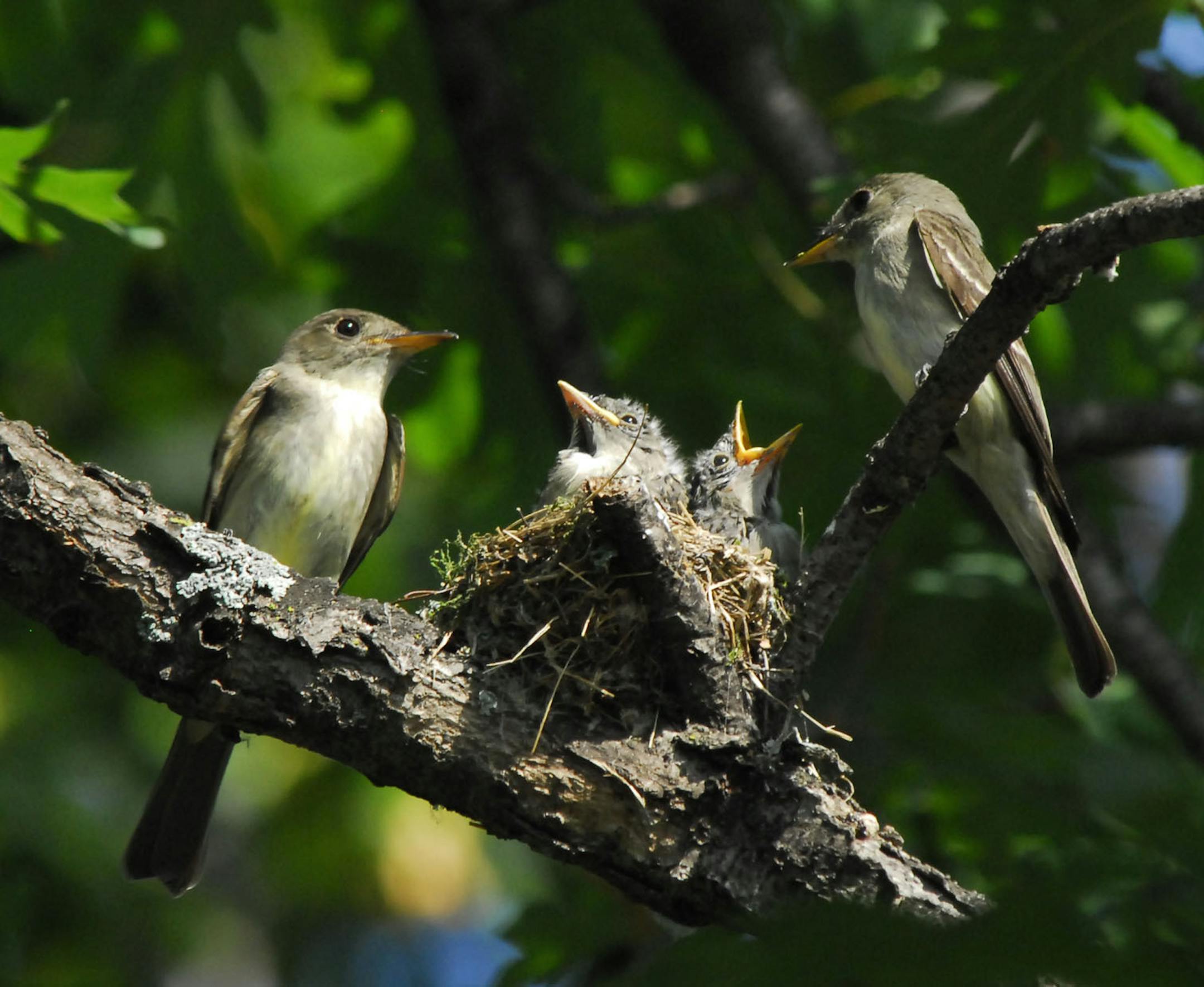
A: Good question, and in almost all cases, once young birds head out into the world, that's it, their nest is never used again. If you've had a chance to look into a used songbird nest, you'll see why: After young birds fledge, their nests are in pretty bad shape, fouled by nestlings' dried poop and invaded by insects. The walls are usually mashed down under the pressure of youngsters' feet. For these reasons nests are built to last only one season. There are exceptions, the most notable being bald eagle nests, as well as those of great blue herons, osprey and other large hawks, many of which re-use their nest for many years. Some birds that nest very late in the summer, like the cedar waxwing, have been observed pulling apart abandoned songbird nests to scavenge building materials.
Life spans
Q: It occurred to me to wonder about the life spans of two of my favorite back-yard birds, the blue jays and the cardinals.
A: Like all birds, blue jays and cardinals suffer very high mortality during their first year of life — there's a steep learning curve in confronting the many dangers in their world. But if they make it past their first birthday, then blue jays are fairly long-lived, with seven years being their average life span. (The oldest known wild blue jay lived for 17 ½ years.) Cardinals don't live as long, averaging three to four years, but birds as old as 15 have been captured in bird banders' nets. Cardinals are such conspicuous birds and very visible to predators, which may help explain their shorter lives.
Sap sipper?
Q: It always makes me chuckle when I hear or see the phrase "yellow-bellied sapsucker," because it sounds like something from an old cartoon. Does this bird really suck sap?
A: Even though it has plenty of comic potential, the name of the yellow-bellied sapsucker is very apt. This woodpecker drills holes in trees and licks up the flowing sap. But it's not really a sapsucker, more of a sap sipper, using its tongue to absorb sap much like a paintbrush picks up paint.
Homemade 'Halo'
Q: Sparrows have completely taken over my feeders and I don't know what to do, short of taking them all down. Several people have told me that those "halo" devices don't work for them. Can you help?
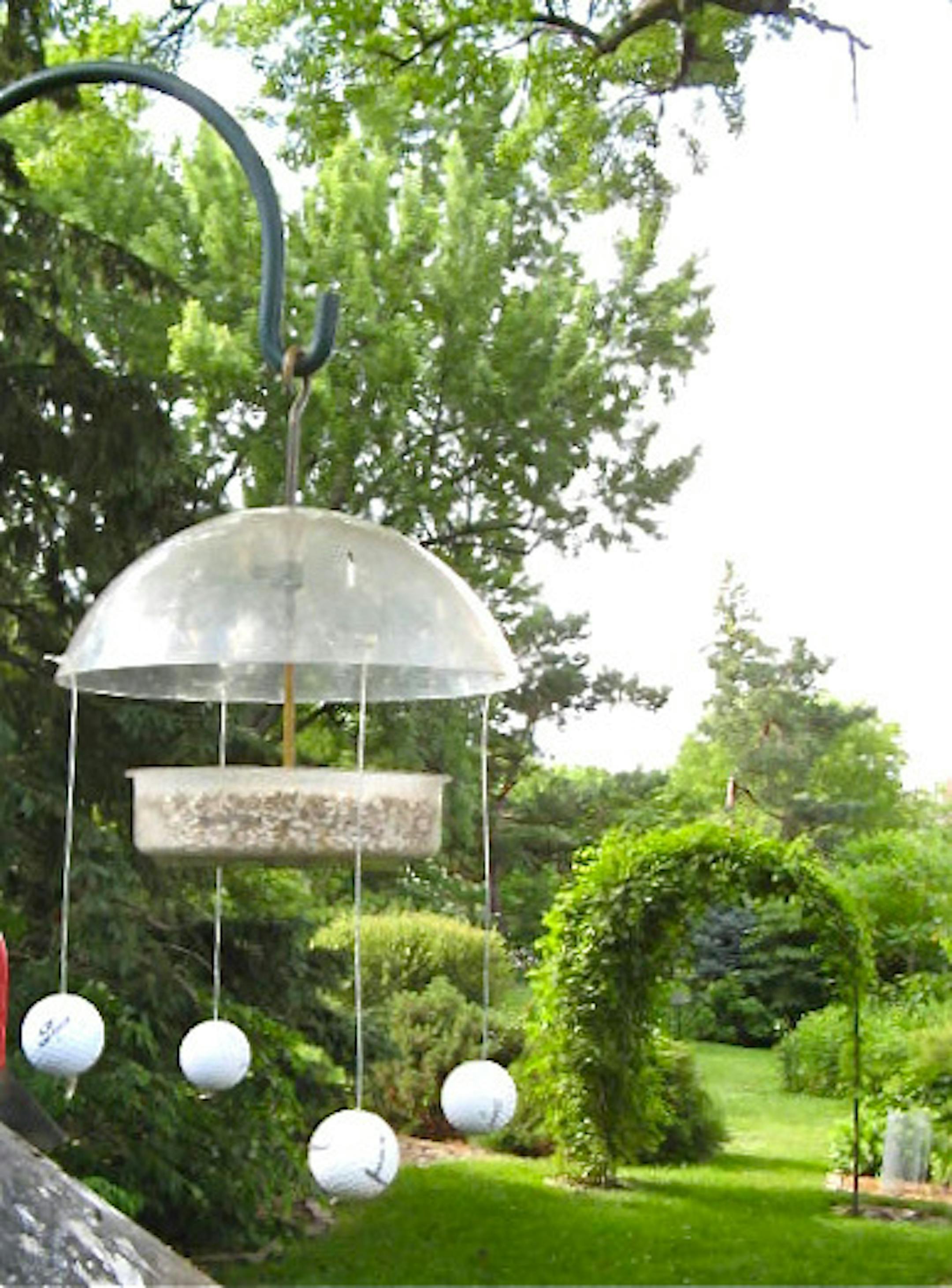
A: I've heard good things about this pest-deterring product, but several readers have written that it doesn't work on their sparrows. I was thinking of buying one to test it, but my husband wanted to try making a homemade version first. He used old golf balls tied to filament line (the kind used in weed whackers), first drilling a hole through each ball, and then threading the line through the ball and knotting it. Next he drilled four holes in the feeder's domed roof and strung the lines through each hole and knotted each end. The balls hold the line down on four sides of each feeder, and this homemade halo is doing a great job of deterring the local sparrows. The theory behind this is that sparrows aren't very adept fliers and prefer to avoid obstructions. For the price of four old golf balls and a package of line you may have the secret to a sparrow-free feeder.