

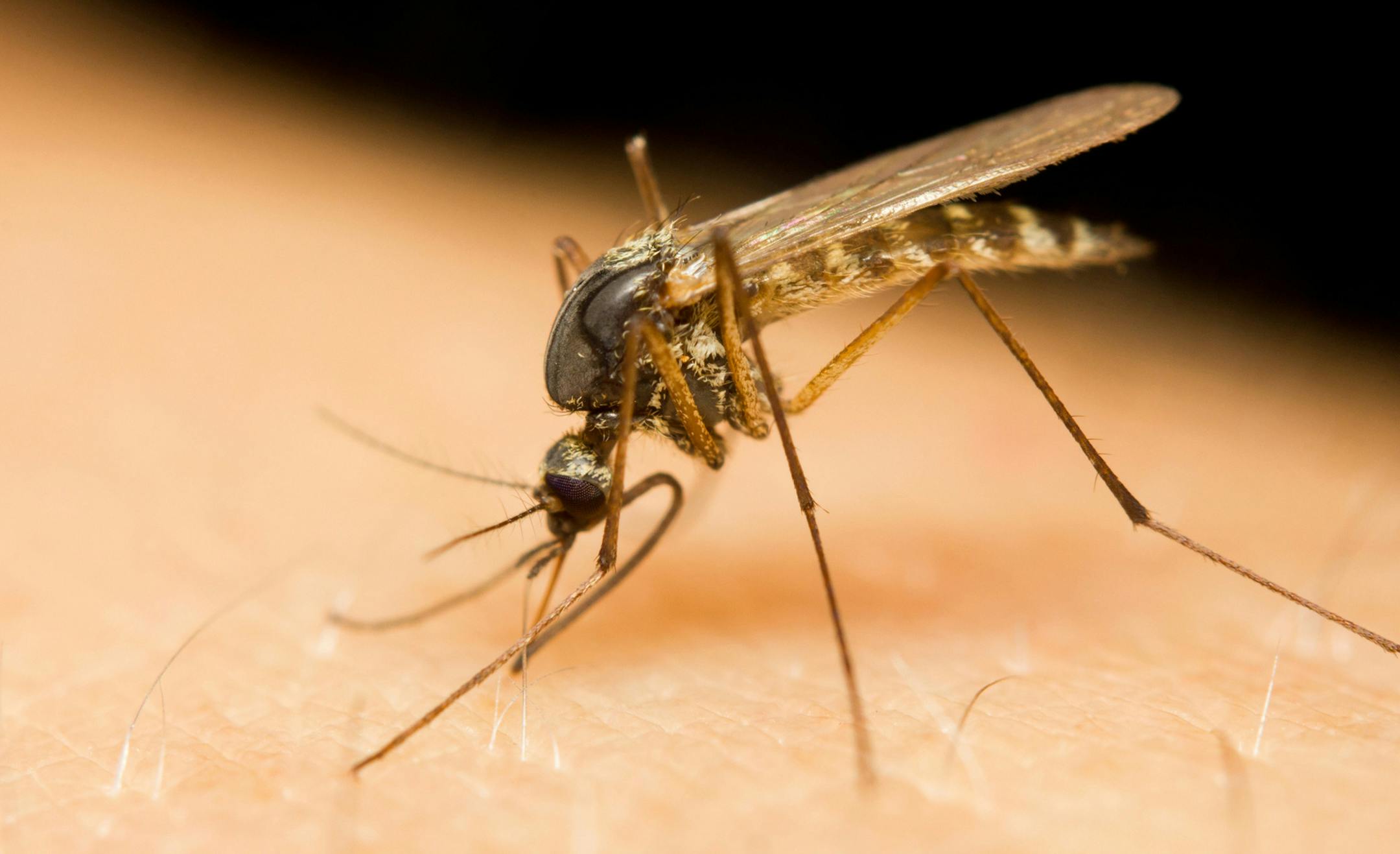
Spray on the repellent and wear light-colored clothing if you're headed outdoors this weekend because mosquito larvae will be hatching and the newborns will be looking for lunch.
Recent heavy rains combined with warm weather will bring out a healthy brood of biting pests that are just itching to fly, said Mike McLean, a spokesman for the Metropolitan Mosquito Control District.
"We will see more numbers of them than we have so far," McLean said. "We are on the cusp of them coming out."
The insects lay their eggs in water and there has been plenty of that in recent days to generate a bumper crop.
The Metropolitan Mosquito Control District has been doing its part to stay ahead of the expected population burst by spreading granular pellets laced with a bacterium called Bacillus thuringiensis israelensis, or Bti for short. Larvae ingest the pellets that feature a texture resembling a Grape-Nuts flake, killing them on the spot. Bti, however, won't kill any other bugs and it's not lethal to humans, McLean said.
The district has used six helicopters to drop Bti over swamps, marshes and other areas prone to mosquito development. The district has treated more than 40,000 acres in the seven-county metro area in the past few days with airdrops and crews on the ground.
But larvae feed on the bacterium only while they are small and still in the water. Once big enough to fly they stop eating it and come after us, McLean said.
It's kind of like fighting crabgrass, he said. It takes only seven to eight days for larvae to grow big enough to fly, so the window of opportunity to catch them is small. The treatment has to be put down at just the right time.


