

CAIRO – Egypt's new military-backed government had hoped trying Mohammed Morsi would close the chapter on his presidency. Instead, the trial of the ousted Islamist president on charges of inciting murder, which begins Monday, is only compounding their troubles.
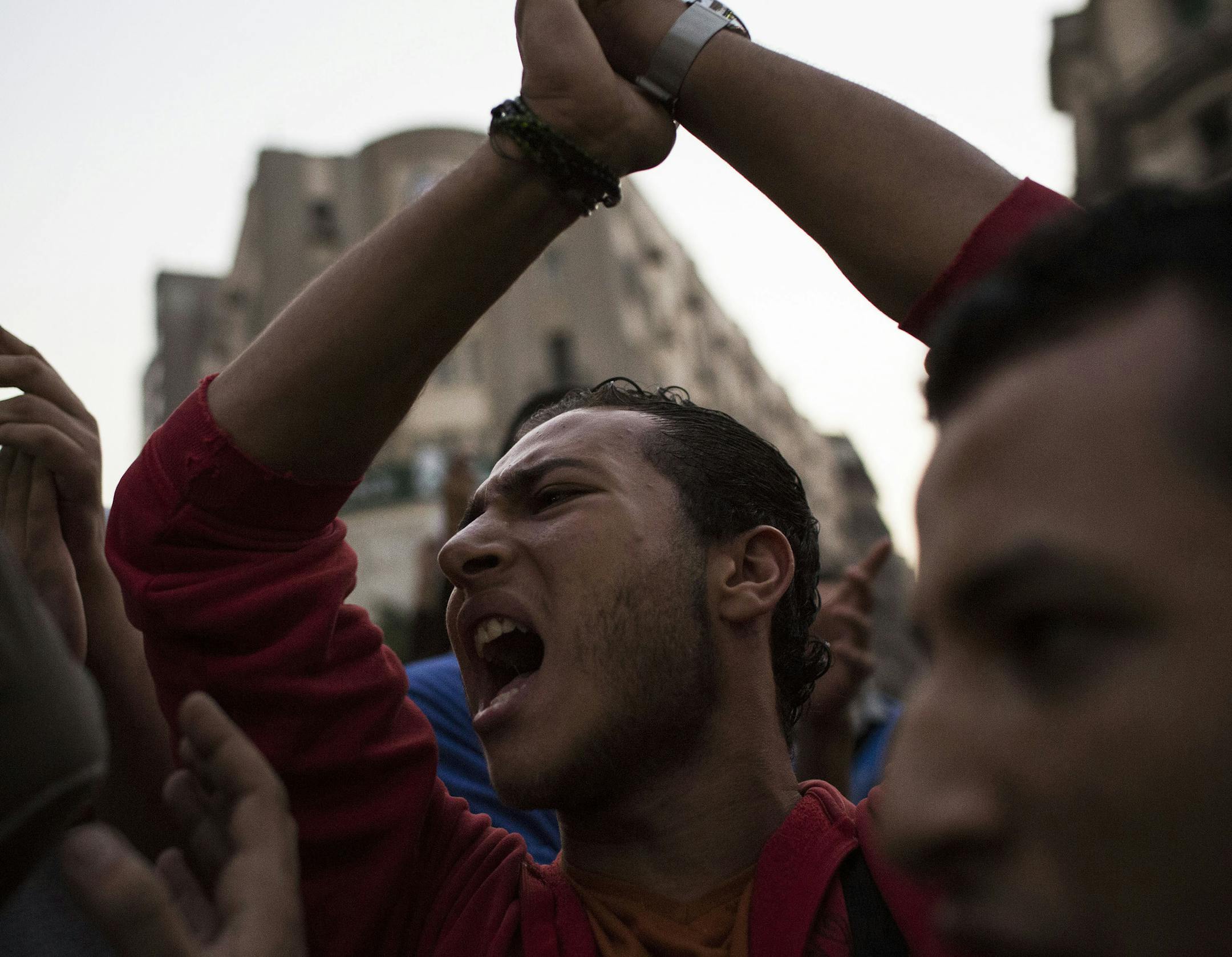
Morsi's supporters plan widespread protests on the day of the trial, threatening to disrupt the proceedings. Security concerns are so high that the venue for the trial has still not been formally announced, though it is expected to be held in a heavily secured police academy in Cairo.
Then there is the political risk of Morsi's anticipated first public appearance since the military deposed him on July 3 and locked him in secret detention, virtually incommunicado. Morsi will likely represent himself in the trial, the first time public figure to do so in the host of trials of politicians since autocrat Hosni Mubarak's ouster in 2011, Brotherhood lawyers say. He will use the platform to insist he is still the true president, question the trial's legitimacy and turn it into an indictment of the coup, further energizing his supporters in the street.
If Morsi is not brought to court at all, his absence will further throw into question the fairness of a trial that rights experts say is already in doubt. Morsi's Brotherhood has denounced the trial as a farce aimed at political revenge.
During four months of detention in undisclosed military facilities, Morsi has been extensively questioned and has not been allowed to meet with lawyers. Virtually his only contact with the outside world was two phone calls with his family. Brotherhood supporters have called the detention an outright kidnapping, and Morsi has refused to cooperate with his interrogators.
Rights groups say the first test in the trial will be if the judge rules whether Morsi should be brought out of secret detention and moved to a regular prison during the trial. Authorities have said military detention is necessary for security reasons in the country's turmoil.
Further weighing on the trial's fairness, Morsi will be tried in a judicial system stacked with his adversaries, with whom he clashed repeatedly during his yearlong presidency. Rights activists — even ones who believe Morsi should be tried for abuses during his presidency — fear the proceedings are more concerned with retribution than justice. And the trial is taking place in the atmosphere of a widescale crackdown on the Brotherhood and its Islamist allies in which several thousand have been arrested and hundreds killed.
For the military-backed government, the trial is key to showing its plan for transition toward democracy is on track. Authorities want to show the international community, sharply critical of the anti-Brotherhood crackdown, that they are justified in moving against the Islamist group by proving Morsi committed real crimes.


