

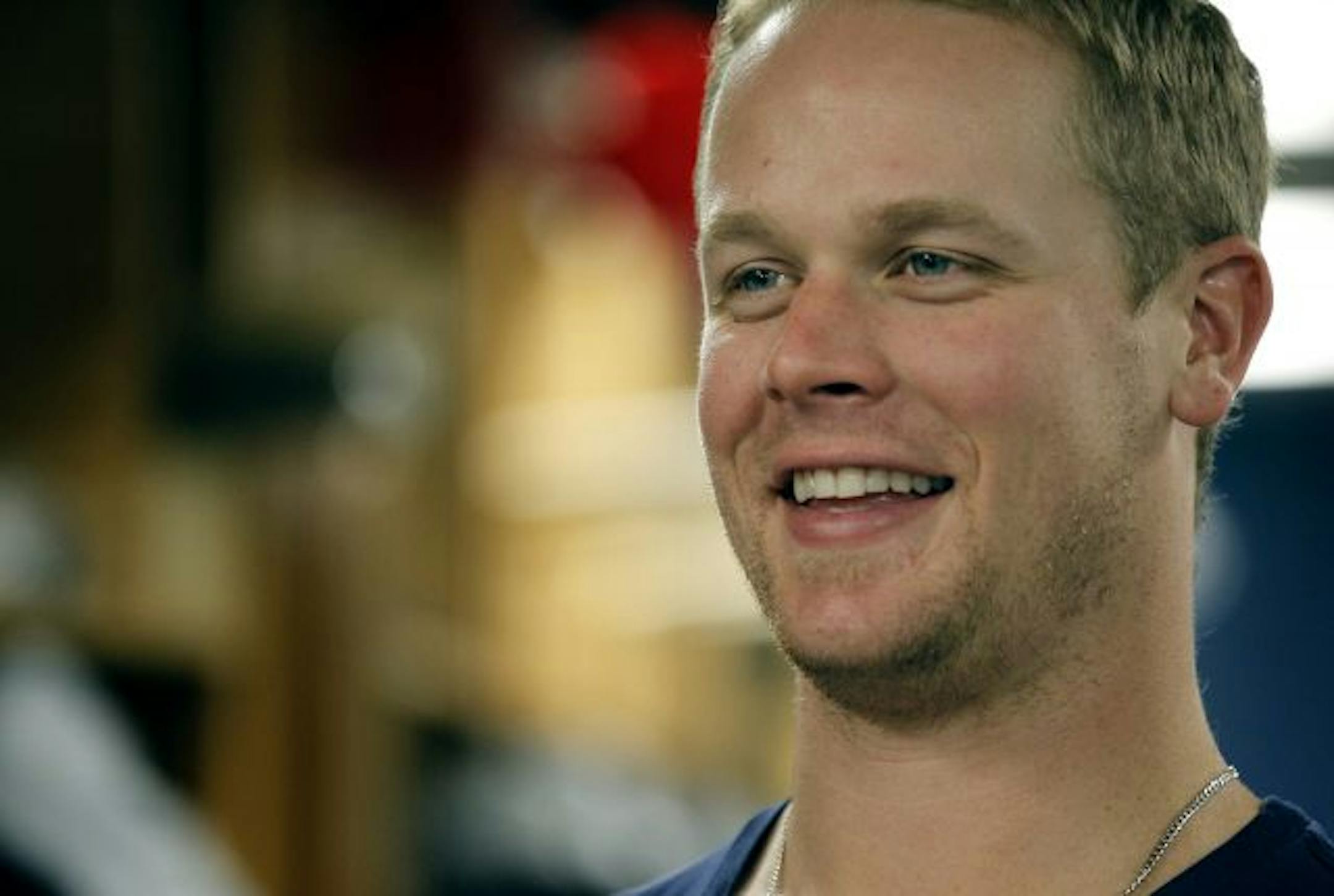
On July 7, 2010, Justin Morneau slid into second base at Rogers Centre. Toronto's John McDonald, trying to turn a double play, kneed him in the head.
That innocuous collision cost Morneau almost three months of the season, a chance to dress for the playoffs and the ability to live a normal life in the fall.
On Monday, more than seven months later, Morneau arrived at Twins camp and said his concussion will keep him from playing in the Twins' early spring training games, putting him about seven months behind his initial plan for recovery.
When Morneau reflects upon the randomness of his injury and the fragility of his career, here's what he should think:
"I am one lucky human being."
In terms of sports concussions, and their treatment and diagnosis, Morneau is fortunate to live in an age of enlightenment.
Had Morneau suffered a debilitating concussion in a previous era, he might have been considered by the crustier elements in the game to be a malingerer. Despite Morneau's reputation as an admirable competitor, someone would have accused him, privately if not publicly, of being a wimp.
He would have felt compelled to try to play despite a bruised brain. He might have failed as a player, or relapsed as a patient. He might never had been the same again.


