
More than 100K Minnesotans receive first COVID-19 vaccine doses

Gov. Tim Walz praised plans to release federal reserve supplies of COVID-19 vaccine to states.

January 8, 2021 at 6:12PM
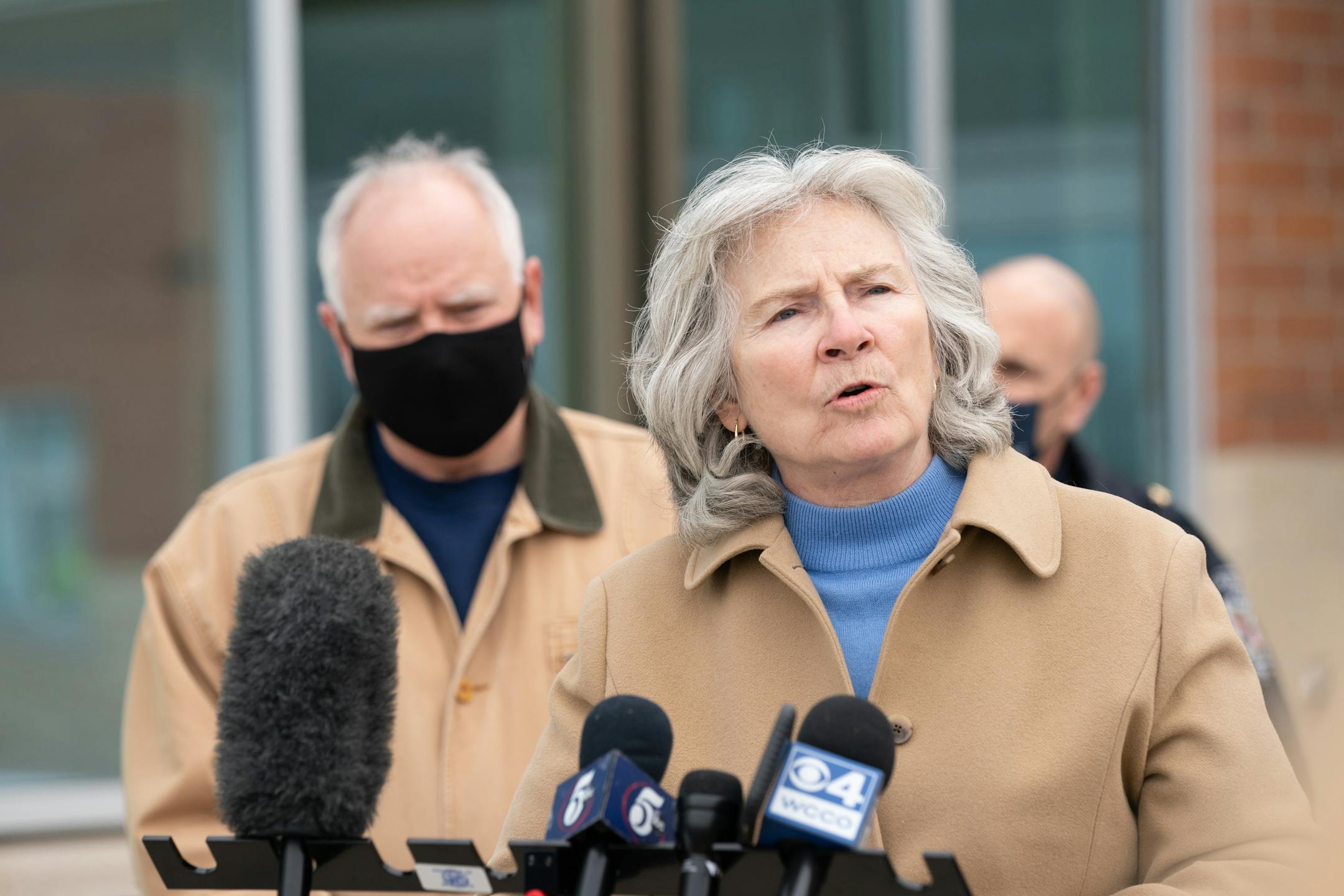
Governor Tim Walz and Minnesota Health Commissioner Jan Malcolm answered questions about the change to use vaccines as they get them, rather than reserve a second dose for recipients. They visited a COVID-19 vaccine clinic where EMS-certified first responders received the Moderna vaccine.
Minnesota Health Commissioner Jan Malcolm and Gov. Tim Walz answered questions Friday about the change to use vaccines as they get them, rather than reserve a second dose for recipients. (Glen Stubbe, Star Tribune/The Minnesota Star Tribune)

Gov. Tim Walz on Friday praised plans to release federal reserve supplies of COVID-19 vaccine to states, even though Minnesota surpassed 100,000 shots on Friday and is on track to vaccinate its first wave of health care workers and nursing home residents.

While the reserve supply is meant to guarantee on-time second injections of the two-dose COVID-19 vaccine, Walz and state Health Commissioner Jan Malcolm said it is worth the risk to provide more first shots now and rely on the manufacturers to replenish the supply.

"We're trusting what we're hearing from our federal partners," Malcolm said, "that there is enough in the supply chain to make them confident that the second doses can be accounted for."

Walz and other governors had asked for the earlier release of the reserve doses on Thursday, and President-elect Joe Biden said he would plan to distribute them after he takes office later this month.

The governor spoke while visiting a vaccination site for emergency medical workers at Wayzata High School, where nurses told him they could expand their capacity if they had more vaccine in hand. Along with a similar clinic in Eden Prairie, the two sites have provided more than 1,300 shots so far.

Biden's plan is the latest effort to stretch the vaccine supply amid public impatience and a COVID-19 pandemic that has cooled in Minnesota this winter but is reaching record levels elsewhere in the U.S.

Walz urged patience but told people "your sense of urgency is healthy and right and we feel it, too."

Other nations are delaying second doses to provide more first doses, despite concerns that it could reduce protection against the coronavirus that causes COVID-19.
Second doses of the Pfizer and Moderna COVID-19 vaccines are supposed to be provided at three and four weeks after the first doses, respectively. Pfizer's clinical trials showed the first dose was 52% effective and the second dose was about 95% effective when following that schedule.

Providers in the U.S. also are trying to squeeze extra doses from excess vaccine in the five-dose Pfizer vials and 10-dose Moderna vials.

Health officials remain concerned that holiday gatherings increased transmission of the novel coronavirus, which has caused 5,620 deaths and 431,944 diagnosed infections in Minnesota. That includes 48 deaths and 2,387 infections reported on Friday.

The positivity rate of diagnostic testing has increased in Minnesota from 4.7% on Dec. 24 to 6.9% on Dec. 30.

On the other hand, the number of Minnesota hospital inpatient beds filled with COVID-19 patients has dropped from 1,863 on Nov. 29 to 759 on Thursday.

The trends were positive enough for Walz to dial back some pandemic restrictions — allowing bars and restaurants to reopen indoor service at 50% capacity starting Monday. While the full impact of the holidays on viral transmission might not be known for another couple weeks, the governor said he didn't think he could wait any longer to scale back restrictions.

"This last turn of the dial was hard on people," he said.

Impatience over the rate of vaccination has emerged in part because state data shows a gap between the number of doses allocated to Minnesota and the number provided. State health officials agreed that the pace of vaccination needs to pick up, but stressed that the gap is misleading.

The 396,350 doses allocated to Minnesota as of this week includes shipments that won't arrive until later next week. The process of reporting and verifying vaccinations means that the official tally of 104,226 doses administered so far is an undercount.

Most are first doses, but providers are starting to provide second doses to people who received initial shots in mid-December.

The state count also doesn't include vaccinations at federal facilities that have their own supplies. Cass Lake Indian Health Services in northern Minnesota provided first doses as of Thursday to 722 people, and second doses to 43. The Minneapolis VA Medical Center had provided 3,143 first doses to workers and veterans as of Wednesday and 544 second doses.

Malcolm said broad public access to the vaccine isn't expected until the spring at the earliest.

Following guidance from the federal Advisory Committee on Immunization Practices, the state prioritized health care workers who are at increased risk of viral exposure and long-term care residents who are at increased risk of severe COVID-19 because of their age and underlying health conditions. That is roughly 500,000 people.

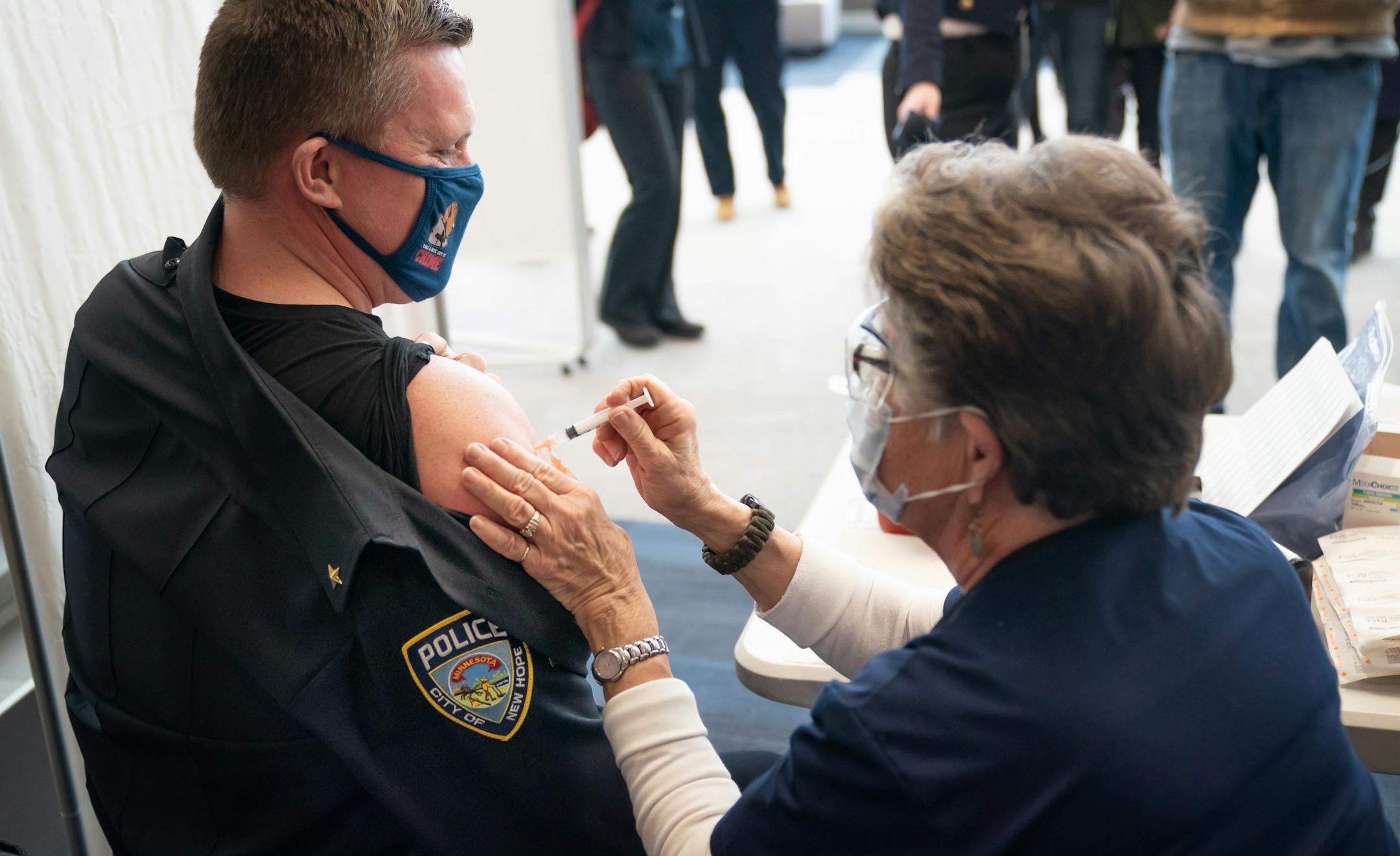
Chief Tim Hoyt of New Hope P.D. received his COVID-19 Moderna vaccine from RN Gloria Christensen.
New Hope Police Chief Tim Hoyt of New Hope P.D. received his COVID-19 Moderna vaccine Friday from nurse Gloria Christensen. (Glen Stubbe, Star Tribune/The Minnesota Star Tribune)

On Monday, state health leaders will discuss the rollout of vaccine to the next priority group of 1.1 million people who are 75 or older or who are critical front-line workers such as teachers, police officers and utility workers.

The U.S. surgeon general on Friday stressed that states have flexibility to vaccinate the next priority groups even as they complete the first ones.

Some states have deviated from the federal guidance. Florida has prioritized people 65 and older for its initial doses, though this strategy has come under criticism as senior citizens have struggled to register for shots and waited in lines for hours.

Malcolm said it is irrelevant to consider vaccinating the next priority groups at a time when the vaccine supply isn't large enough to cover the first priority group.

"That would be great if we had enough vaccine to do that, but with only 65,000 doses a week coming into the state so far, that just doesn't stretch far enough," Malcolm said. "We'd have very, very long lines and a lot of frustrated people if we said, 'Everybody come on in!' "

Jeremy Olson • 612-673-7744

about the writer

about the writer

Jeremy Olson

Reporter

Jeremy Olson is a Pulitzer Prize-winning reporter covering health care for the Star Tribune. Trained in investigative and computer-assisted reporting, Olson has covered politics, social services, and family issues.

See Moreicon