"Why Canada's wildfires are extreme and getting worse, in 4 charts"
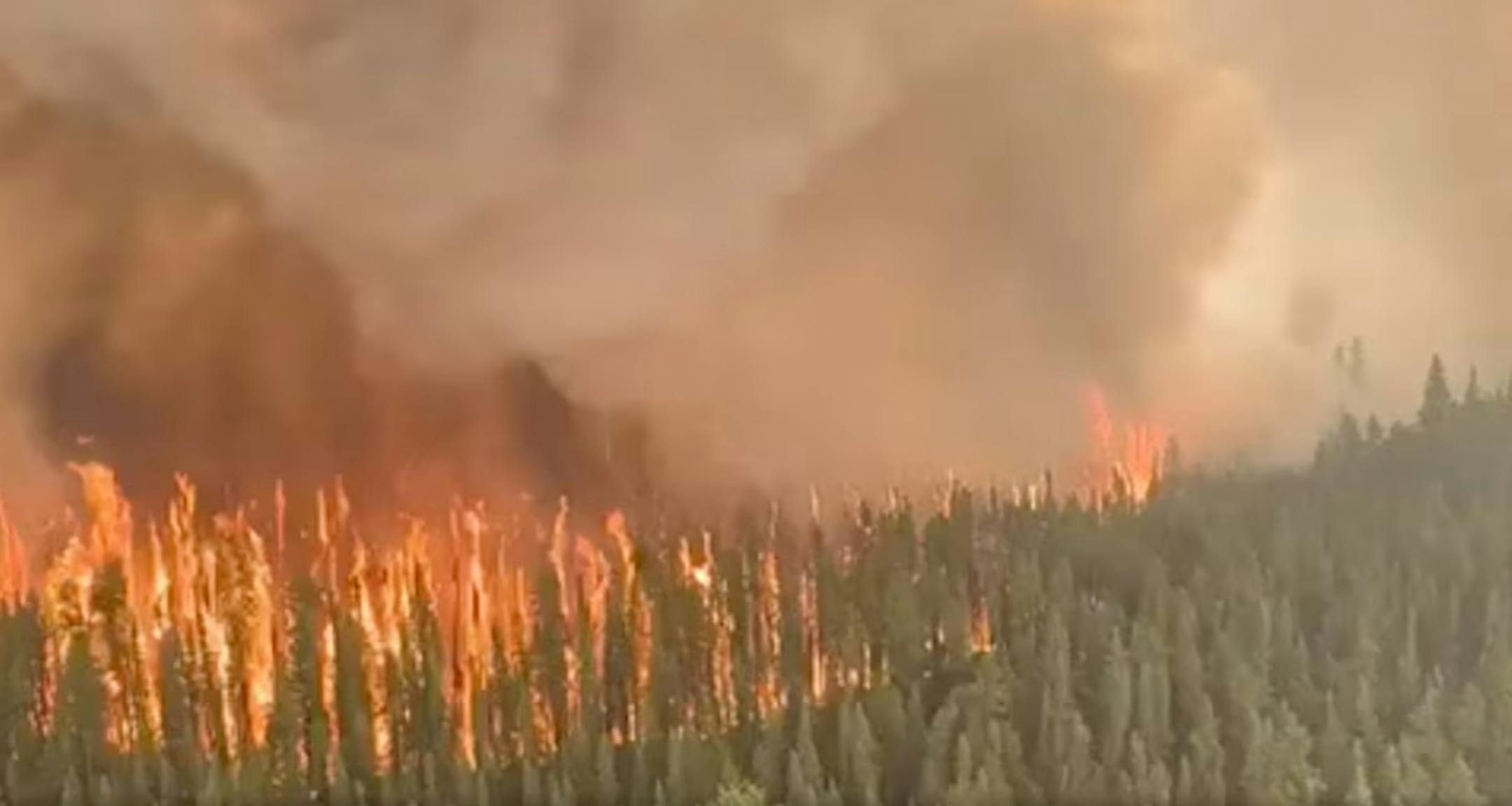
"There is little that's normal about the siege of Canadian wildfires that sent record amounts of smoke pouring into the Lower 48 last week. Even as the fires in Quebec have eased some and the hazy skies over the eastern United States have mostly cleared, blazes still rage in parts of British Columbia and Alberta. Statistics on the fires — which help place their scope in historical context — continue to show how extreme they are. And they're part of a trend toward larger, fiercer fires and more-damaging fire seasons. The fires have burned the most land on record so early in the season — more than 4.7 million hectares (11.6 million acres). And already, even though the fire season is just underway, more area has burned than in all but three entire fire seasons since modern records began in 1983."
Canadian Wildfire Smoke
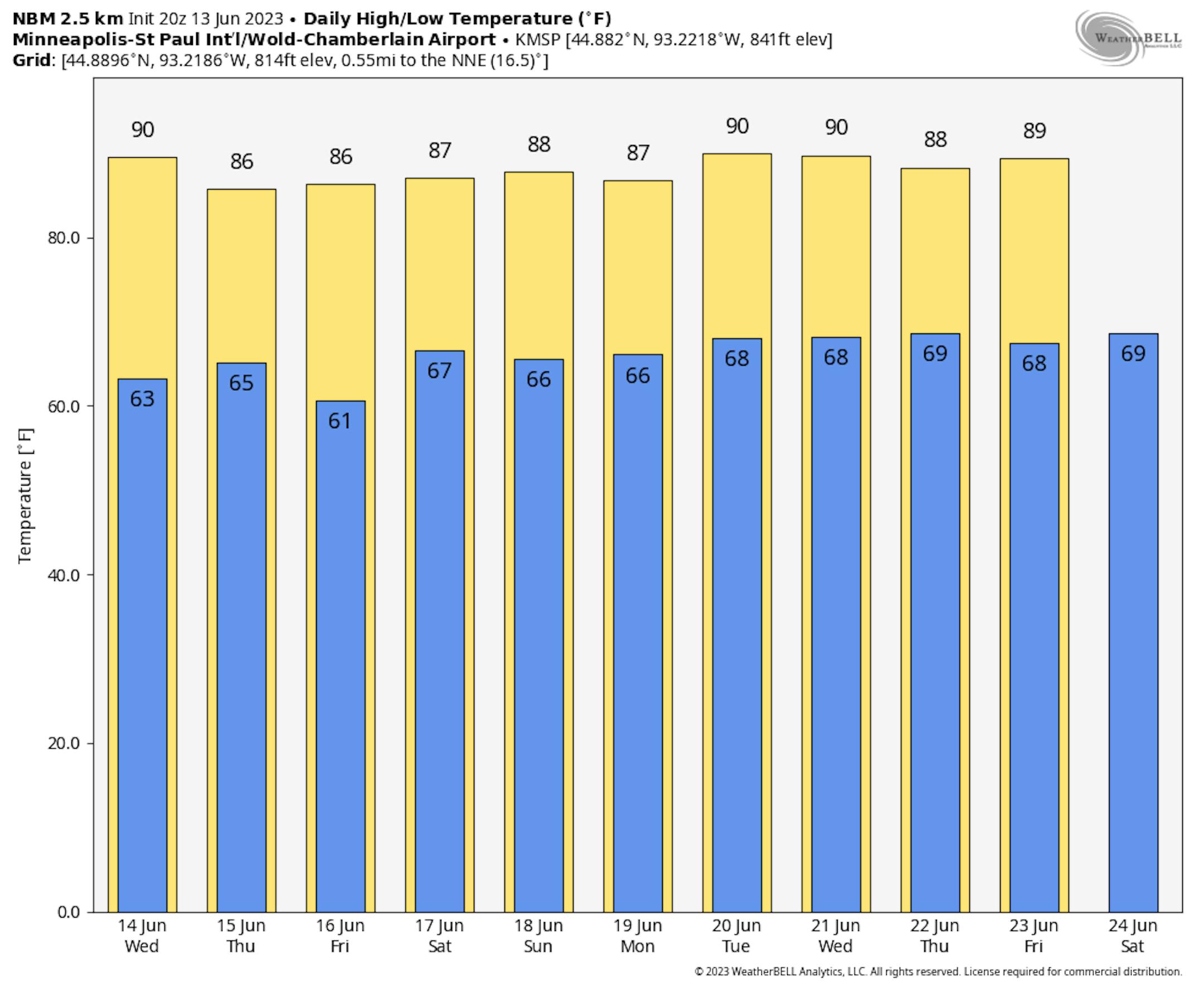
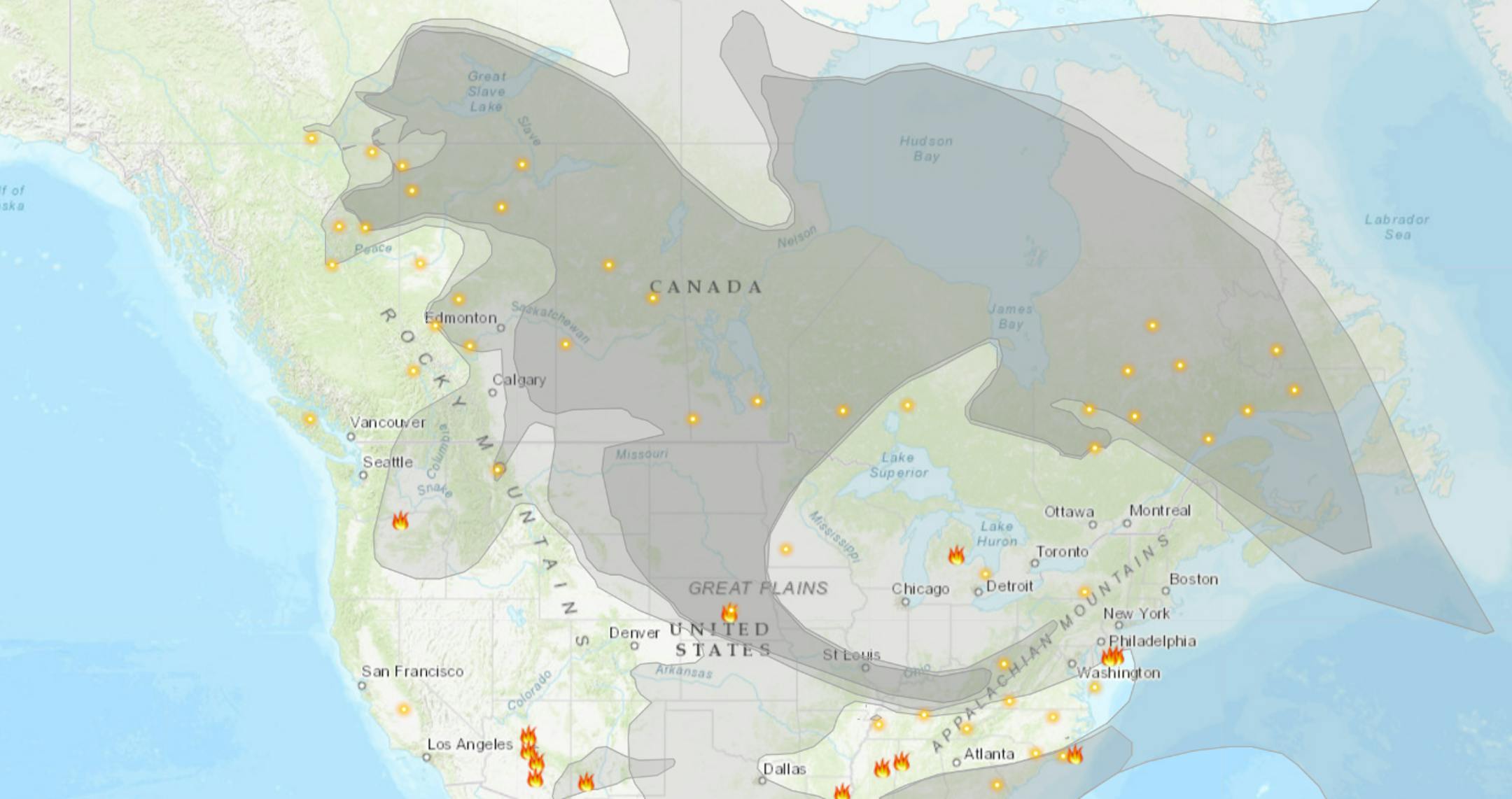
Thanks to a number a very large Canadian wildfires, endless plumes of wildfire smoke continues to drift across the Canadian Provinces and south into the Lower 48. This summer is shaping up to be a hot, dry and smoky one, which doesn't appear to end anytime soon.
Smoky Skies Return
Here's the wildfire smoke analysis into Wednesday, which shows widespread smoke drifting over much of the Upper Midwest and Minnesota. Some of the smoke concentration looks fairly impressive, so skies will be quite hazy with slightly lower visibility at times.
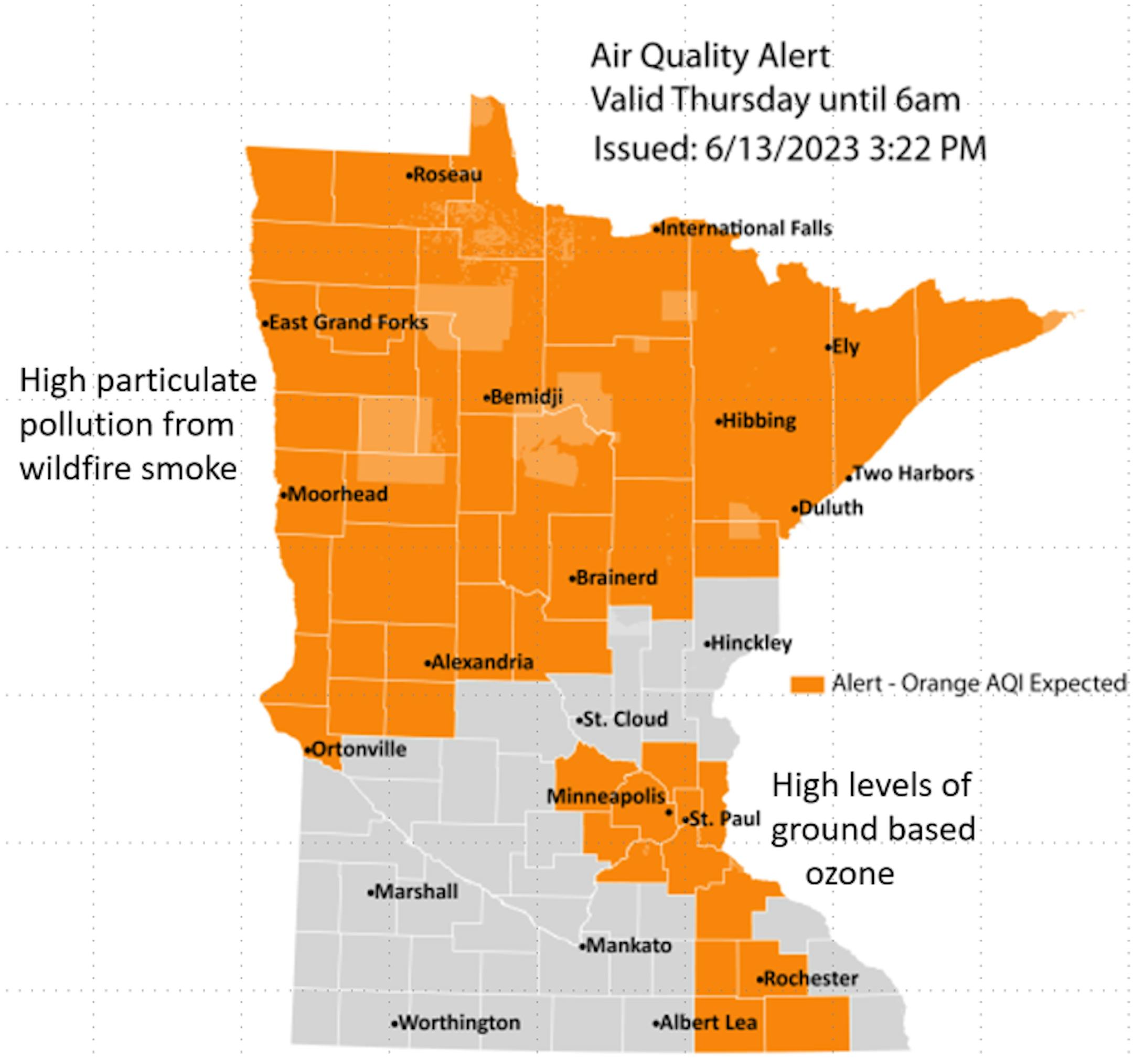
Air Quality Alert Through Thursday
"Smoke from Canadian wildfires will move into northern Minnesota beginning Tuesday evening and will reach Brainerd and Alexandria by early Wednesday morning. The smoke will slowly move south during the day Wednesday and may approach St. Cloud in the evening. In addition, light smoke may move into southeast Minnesota on Wednesday evening. Winds will shift and push this smoke towards the west. Smoke will linger across much of the state throughout the day on Thursday, but concentrations should decrease below the orange category Thursday morning. In addition, sunny skies, warm temperatures, low humidity, and light winds will produce an environment for volatile organic compounds (VOC) and oxides of nitrogen (NOx) to react in the air to produce elevated levels of ozone in the afternoon. Ozone will be elevated across the Twin Cities and Rochester during the afternoon hours, but will decrease in the evening."
5th Driest May 1st - June 13th On Record
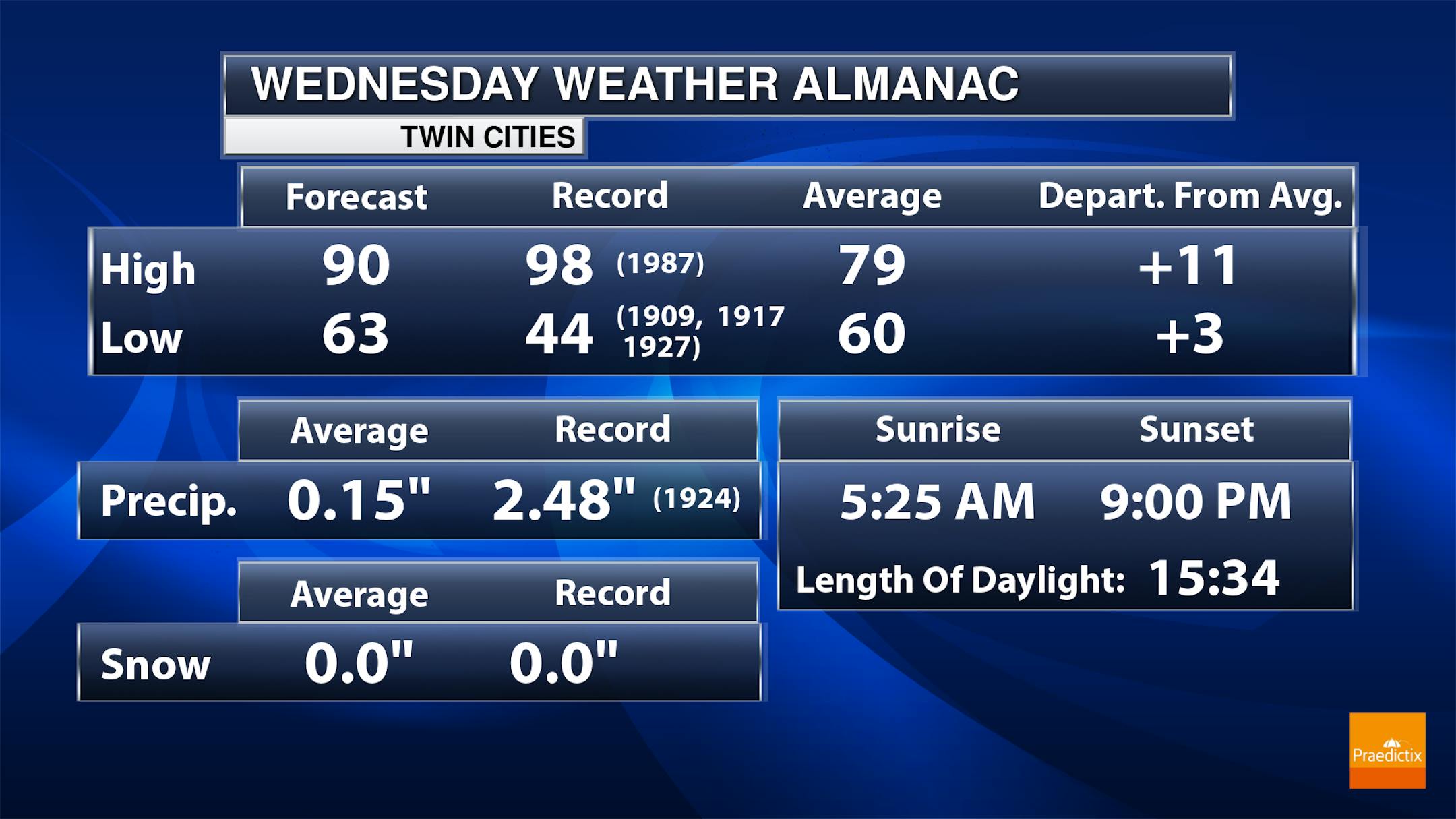
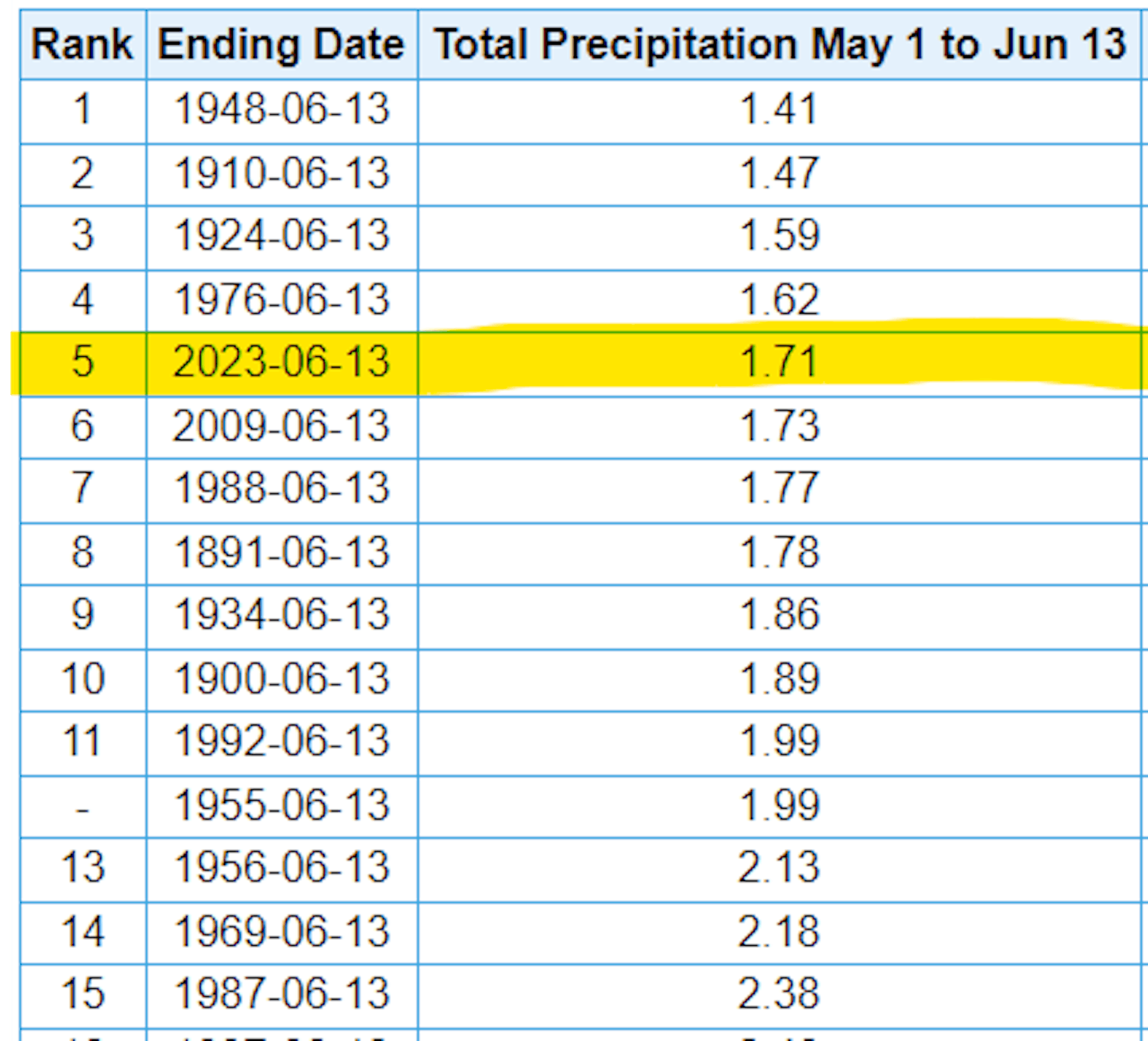
According to NOAA's NWS, this is the 5th driest May 1st through June 13th on record with only 1.71" of rain falling at the MSP Airport. Note that since May 1st, MSP should've had nearly 6.00" of rain, so we are more than 4.00" below average.
MN Drought Update
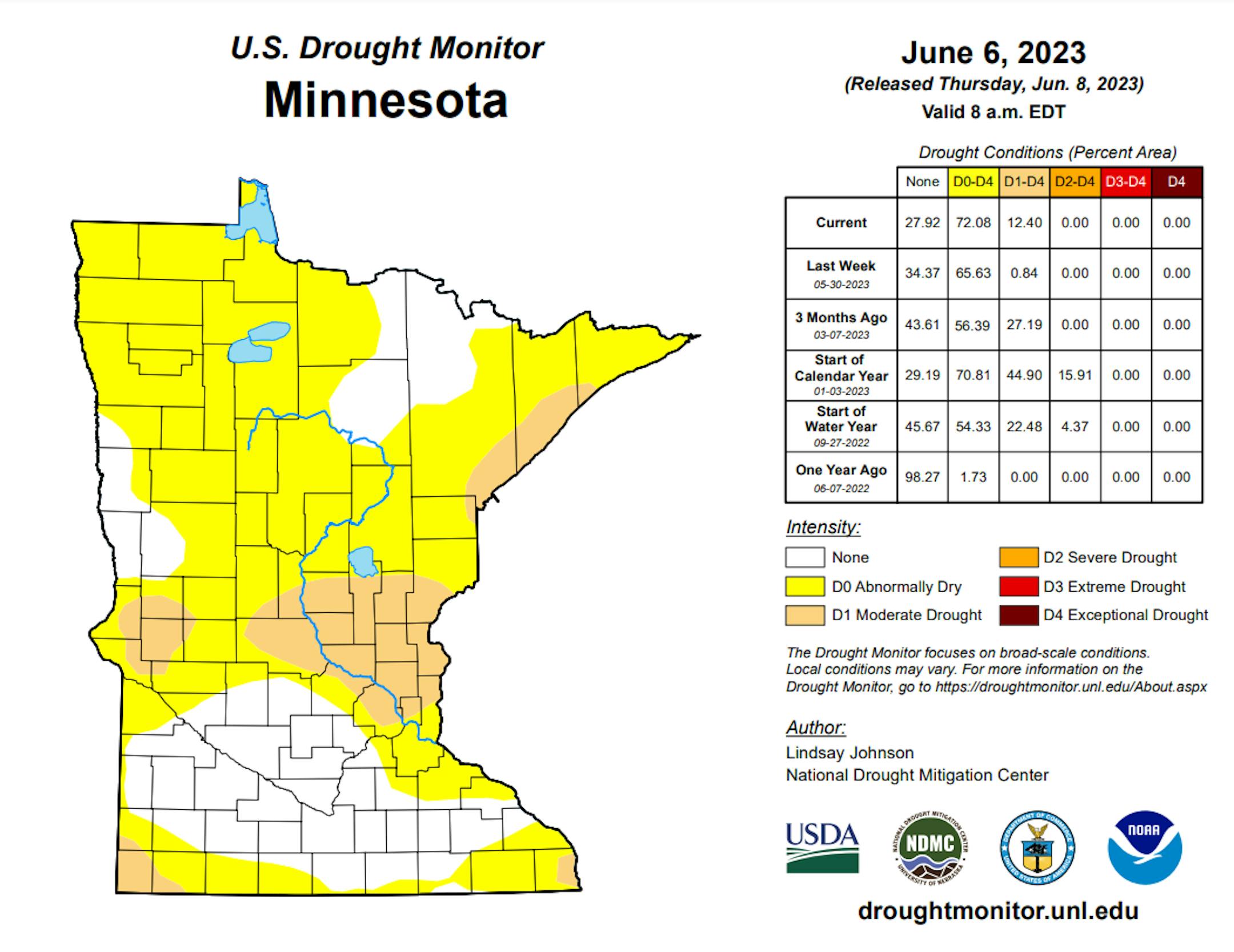
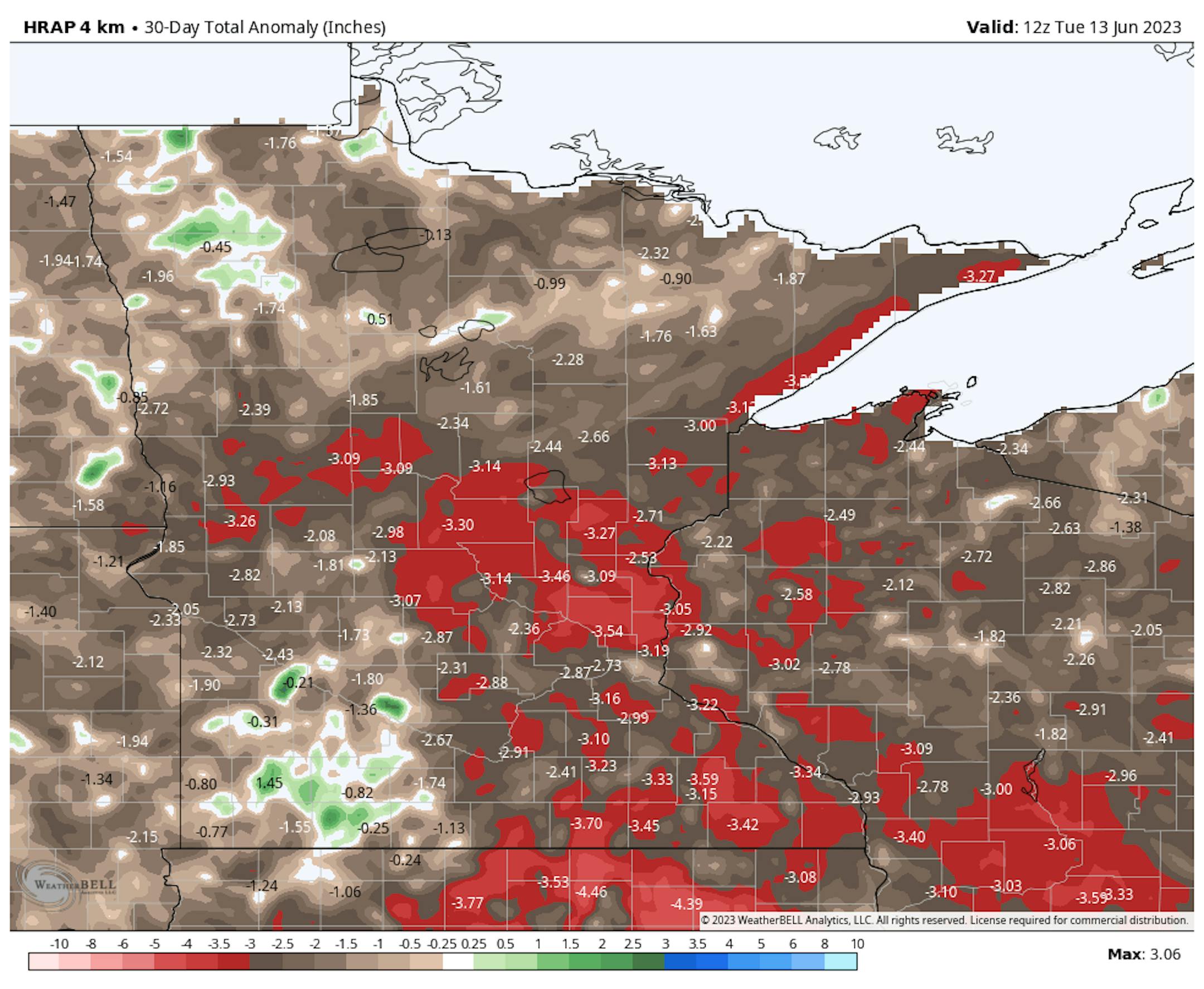
According to the US Drought Monitor, parts of Minnesota are under a MODERATE drought now, which includes parts of the Twin Cities. This moderate drought area is where the rainfall deficit is nearly -2.00" to -4.00" below average over the last 30 days. These drought areas will continue to expand if we don't get any good rain anytime soon.