

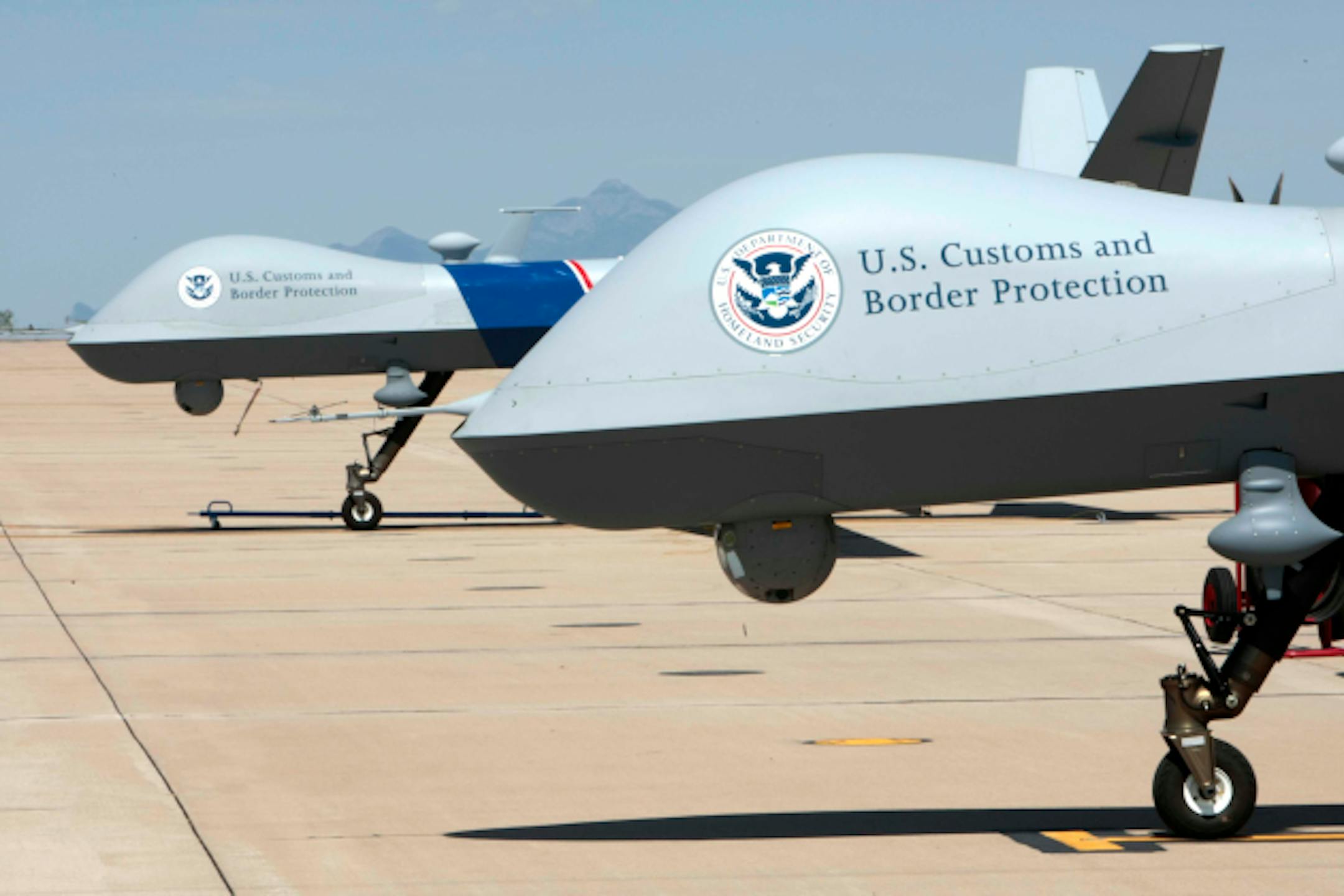
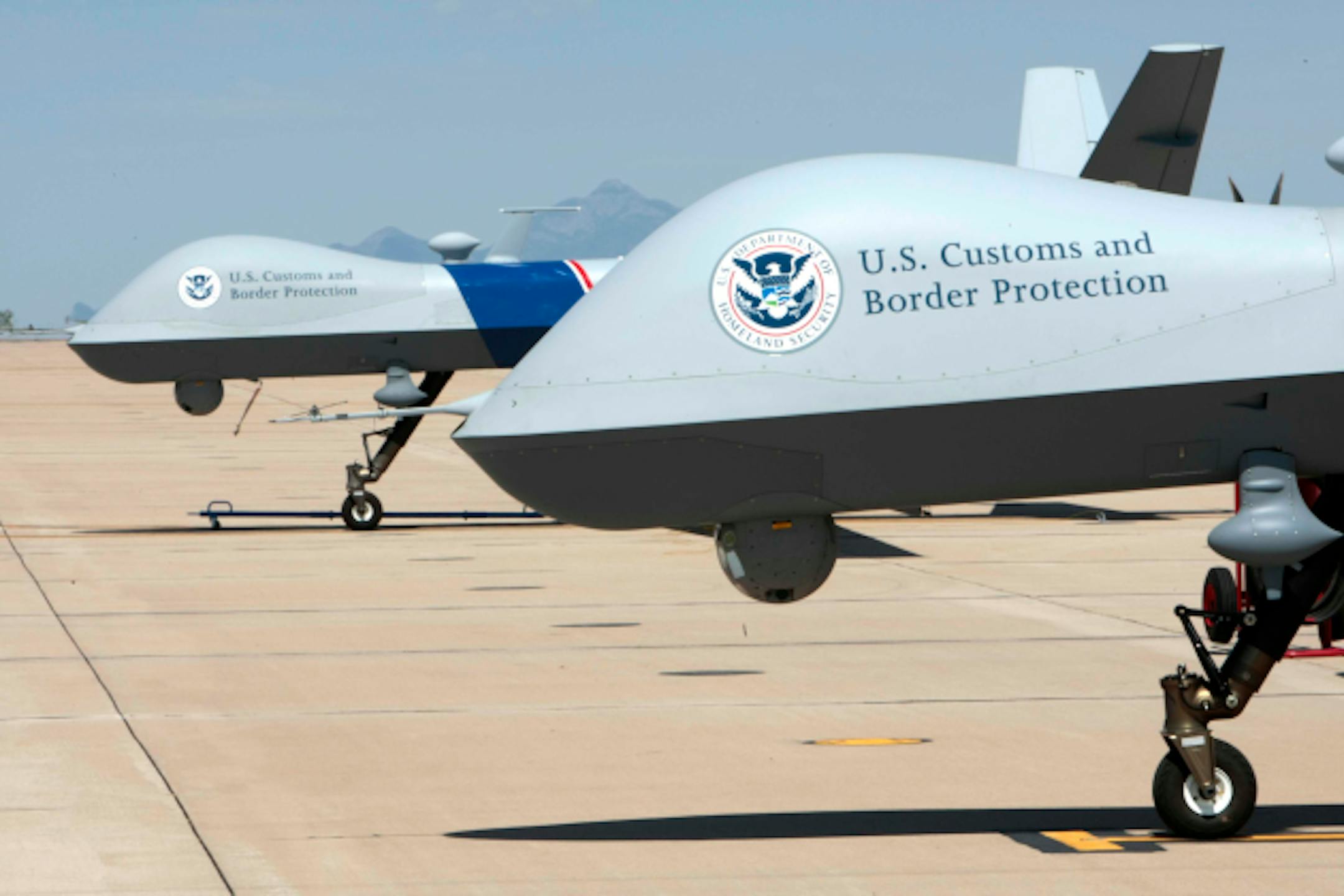
The folks at Public Records Media continue to use FOIA to pry loose documents about the use of drones over the Upper Midwest. The latest records are Federal Aviation Administration permits for the use of drones, also known as unmanned aircraft systems (UAS).
One of them, dated Nov. 29, 2010, grants one-year permission to Customs and Border Protection to use a Predator B aircraft (pictured above) out of Grand Forks, N.D. It lacks the drama of the "targeted killing" memo, but some curious details do emerge among all of the blacked-out information. Here's one of the FAA requirements:
For the purpose of see-and-avoid, visual observers must be utilized at all times except in Class A and restricted areas [blacked out] warning areas. The observers may either be ground based or in a chase plane. The UA must remain within a lateral distance of no more than 2.5 NM and 3,000 feet vertically from the visual observer.
We hear more about these restricted and warning areas further down in the same section. (COA refers to certificate of authorization):
The dropping or spraying of aircraft stores, or carrying of hazardous materials (included ordnance) outside of active Restricted, Prohibited, or Warning Areas is prohibited unless specifically authorized in the Special Provisions of this COA.
So the Border Patrol cannot spray anything or drop its payload in most airspace unless there's some special provision, which is of course blacked out for security reasons. I've sent in a question about the drone use to a Customs and Border Protection spokesman, and will let you know if and when I hear anything.
Here's the FAA certificate:


