The mayor's office released the first details Wednesday night about what is driving their proposed 2.4 percent levy increase, and precisely what it will mean for taxpayers.
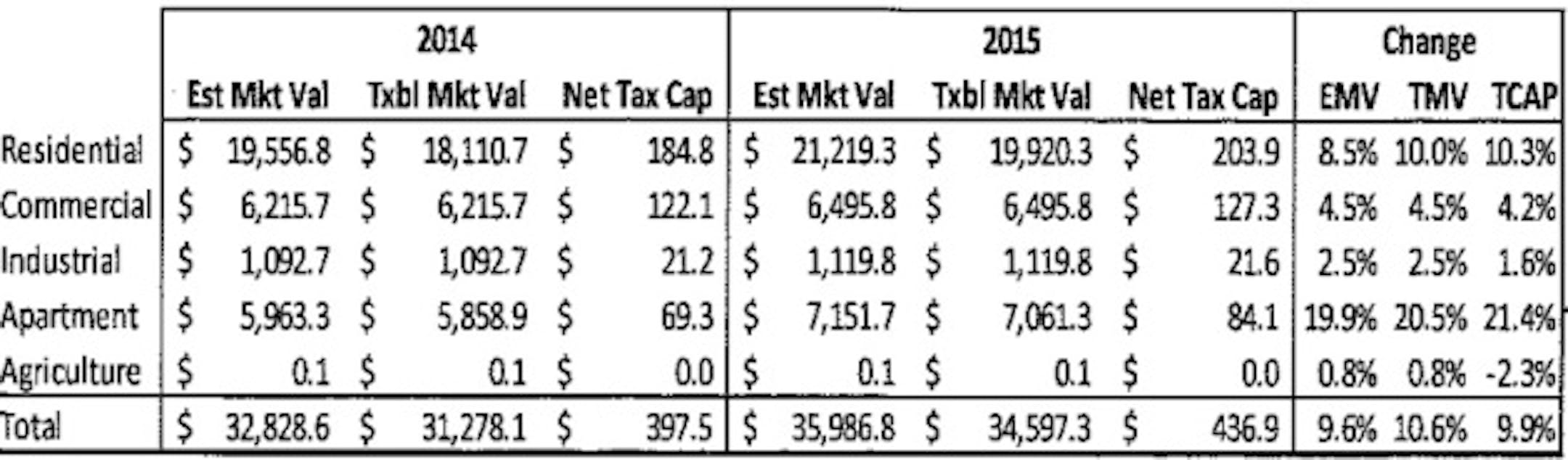
The tax levy is a dollar amount the city collects through property taxes. Since it is not a tax rate, the impact on individual homeowners depends on changes to the tax base and individual home values.
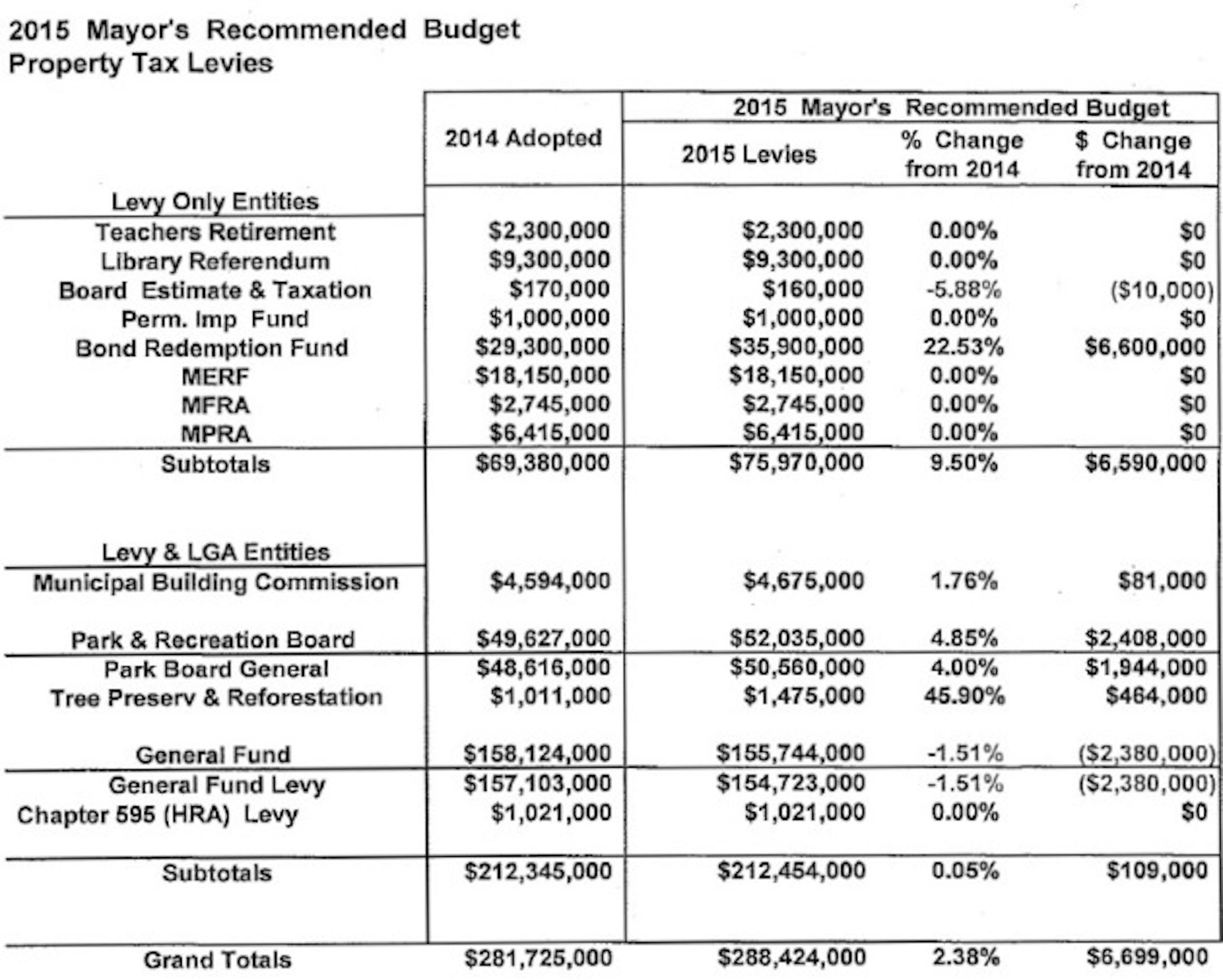
The mayor's proposed 2.4 percent increase aims to raise $6.7 million more in property taxes, bringing the city's total levy to $288 million (see below). Almost all of that increase, $6.6 million, will be consumed by additional debt payments primarily relating to R.T. Rybak's five-year accelerated street paving program, according to an overview presented to the city's levy-setting Board of Estimate and Taxation Wednesday.
A 4.9 percent, $2.4 million levy increase from the Park Board also contributed heavily to the mayor's proposal. In fact, the amount of property taxes supporting the general fund, which fuels the city's discretionary spending, will actually decrease by $2.3 million or 1.5 percent.
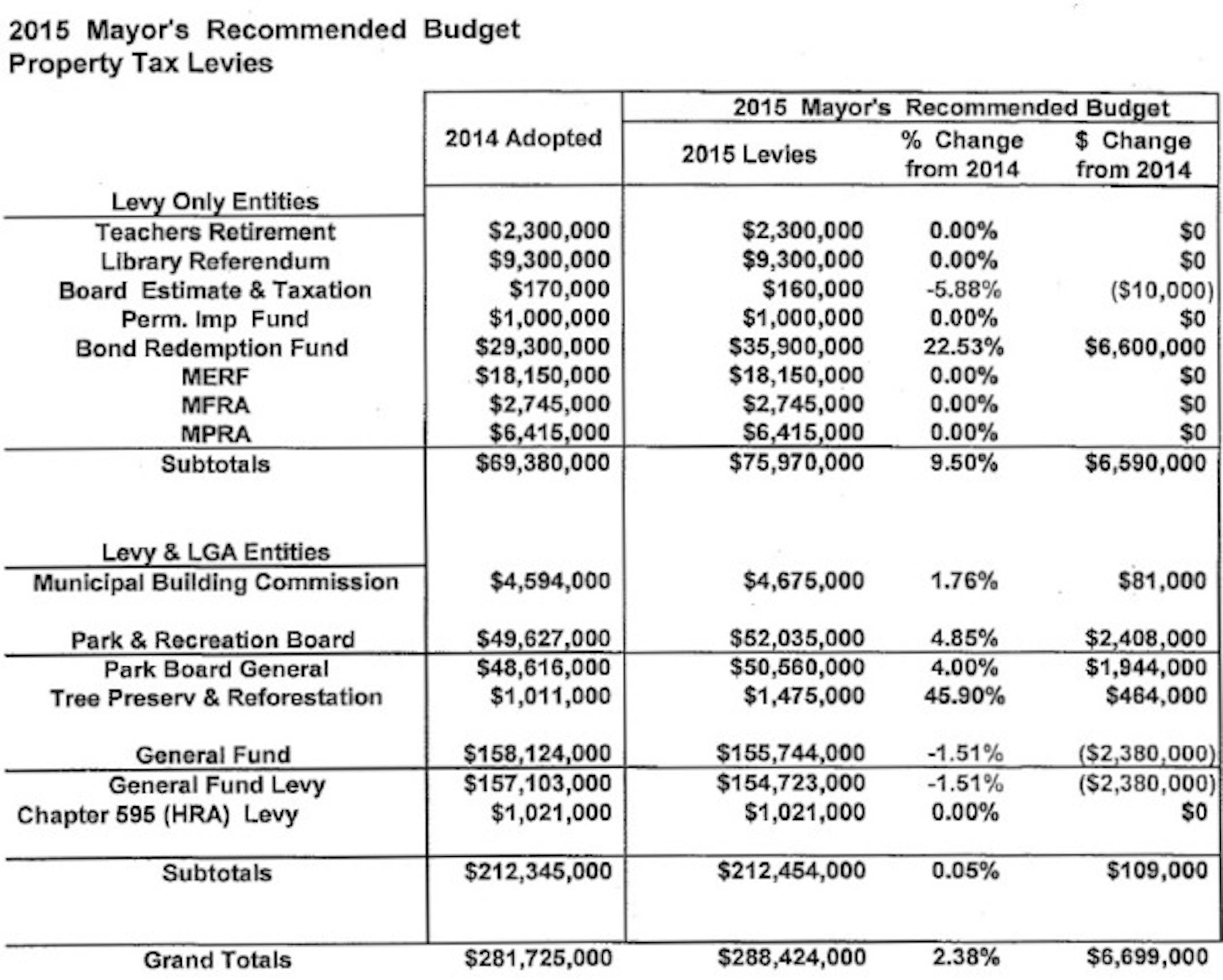
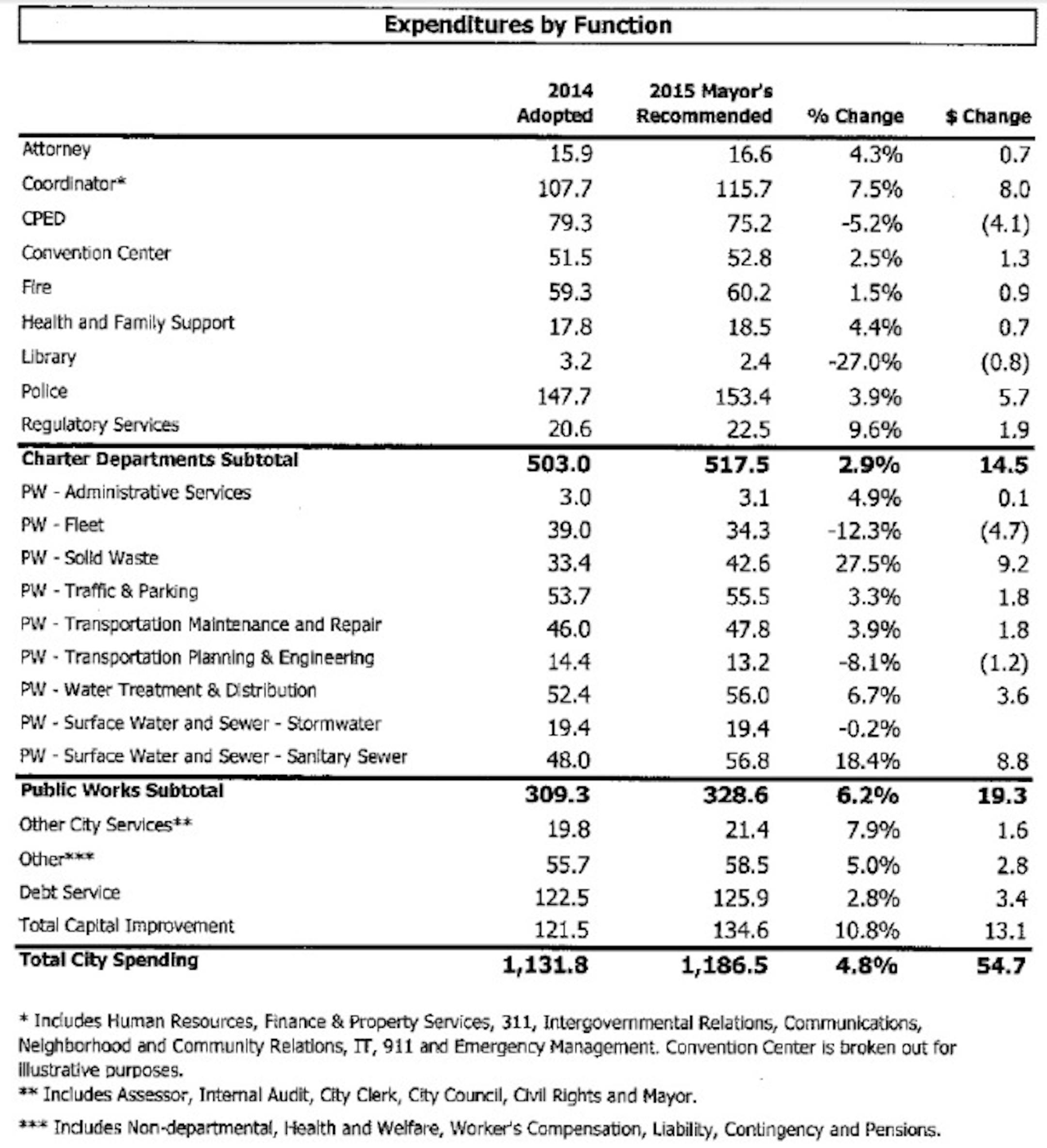
Total city spending, which includes dedicated funds for water and other services, will rise 4.8 percent in Hodges' budget to $1.18 billion. That excludes department-to-department transfers.
So how will it feel for homeowners?
Nearly 57 percent of residential properties in the city will see an decrease in their property tax bills, with the remaining 43 percent seeing an increase, according to an analysis presented to the Board.
One additional cost will be felt equally, however: A $48 hike in solid waste utility fees due largely to the mayor's proposed organics recycling program (see "Solid Waste Recycling" below). That's a 17 percent increase over 2014 costs. The program will cost about $8 million to administer in its first year, said Sandy Christensen, the city's deputy financial officer.