

Police and firefighters in Anoka County are receiving more disaster-response training as oil trains move millions of gallons of North Dakota crude through the county and Twin Cities every day.
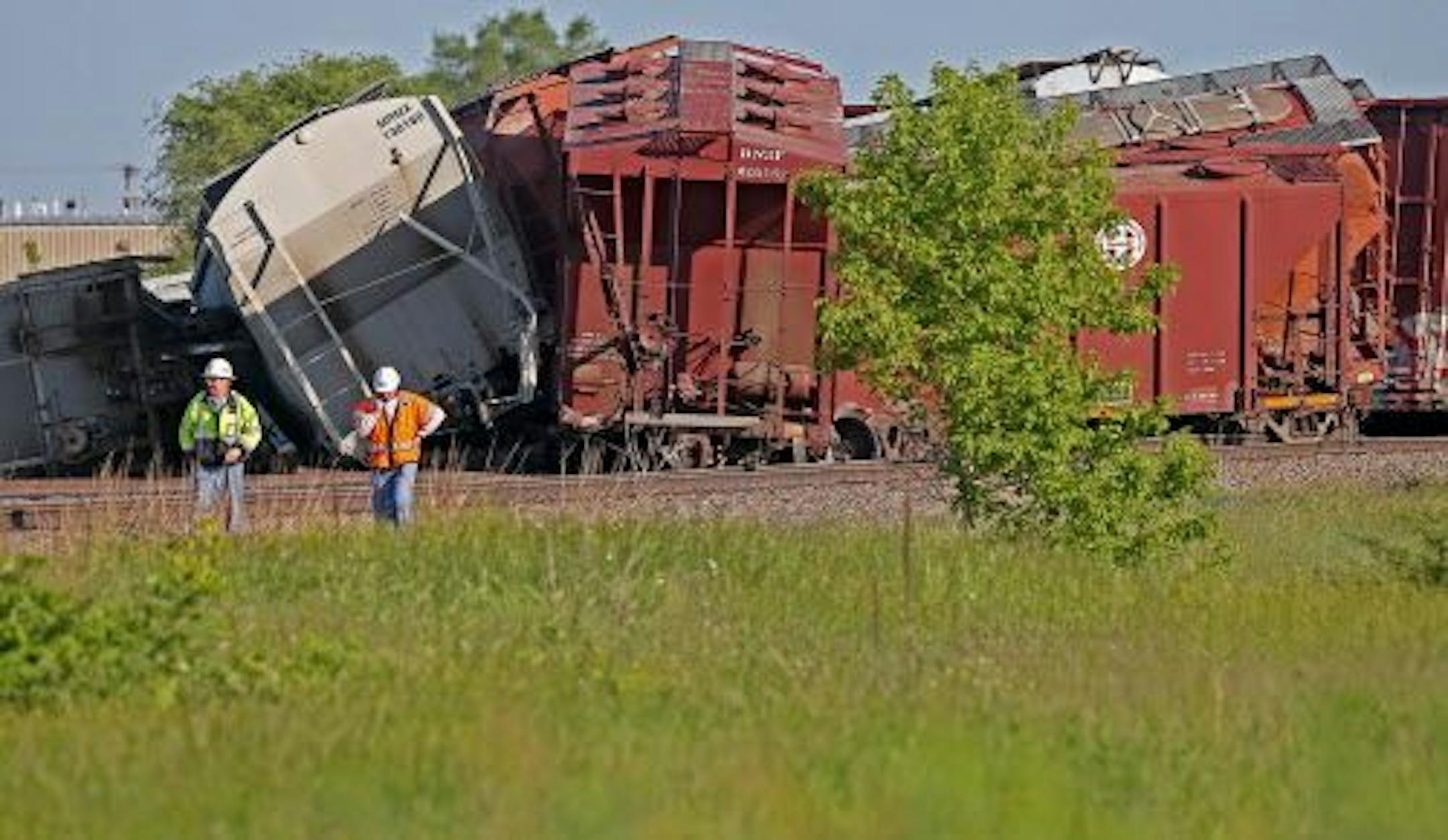
Concerns were heightened last month, when 16 freight cars derailed in the city of Ramsey. Fortunately, the cars were empty and the incident caused no injuries, but it gave officials pause.
"The reality is as more and more traffic comes down the tracks, the probabilities of accidents happening go up," said Anoka County Commissioner Matt Look, who represents Ramsey. He said a derailment like the one on June 13 "could have been oil cars and a fire [could have] ignited and we would be evacuating."
In the past decade, Minnesota has become a major thoroughfare for North Dakota crude heading for Midwest and East Coast refineries. About six oil trains, often with 100 cars, roll through the Twin Cities each day, and five of them go through Anoka County, said Dave Christianson, a senior freight and rail planner for the Minnesota Department of Transportation (MnDOT).
As North Dakota pumps more crude, the number of tankers gradually increases and people are noticing, Christianson said. He receives calls every week from local officials, residents and others asking about oil train risks and proximity.
The issue also resonates well beyond Minnesota. On Wednesday, the U.S. Department of Transportation proposed a set of new safety regulations for trains carrying oil, ethanol and other hazardous liquids.
In Minnesota, Christianson said he has visited many of the 128 cities along the state's crude oil train lines and estimates about half are properly trained for responding to emergencies.
"There definitely is a gap in training that we have to satisfy. We will have a much more extensive program and government officials will be checking training regiments," he said. "The state's goal is to have comprehensive training for emergency response along crude oil routes."


