

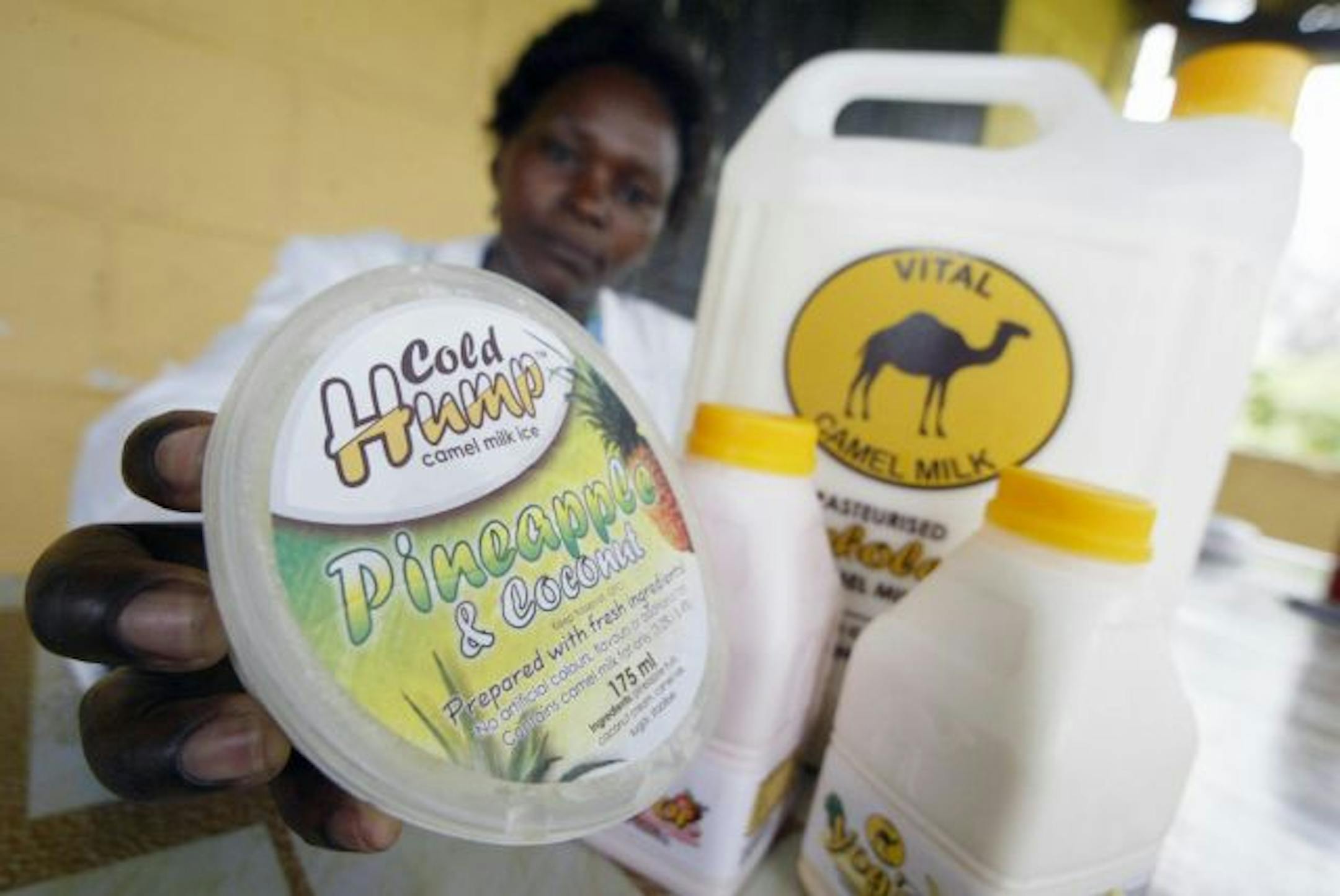
Appearing soon in a store near you -- camel milk. Whiter and sweeter than cow's milk, it is thought in some cultures to have health benefits not found in ol' Bessie's milk.
Camel milk? In Minnesota? Who's going to drink that? About 70,000 Somali Minnesotans, for starters.
"It's a little sweet, hard to describe," said 19-year-old Jamilla Mohamed, of Minneapolis, who remembers drinking camel milk in Somali when she was 11. "My grandma said it was healthy to drink."
A traditional drink in much of Africa, the Middle East and points east, camel milk is not available in the United States right now. But Millie Hinkle, a North Carolina homeopathic physician who is leading the camel milk cause in this country, is fielding hundreds of requests -- including regular queries from a potential distributor in Minnesota.
Hinkle, who has successfully lobbied to change federal rules allowing the sale of camel milk and is organizing a camel farm co-op in several states, predicts that camel milk will be on Minnesota shelves within a year, and that camel dairies will follow, depending on demand.
The Minnesota Department of Agriculture said it has no problem with camel dairies or the sale of camel milk, as long as it's done according to law. But it's no simple trick getting camel milk from teat to table.
Milk with a killer kick
Camel milking is notoriously difficult. It's done mostly by hand, on large, often uncooperative animals that can deliver a killer kick sideways. Output per camel is about half that of a traditional dairy cow, and what a camel gives has to be shared.


