

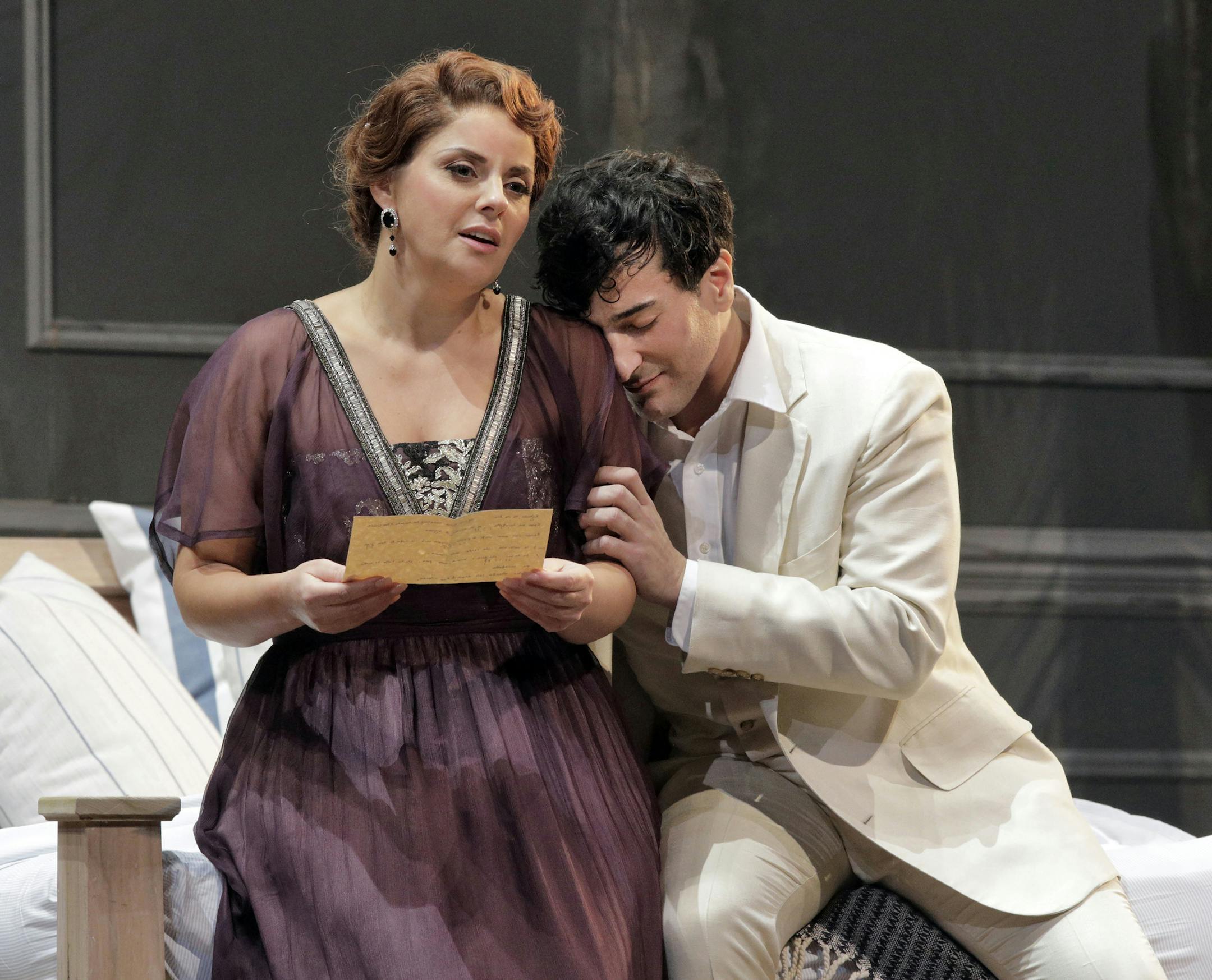
A rich man's mistress falls for an impecunious stranger. The pair abscond, then run out of money. She admits her past to him before returning to her sugar-daddy benefactor.
There is a whiff of inconsequentiality about the plot of Puccini's opera "La Rondine" (The Swallow), and Minnesota Opera's new production at the Ordway on Saturday evening did not entirely solve it.
Director Octavio Cardenas framed the action by updating it to the World War I period, and introducing a doppelgänger of Magda, the swallow of the title.
At curtain-up this shadowy figure floated through Magda's Parisian boudoir, undraping sheets from furniture. She was there again at the opera's conclusion, surveying the emotional wreckage of her life in the intervening period.
Should she have done things differently? Does hindsight help us become better people or merely sharpen the regret for our mistaken actions?
Cardenas' framing device helped ask these questions, but he ultimately overused it.
At the opera's conclusion, a video projection showed Ruggero's tombstone. He had been killed in battle after enlisting for wartime service.
Cue anguish from both the real-life and shadow versions of Magda and a mushily sentimentalized conclusion that even the arch-sentimentalist Puccini might have blanched at.


