

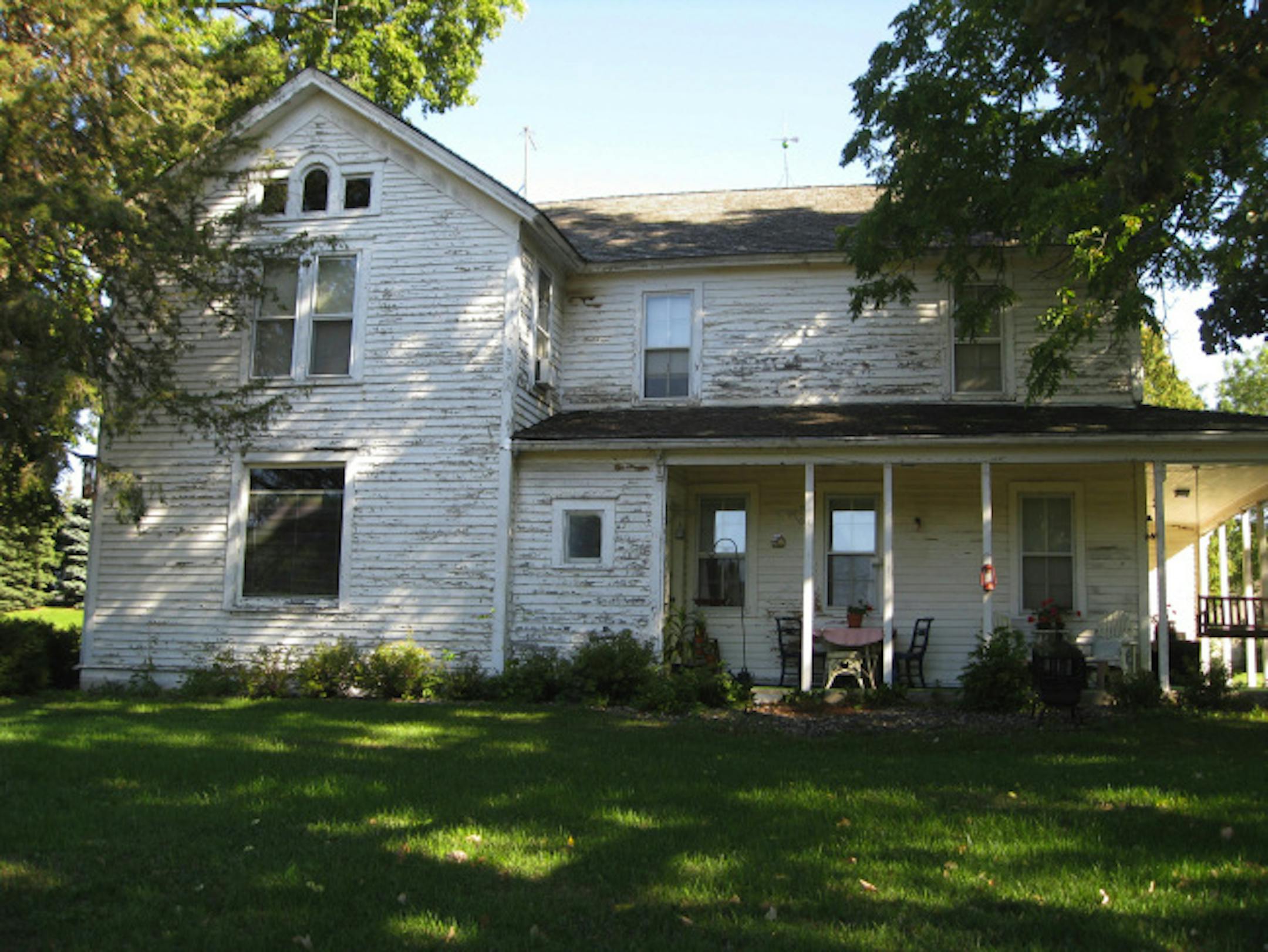
To Bloomington city planners, it seemed unfair to force the owner of the 1865 John Brown house to pay nearly $37,000 to repair peeling lead paint. They agreed it made more sense to demolish the house.
But where some see needless expense, others see a tragically deteriorating 19th century farmhouse that offers a glimpse into the city's past. Brown, an English immigrant and farmer, fought with the 1st Minnesota regiment at the Battle of Gettysburg and was a constable in the pioneer community.
The city's Planning Commission recently granted the Brown house a reprieve from demolition while the owner applies to get the house on the National Register of Historic Places.
If that failed, under the commission ruling, Bethany International, a missionary college that owns the site, would be allowed to raze the house. The City Council will consider the matter today.
It is a clash of money and priorities, a conflict between honoring the past and dealing with today. Labeling a home "historic" can hamstring private owners who have to clear renovation with a city. Upholding historic standards is often expensive. And cities usually don't have money to help homeowners.
In Edina's Country Club neighborhood, which is on the National Register, some changes to homes require approval by a Heritage Preservation Board. Recently Eden Prairie has battled over a majestic arch-roofed barn that stands in the way of highway development.
Bonnie McDonald, executive director of the Preservation Alliance of Minnesota, said many suburbs are just beginning to get interested in saving historic buildings.
"I think it's a very new concept for them, frankly," she said. "In first-ring suburbs, the issue is redevelopment as well as competing with third-ring suburbs."


