

We really didn't think we'd watch much football yesterday. It was the Vikings' bye week, of course, and we also went into the weekend with a household project looming. But the stars aligned Sunday: namely, we finished the project Saturday and, well, who are we kidding. If football is on, we're probably going to catch at least some of it. It didn't hurt, of course, that the Packers and Bears laid giant eggs in the early games, including Green Bay blowing a double-digit fourth quarter lead against a previously winless Tampa Bay squad that had a QB making his first career NFL start. We could write that sentence over and over again and never get tired of it. While the NFC North race is hardly over -- the Vikings still have two games left against the Bears, and anything can happen -- it's impossible not to say they grabbed even firmer control yesterday.
That said, exposure to other games wasn't always positive.
*By all accounts, Philip Rivers' INT with a little over 3 minutes left, which was returned by the Giants to the SD 4 yard line, should have been the game-clincher for the Giants. They already led by three points. They had all the momentum in the world after dominating the fourth quarter to that point. Punch that thing in the end zone, and the Chargers are finished. Instead, a first down holding call moved them back. And from there, Tom Coughlin went soft. Now: calling a short pass and two runs wasn't the worst thing he could have done. It ate some of the Chargers' timeouts and, after a short field goal, forced the Chargers into a 2-minute drive where they had to get a TD. But as Rivers proved when he did just that -- without even using a timeout and with 21 seconds to spare -- it showed that even that amount of time can be an eternity in the NFL. Leave a team only 30 seconds and then we can understand going conservative. Part two of this is how much we really dislike when coaches play not to lose. All game, a touchdown is a goal. All game, a team runs the risk of turning the ball over by throwing in pursuit of that TD. Why not take a couple of shots at plays with legitimate chances of scoring -- even reasonably safe plays like a throw to the back of the end zone that an experienced QB like Eli Manning can decide to throw 10 yards too far if the receiver is covered? The Giants paid for their philosophy (just as the Vikings could have a few weeks back against Baltimore).
*Down by 7, Miami punts on 4th-and-5 from New England's 42 with less than six minutes to play. Do coaches need some sort of chart telling them when to punt and when not to punt? Kind of like that two-point conversion chart? Wasn't that really probably Miami's best chance of scoring a TD, on that drive right there? And even if they didn't make it, weren't they still in fine position to get the ball back even if they allowed a first down to start the next drive? Seriously, don't punt there. Teams punt far too often. They should punt somewhere between how much they punt now and how often this high school team punts. And they sure shouldn't punt in the situation the Dolphins were in yesterday. We don't even care about Miami, and we were still upset when we saw them punting. (As it turned out, they got the ball back one more time, at their own 14, and wound up going for it on 4th-15 from their own 27. Ballgame).
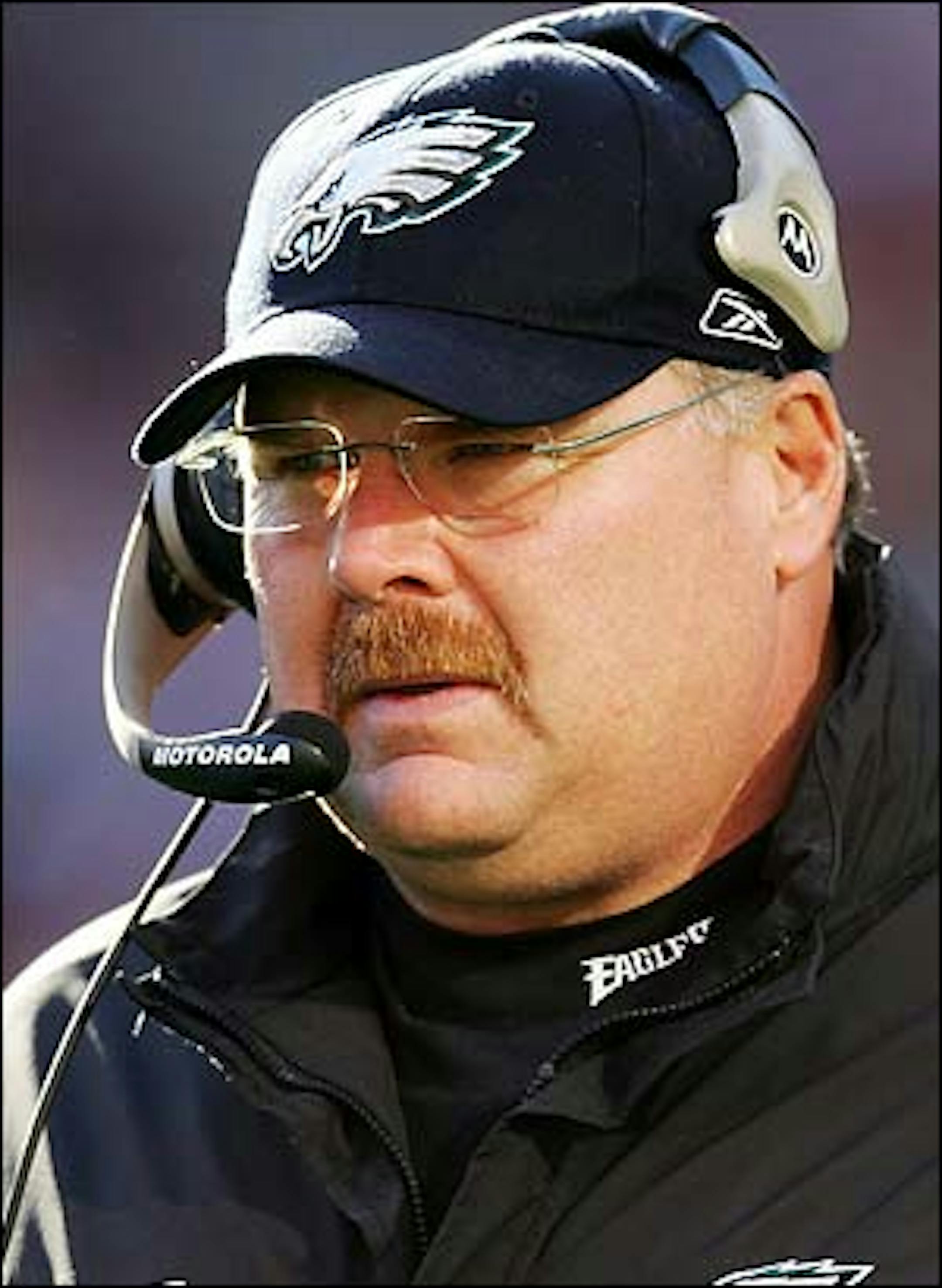
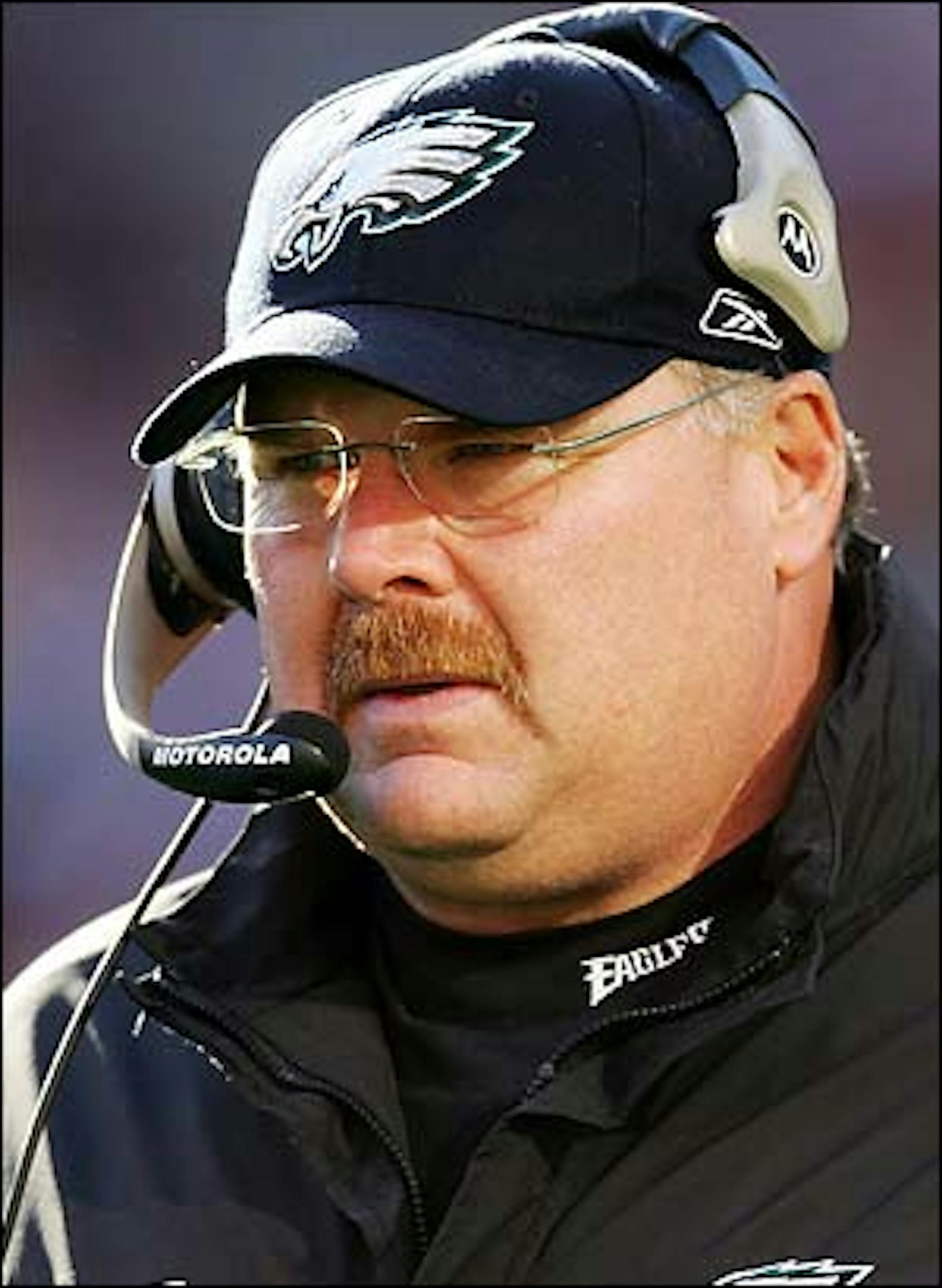
*But really, we saved the most serious breach of point and clock management for last: Andy Reid. With about 4:30 left and the Eagles trailing the Cowboys 20-13, Philly was facing a 4th-11 from the Dallas 34. That's a pretty deep distance to gain, but it's kind of no-man's land in terms of the field. Keep in mind, too, the Eagles have no time outs left -- meaning one Dallas first down comes close to icing it and two first downs likely means the game is over. Let's play risk-reward. Going for it means: A conversion gives the Eagles a first down at least at the Dallas 23, putting them in excellent position to keep moving for a game-tying TD. Not making it, assuming there is no more lost yardage, puts Dallas at the 34 -- decent field position but a spot on the field where, if you can force a three-and-out, you can get the ball back at your own 20 or 25 with more than two minutes to play (more than enough time to go the length of the field for a tying score -- see Rivers, Philip). A punt means no shot at a conversion but could also pin Dallas deep. It's risky because there are no timeouts left and you're counting on your defense to definitely get a quick stop, but if the punt goes to the 10, Dallas runs three plays to the 15, you're going to get the ball back in very good field position for a potential tying TD drive. A field goal make means you are still down by four points and still need a touchdown to make a difference in the game. True, a TD in that case would win the game, but first you have to give the ball back to Dallas, and a kickoff is likely going to give them the ball at the 25 or so -- not great field position, but decent enough. And keep in mind this is a 52-yard field goal. No gimme. A miss gives Dallas the ball at the 42, their best possible field position, and you're still down 7 without having taken a shot at a first down.
So it seems clear, right: going for it is the smart, aggressive play. Punting is the hopeful, conservative, but not outlandish play. And a field goal makes next to no sense and barely does you any good even if you manage to make it, which is no sure thing. Of course, the Eagles make the field goal, Dallas gets the ball back, gains two first downs and Philly never sees the ball again in a must-win game. We were incredulous when the FG team came on, as was NBC's Cris Collinsworth.
We really thing the best coaches stay awake at night going over what they would do in every game scenario. Sometimes it takes an adjustment based on feel or momentum, but usually there is a smart decision staring a coach in the face -- and even if there isn't, there is always a tough decision worth supporting. Tom Coughlin, Tony Sparano and particularly Andy Reid either don't think about these things nearly enough, or when they do they think about them in ways we cannot fathom.


