

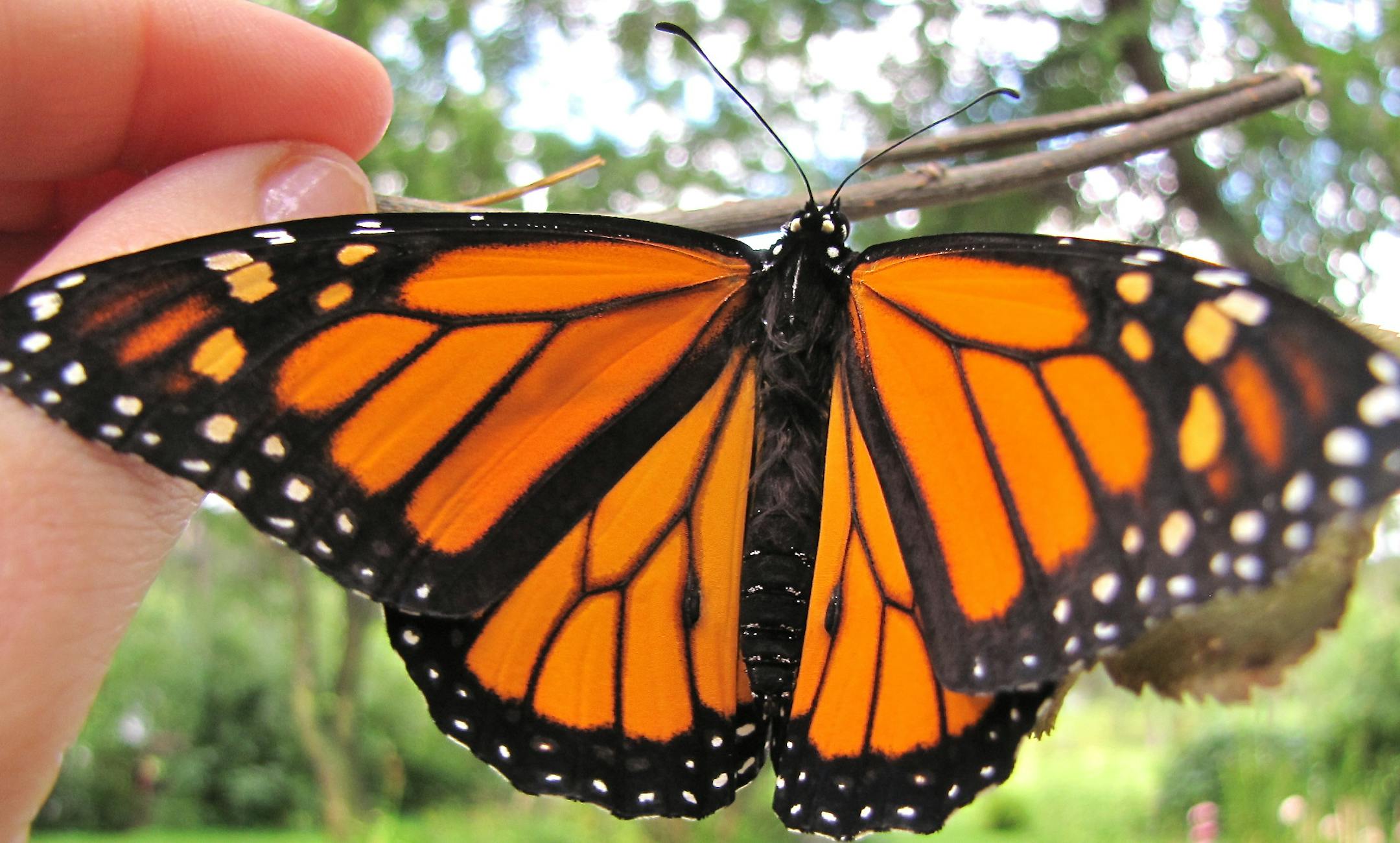
Two Augusts ago, my eagle-eyed 8-year-old spotted a green chrysalis attached to our family's crabapple tree. We carefully removed it and kept it in a jar on a shady windowsill.
It sat there for just over a week with a crown of tiny dots that looked like 14-karat gold. Then the green began to darken one morning. Within an hour the darkness turned to transparence and the telltale orange, black and white markings of the monarch began to show through.
Seeing it emerge almost miraculously with moist wings and gently escorting it outside a few hours later rank among our family's favorite wildlife experiences — and we didn't even leave our back yard. The butterfly sat on our fingers for a few minutes, seemingly unafraid and content until it was ready to spread brand-new wings. Then it lifted up as light and fluttery as a breeze.
For butterfly fans, this year brings good news after last year's plunge in the number of monarchs.
"We're actually seeing a bounce-back," said Karen Oberhauser, director of the University of Minnesota's Monarch Lab. While counts from early this summer aren't considered high, "I can say we're cautiously optimistic, that we're seeing a rebound in the population."
Monarch sightings should be peaking by mid- to late August as newly hatched monarchs join the population and begin gathering on trees and plants in clusters by the end of August into September.
The great-great-grandchildren of monarchs that arrive in the spring will ultimately make the 1,000- to 3,000-mile journey south — butterflies living east of the Rockies will travel to Mexico, while those west of the Rockies will head for California.
Besides the gathering monarchs, now is also a great time to look for common milkweed and the cottony puffs of seeds for fall planting. The monarch's admirers also might consider enhancing their gardens with butterfly-attracting perennials including pink-flowered swamp milkweed, orange-flowered butterfly weed, joe pye weed, red bee balm, purple coneflowers and wild purple asters.

