

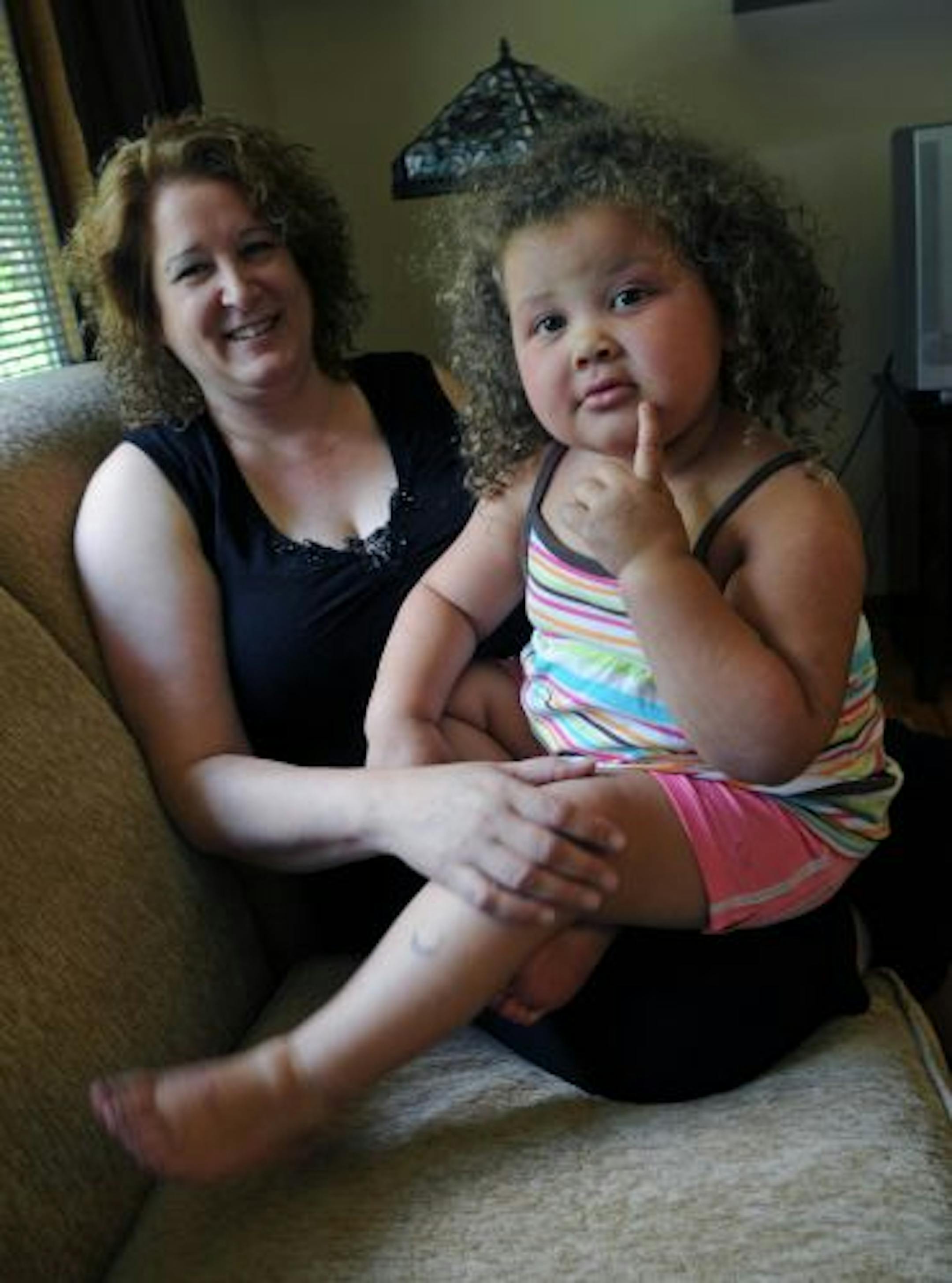
They say that love is blind, and that love between a mother and child is unconditional. But when it comes to adoptions, some say it has also become color-coded.
That's at the heart of a Blaine case in which a white adoptive mother has accused Anoka County officials of trying to block her adoption of a biracial baby.
Melissa Becker did win custody of LaMya Mikulak-Rowe, eventually. But it nearly broke her, and she has filed a complaint with the federal Office of Civil Rights, alleging that the county cost her tens of thousands of dollars because they wanted to place LaMya with a black family.
LaMya spent the first 14 months of her life on the streets, moving from home to home, from shelter to crisis nursery, as her teen mother struggled with homelessness.
Today, LaMya lives in a quiet, tidy neighborhood with Becker. The living room teems with African-American Barbie dolls. From a toy microphone, she likes to sing Taylor Swift songs. Sometimes her birth mother, Shawnte Mikulak, comes to visit or have a barbecue, part of a new extended family that seems to have found peace.
But it was a long and contentious ordeal. Becker and her lawyer say her case is not unusual, that social workers often ignore law changes that say race cannot be a factor in adoptions, and that blood relations is only one element to consider in placing a child.
"The trump card is always what's best for the child," said Mark Fiddler, Becker's lawyer.
Deena McMahon, an expert on child attachment issues hired by Becker, said that Anoka County has been struggling to place children of color in similar families.


