If you see black stuff covering or growing on the roof sheathing in your attic, it's probably mold. It's never fun to find out that your house has mold, but the fix for mold in the attic is usually quite straightforward, and doesn't involve the services of any 'mold remediation experts'.
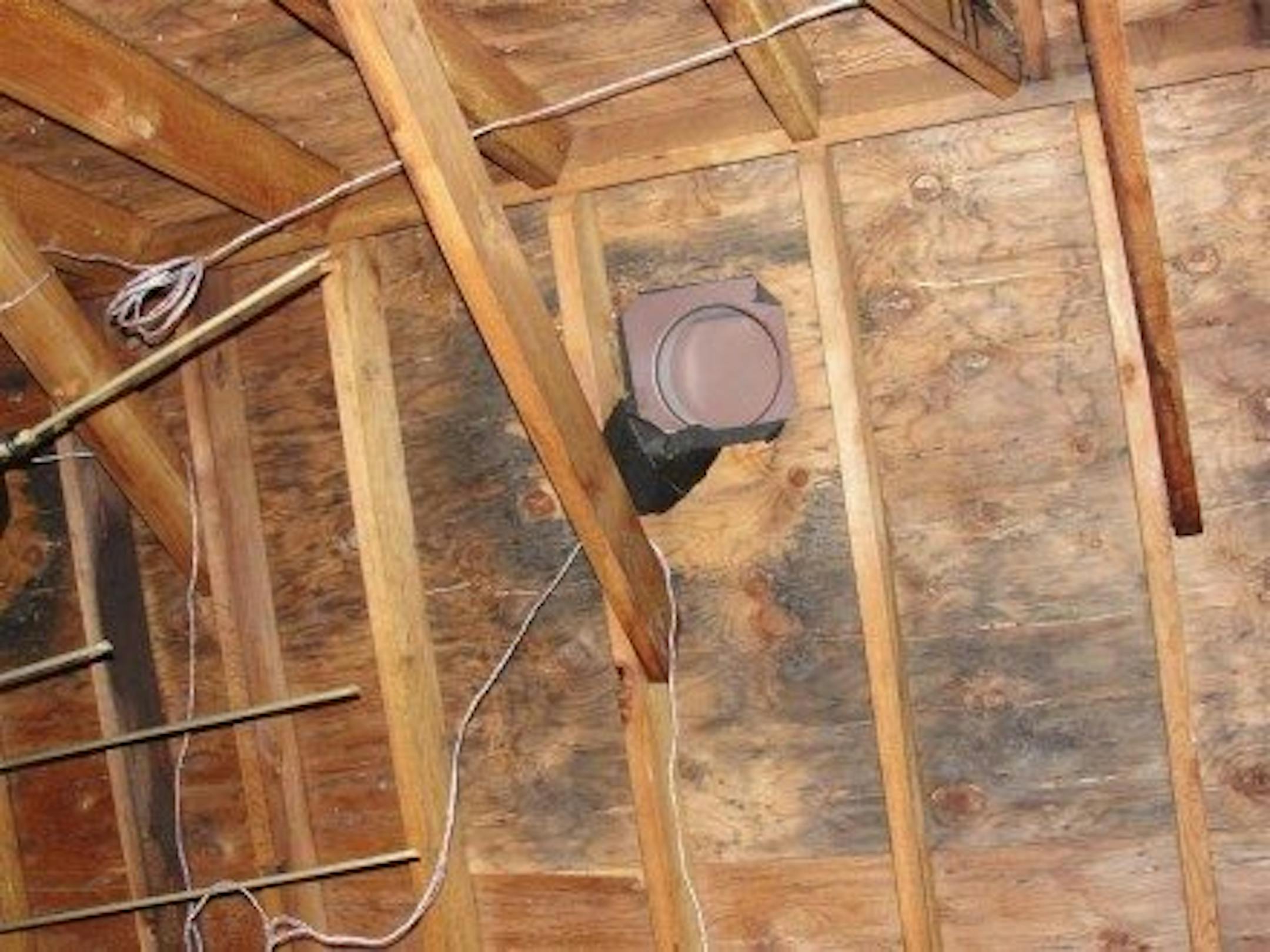
What causes mold in an attic
When mold grows in an attic, it's caused by a moisture problem. Period. Some moisture sources are obvious and have a huge impact - bathroom exhaust fans, kitchen exhaust fans, clothes dryers... they all pump moisture out of the house, and they should never be vented in to the attic. Everyone knows that, right?
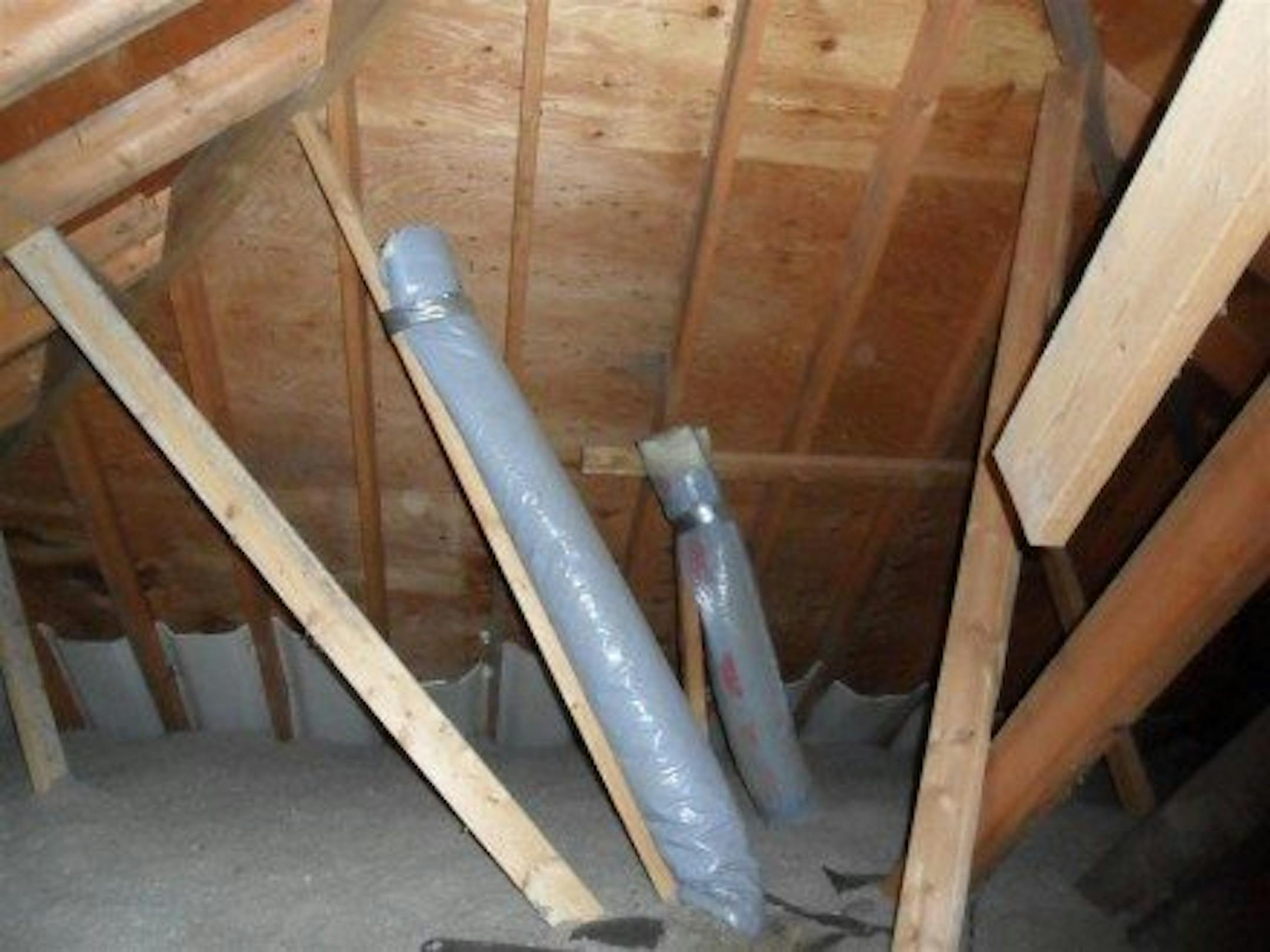
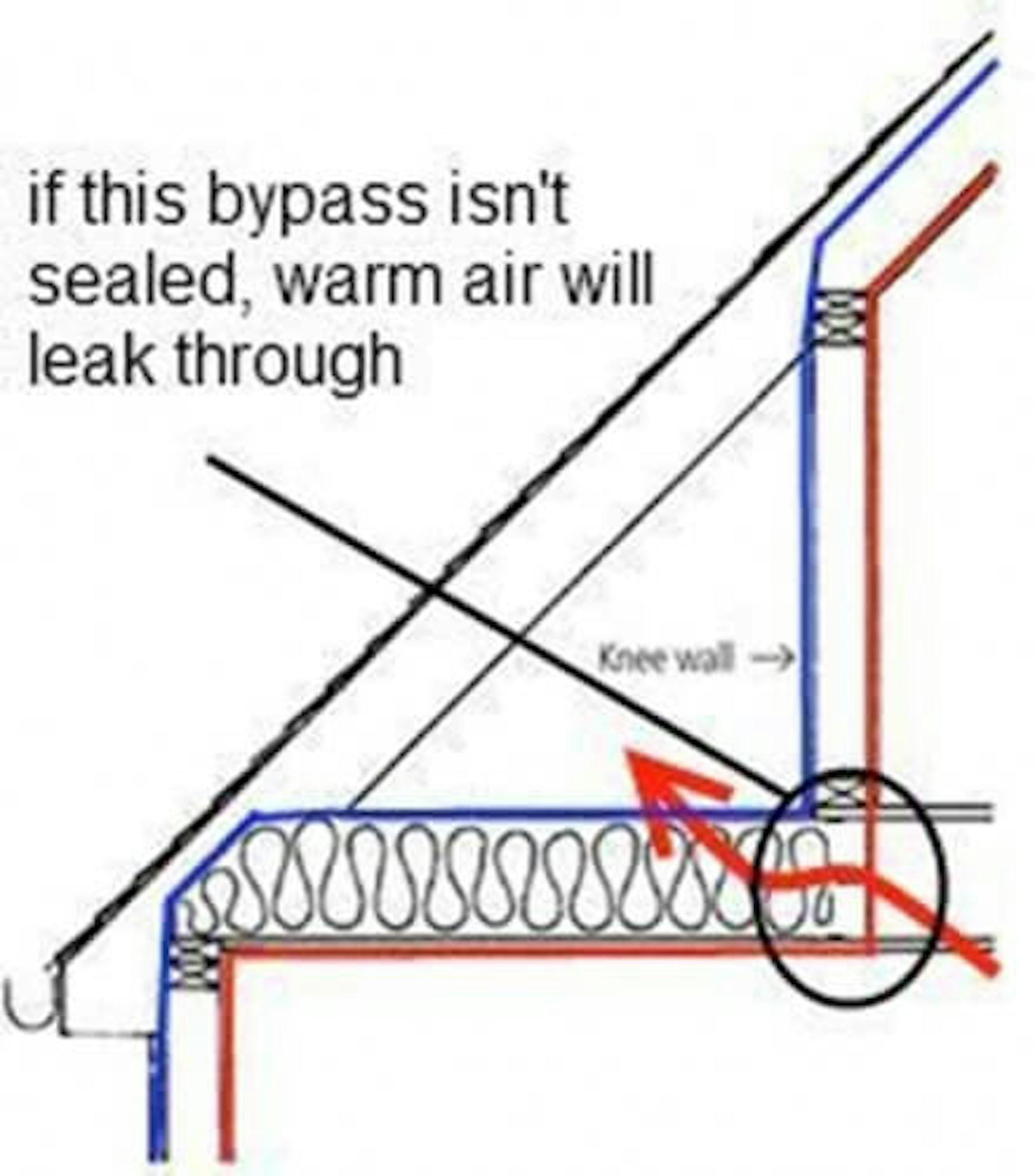
The less obvious moisture sources are attic bypasses; air leaks that allow relatively warm, moist air from the house to get in to the attic. To reduce the amount of moisture getting in to an attic, the attic air leaks need to be sealed off. Covering these air leaks with traditional insulation doesn't stop the air movement; there needs to be some type of air barrier installed, such as foam insulation or caulk. These attic bypasses show up quite clearly with an infrared camera, but any well-trained insulation contractor will already know exactly where to look for these.
Photos of Attic Bypasses / Attic Air Leaks
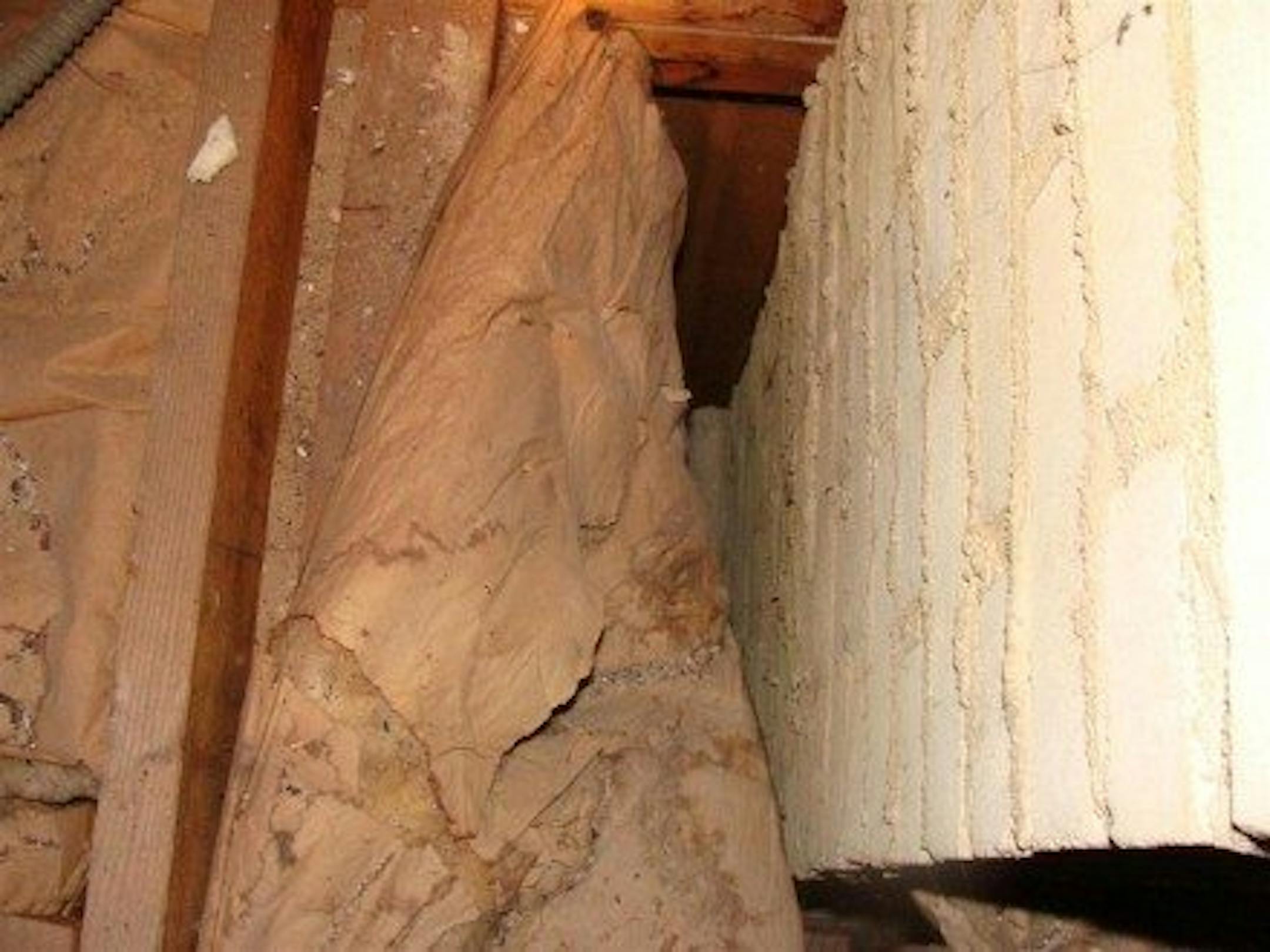
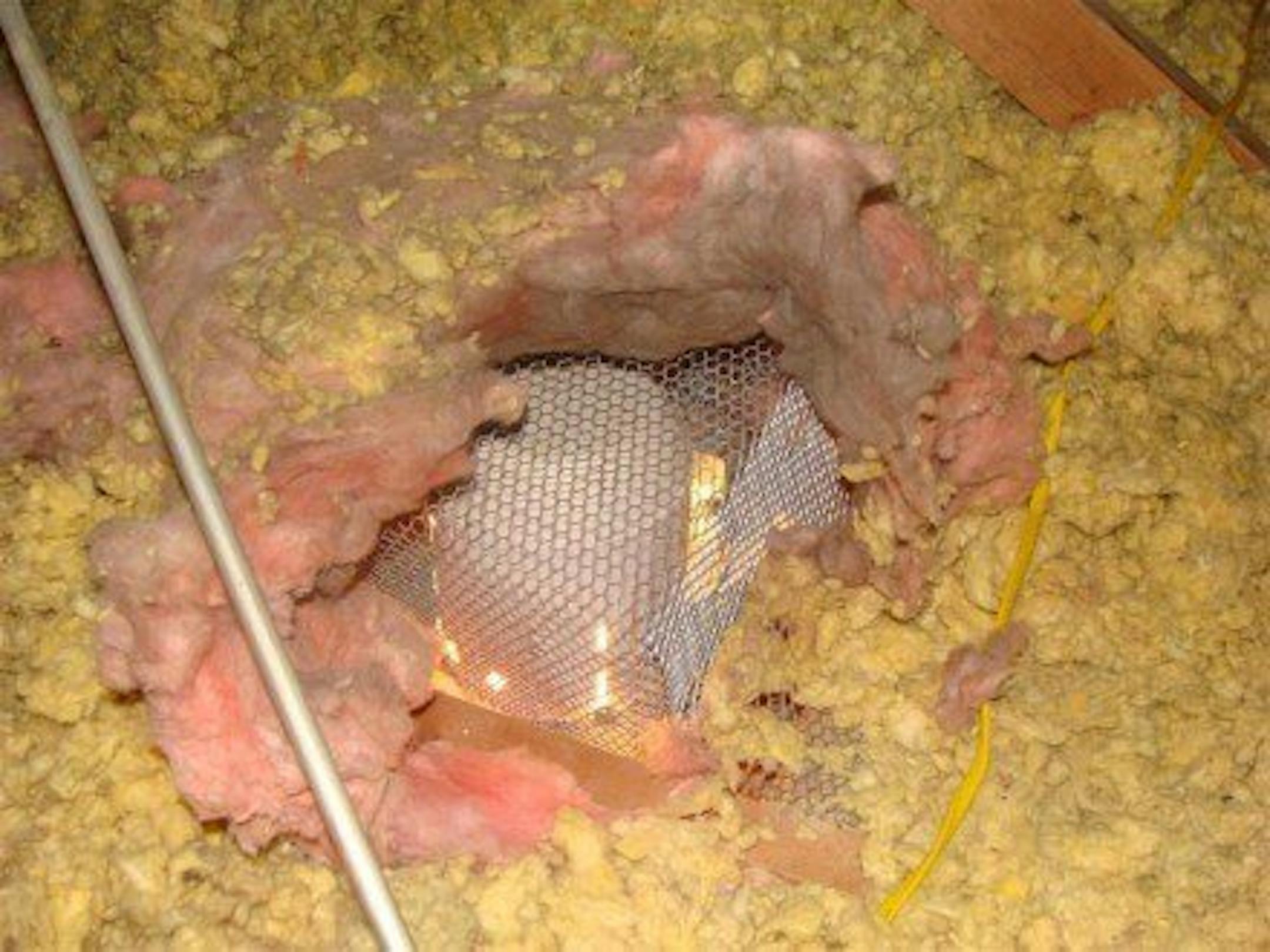
I've accumulated about a bazilli0n photos of attic bypasses over the years, so included below are a few of the most common places you'll find attic bypasses in just about every Minnesota house built before 1991. In all of the photos below, I've pulled the insulation away to reveal the bypasses; you won't find any of these in your attic without moving insulation around. For the record, home inspection standards of practice don't require the home inspector to move insulation... so don't be surprised if your home inspector didn't mention any of this stuff.
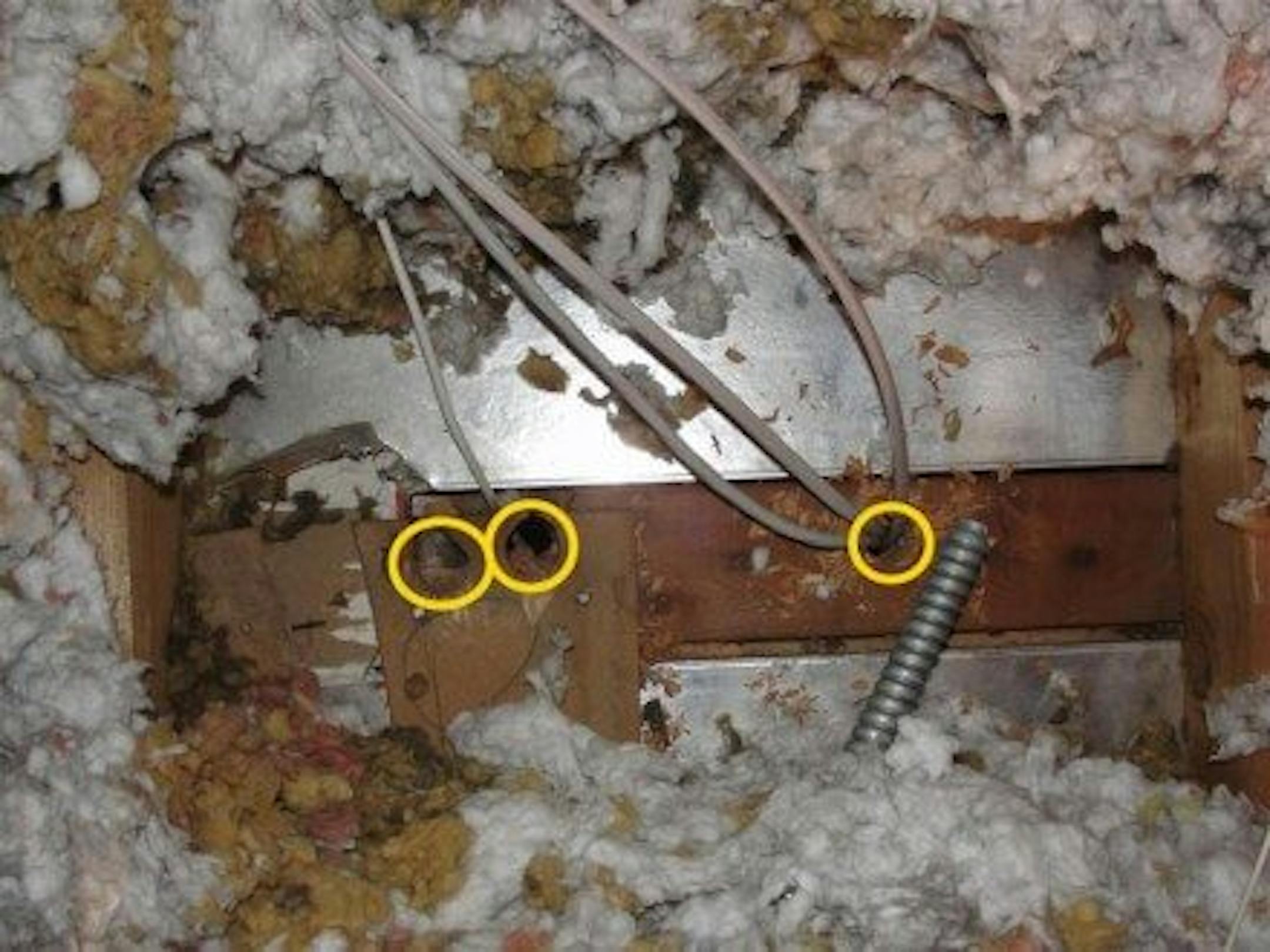
Any time small cables or wires pass through the top plates of walls in to the attic, the holes for the wires should be sealed up. When they're not sealed, they leak air. Do you see how some of the insulation in the photo below has been darkened? It's not mold. This is the result of years and years of air leaking through the insulation; the insulation acts like a filter, and traps all the dust in the air, turning it black. Even though these tiny holes don't seem like a big deal, having them all over your attic can have a huge effect. Sealing these gaps can be easily accomplished with a can of foam insulation.
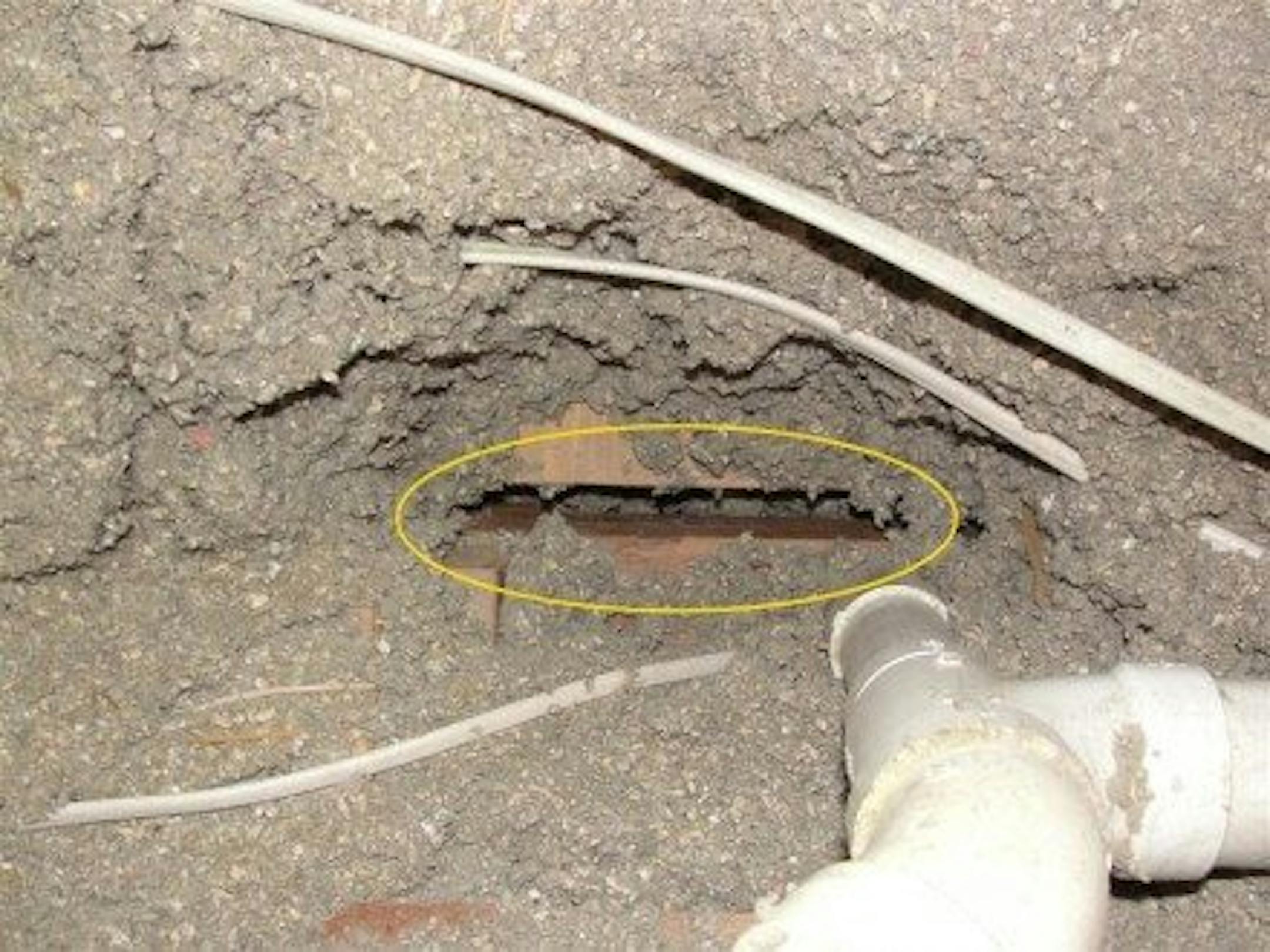
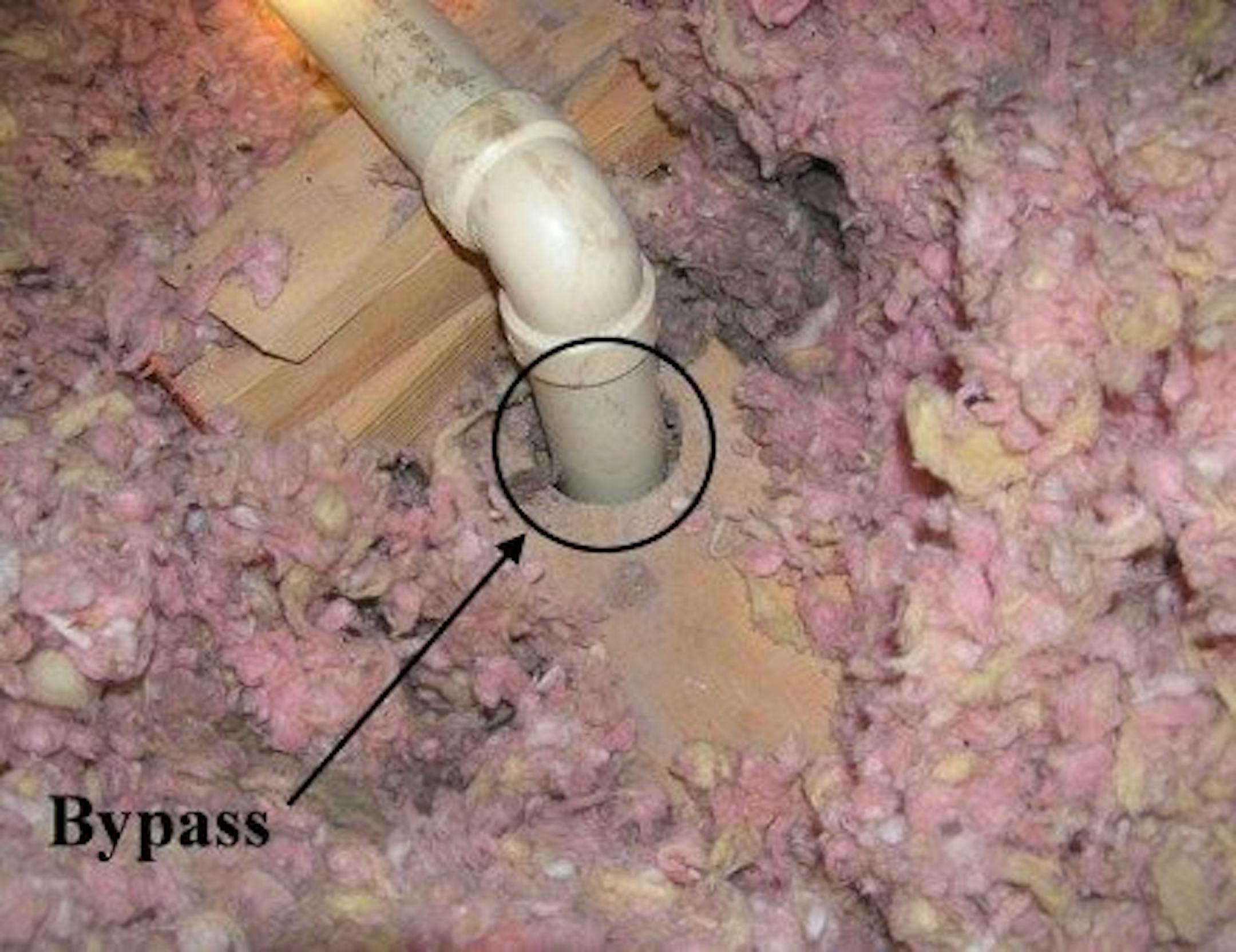
Larger penetrations in to the attic, such as plumbing vents, also need to be sealed. Again, foam in a can works well.
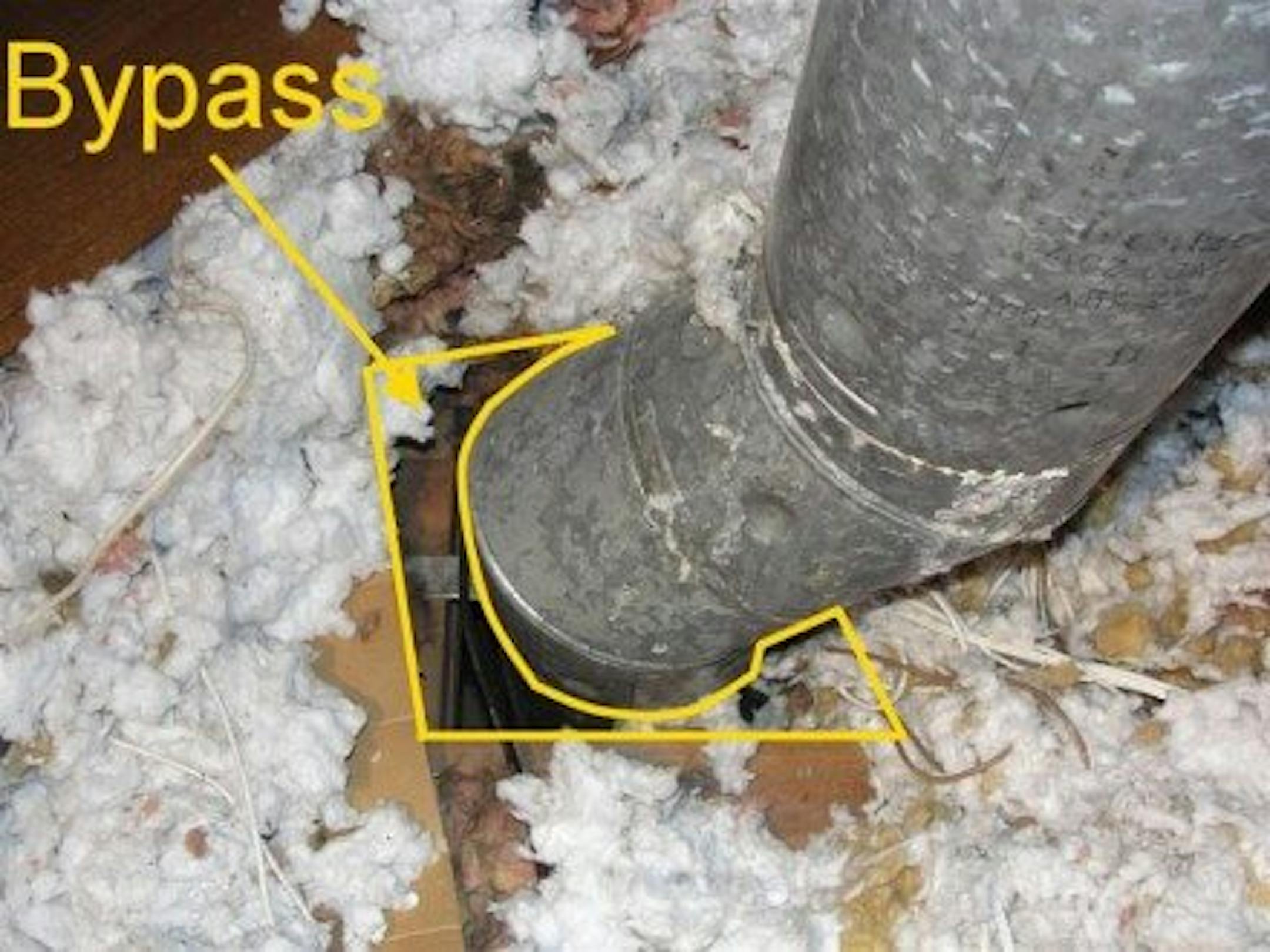
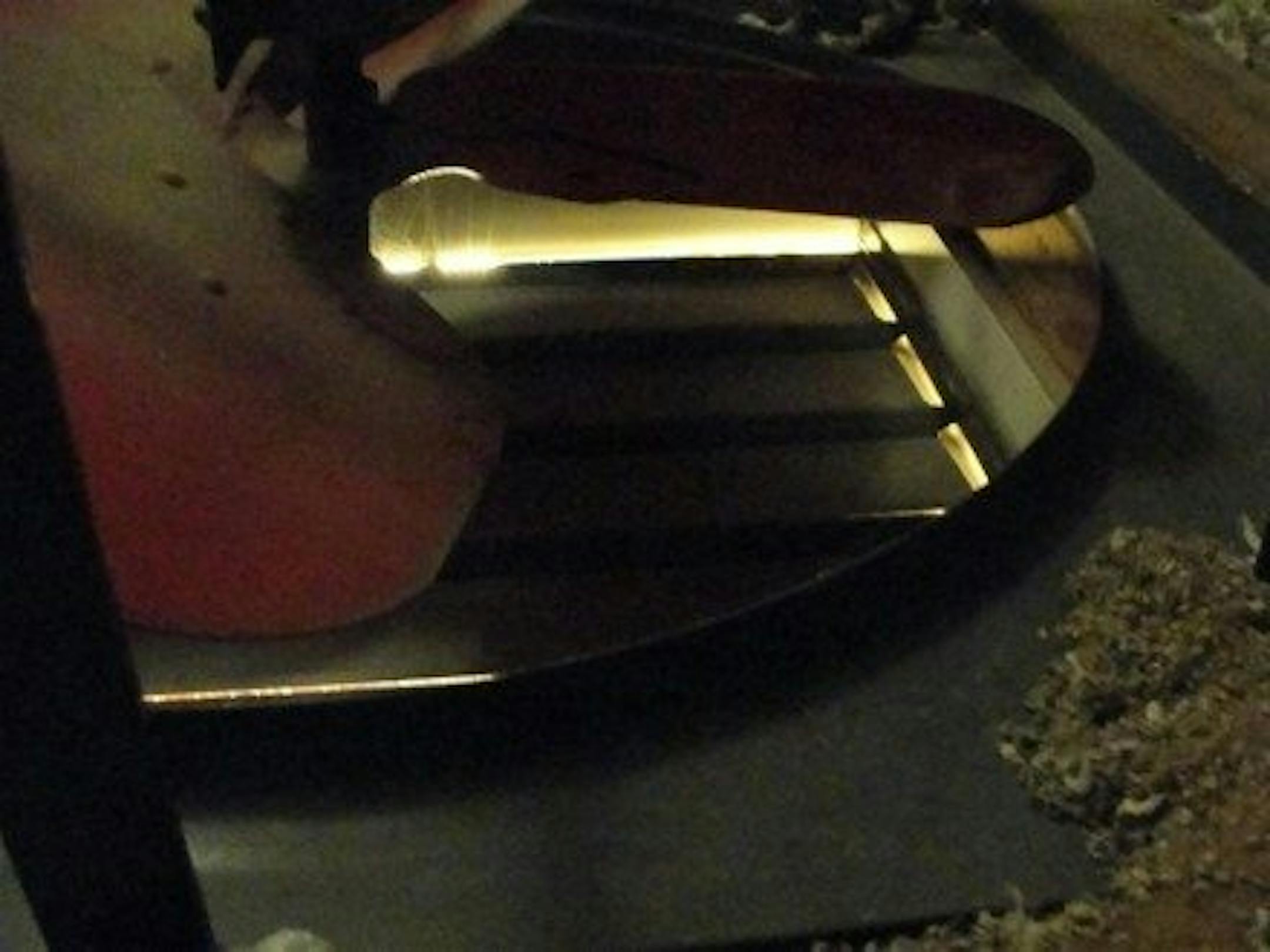
The first place I always check for attic air leaks is around the furnace vent; if there is air leaking in to the attic around this chaseway, there will surely be air leaking everywhere else. In this first photo, the darkened insulation is a dead giveaway that there is a lot of air leaking through here. Foam insulation wouldn't be an appropriate repair for this location - the vent is supposed to have at least one inch of clearance to anything combustible. In the photo below, installing a small block of wood to fill the gap at the bottom (maintaining a one inch clearance to the vent) and then sealing the entire assembly with high-temperature caulk would be a good fix.

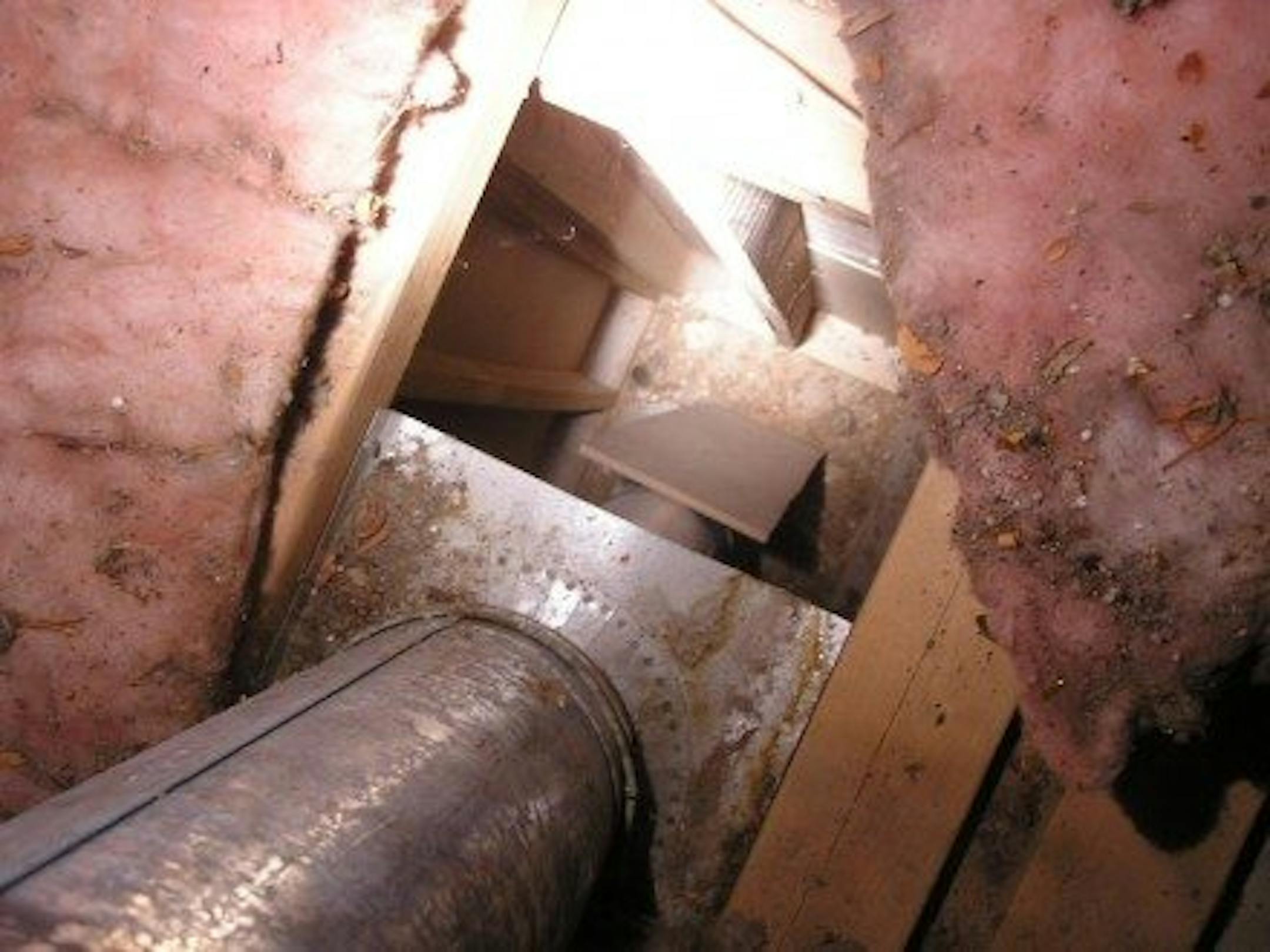
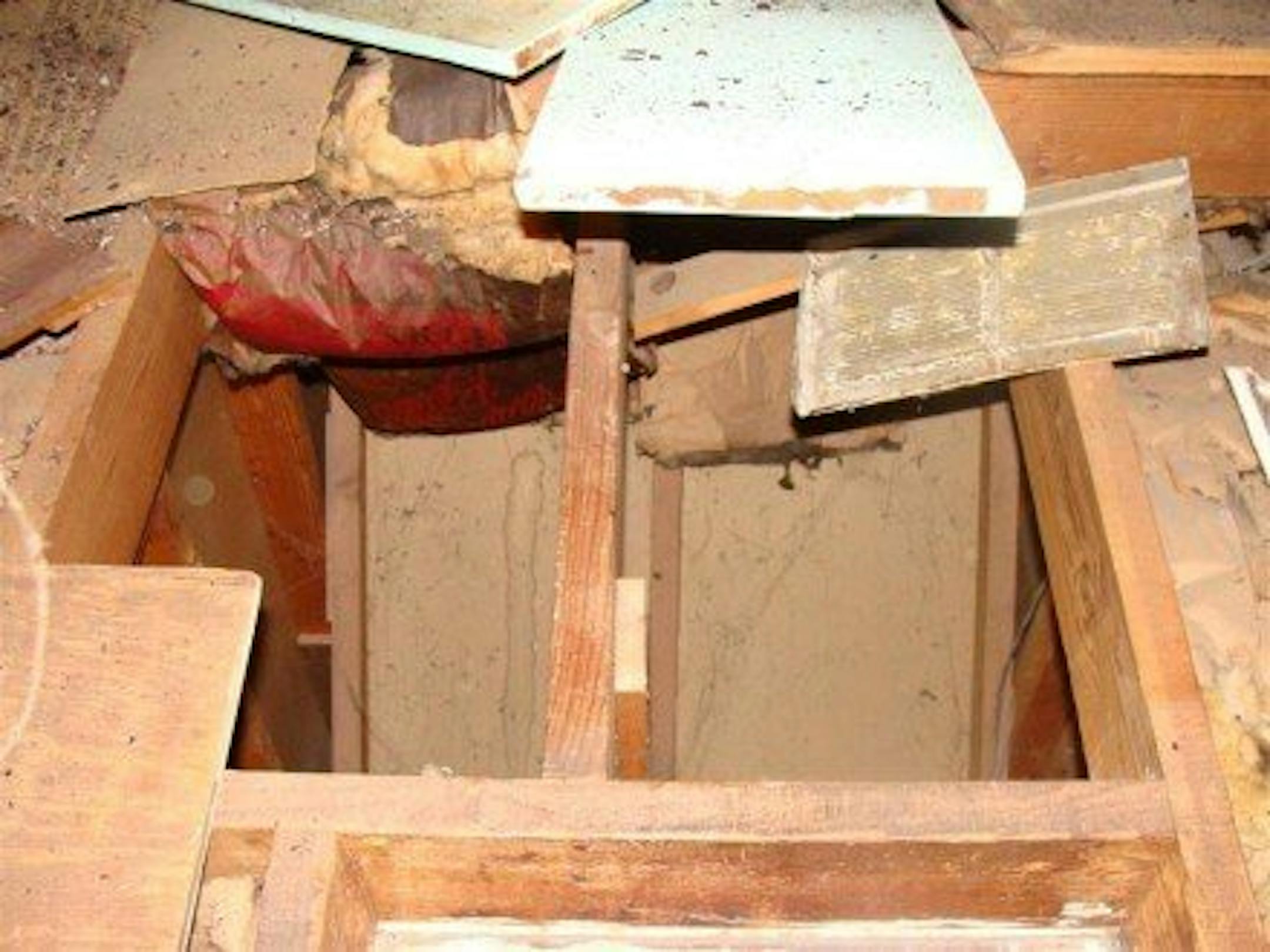
Here's another furnace vent - this one is completely missing the sheet-metal collar. I could see right down in to the walls after pulling the insulation away. This is very common.