

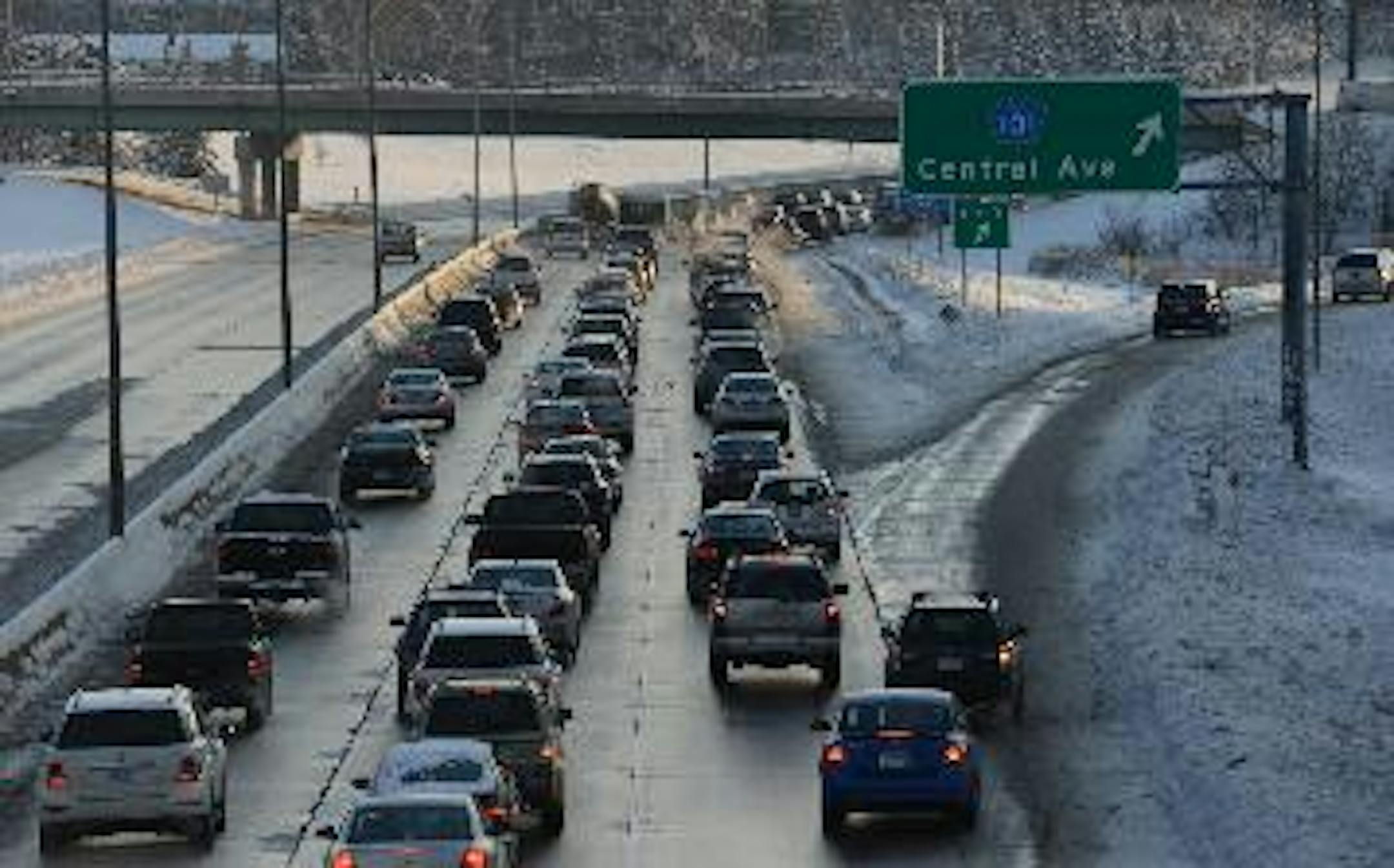
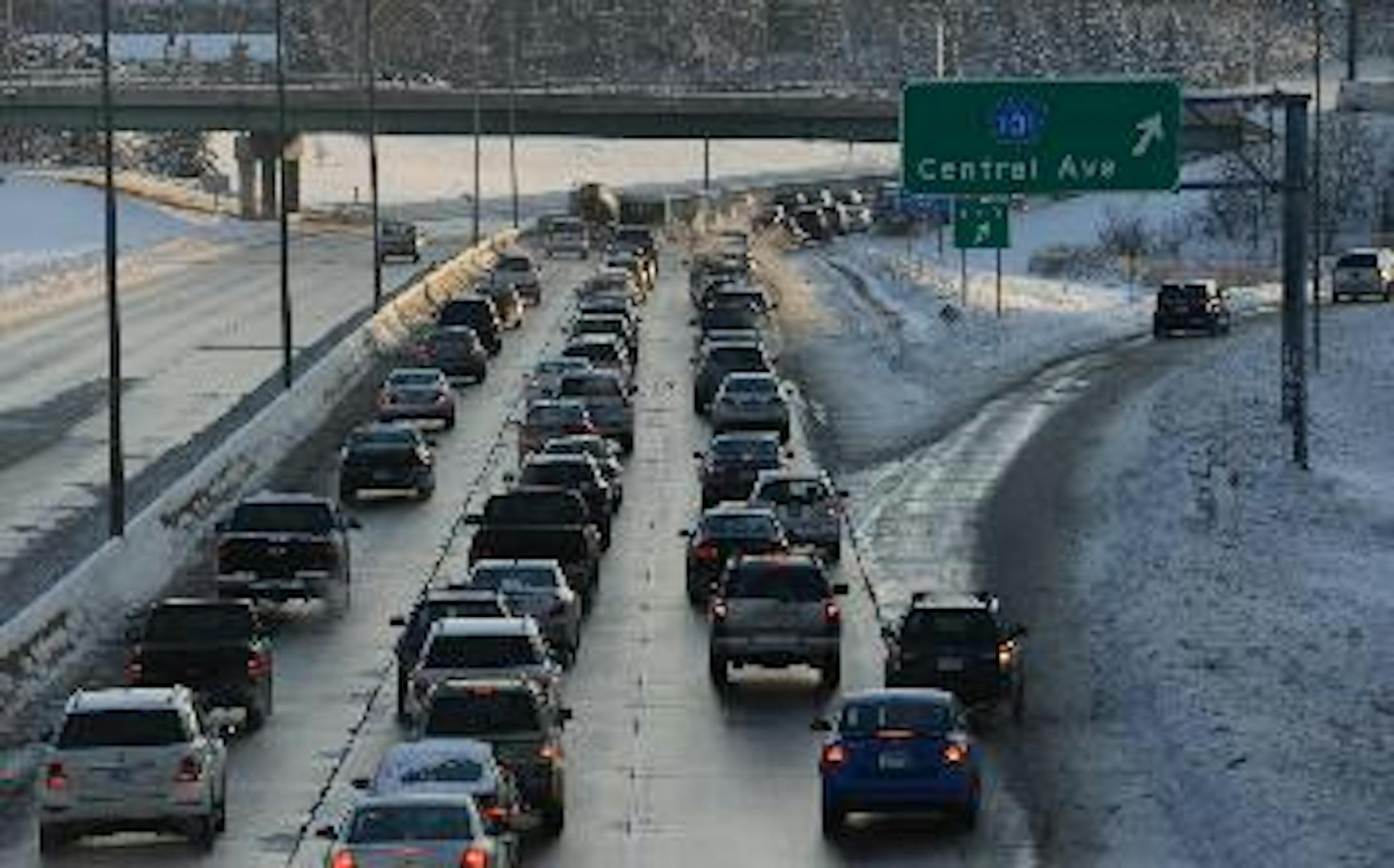
After two days of white-knuckling, patience-testing commutes for Twin Cities motorists, the drive home Tuesday evening has the potential to be the least aggravating and quickest since Sunday's substantial snowstorm left a rutty residue on miles and miles of streets and highways.
But a full recovery is not expected until Wednesday. That's when warmer temperatures and a little bit of sun providing just enough warmth will allow the salt and chemicals applied to the roads to kick in and counter the moisture-laden mix that froze under travelers' wheels.
"We are out scraping. We are kicking it in the rear and will keep working," said Kent Barnard, spokesman for the Minnesota Department of Transportation (MnDOT). "We hope to see a huge improvement by tonight's rush hour."
That won't take much after ice-compacted roads led to many commutes that took up to three times as long as normal and led to scores of crashes and spinouts. At times, traffic was at a standstill on major freeways during Monday's morning and evening commutes, and repeated Tuesday morning.
The 15 inches of heavy, wet snow melted just enough as it fell to create wet roads, but quickly froze as temperatures plunged into the teens. The remainder of the snow fell on the ice, which was then compacted by motorists who drove over the top of it, allowing it to bond solidly to the pavement, said Mike Kennedy, Minneapolis Public Works superintendent.
"It becomes bulletproof," he said. "We saw this in 1991 with the Halloween snowstorm, and conditions persisted for weeks. This is mini-version of that effect."
Both Minneapolis and the MnDOT applied the typical rock salt and salt brine (a liquid mixture), but those chemicals lose their effectiveness when the temperature falls below 15 degrees.
There are some stronger compounds such as potassium acetate, which MnDOT uses on bridges, or magnesium chloride with soy bean oil that might have had better results. But those with more potency are not always readily available and can harm the environment and infrastructure. They also are more expensive, Kennedy said.


