
Opinion | Minnesota should reject burning trees and trash for electricity

The state’s “carbon free” law is unambiguous, and the Public Utilities Commission should implement it as such.

October 23, 2025 at 6:51PM
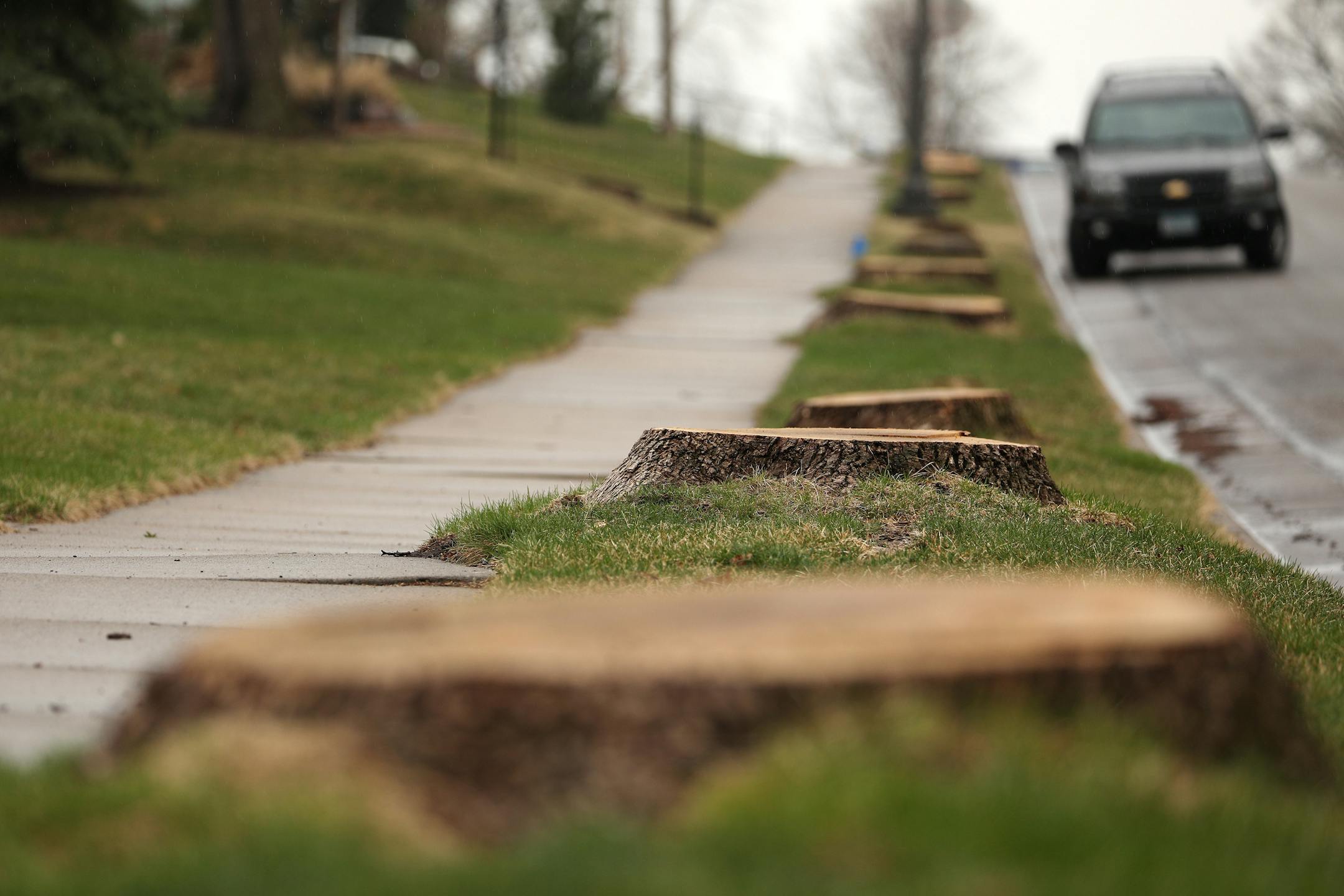
A row of stumps lined a street in St. Paul after the trees were cut down in attempt to manage Emerald Ash Borer by the city. "The MPCA claims we shouldn’t follow the law as written because we have an excess of dead trees killed by emerald ash borer," the writers say. "Emerald ash borer is just an excuse. In reality, utilities like Minnesota Power are looking to harvest our northern forests for wood to keep old coal plants burning, but with a different dirty fuel." (Anthony Souffle/The Minnesota Star Tribune)

Opinion editor’s note: Strib Voices publishes a mix of guest commentaries online and in print each day. To contribute, click here.

•••

Opponents of action on the climate crisis have often claimed to be concerned with energy costs. But then the cost of solar, wind and industrial scale batteries plummeted. They’re now the cheapest way to produce new electricity. Since those costs keep dropping, an Oxford study concluded the transition to clean energy will actually save us money. And the faster we transition, the more we save.

Those who promote an “all of the above” energy strategy should be celebrating. But they’re not. The Trump administration is waging an all-out attack on renewable energy while increasing fossil fuel subsidies and forcing utilities to keep open expensive coal plants. This will raise our electricity bills and they know it. It was never about cost.

With the federal government propping up fossil fuels, state action on clean energy must stay grounded in reality. Fortunately, in 2023 Minnesota legislators passed the 100% clean energy law which requires Minnesota utilities to shift to carbon free energy. That law includes a clear definition: “Carbon free” means generating electricity “without emitting carbon dioxide.”

This wasn’t an easy win. Polluting industries would have preferred a loosely written “carbon neutral” law that would invite creative carbon accounting to benefit certain industries, like companies that want to burn wood or trash for electricity. But they lost and Minnesotans won. The Legislature passed an unambiguous “carbon free” law for the Public Utilities Commission (PUC) to implement. Now those industries are arguing the PUC should just pretend we passed a squishy law they would have preferred. We appreciate 42 legislators who wrote to the PUC standing up for the law.

Burning wood for electricity has been a disaster in Europe. Despite claiming they would only burn “waste wood,” they’ve been shipping across the ocean wood pellets made from full size trees from clear cuts in the southern United States. This fraud is hard to prevent since neither the buyer nor seller of wood has any incentive to insist it is actually waste. Each branch of a tree doesn’t come with a bar code to track its source.

Moreover, burning either wood or “waste wood” for electricity is actually worse than burning coal. Wood is much less energy dense than coal, so you need to burn much more of it to generate the same amount of electricity. Burning wood for heat can be a reasonable choice, particularly in a modern high-efficiency unit. But for electricity, we have much better options in 2025. With Europe now moving away from their past failures, Minnesota should not replicate them.

Just like burning woody biomass, burning trash for electricity and calling it “carbon free” is obviously against the law; it emits nearly twice as much carbon per megawatt hour as burning coal. Burning trash is another instance of environmental racism because some of the biggest garbage burners are in communities of color. The Hennepin Energy Recovery Center (HERC) impacting north Minneapolis is an example. Contrary to industry claims, burning trash doesn’t eliminate the need to landfill. The ash still needs to go somewhere. Furthermore, acting as if trash burning is clean energy creates a perverse incentive to keep producing more garbage.

Unfortunately, the Walz administration is siding with polluting industries. The MPCA claims we shouldn’t follow the law as written because we have an excess of dead trees killed by emerald ash borer. But creating a statewide incentive to expand wood burning because of a temporary challenge in the metro area is dangerously shortsighted. Emerald ash borer is just an excuse. In reality, utilities like Minnesota Power are looking to harvest our northern forests for wood to keep old coal plants burning, but with a different dirty fuel.

Perhaps for some players at the State Capitol, this rollback at the PUC was the plan all along. But our organizations would not have supported the 100% law if we were told the standard of “carbon free” would be discarded for favored industries.

Pretending words don’t mean what they mean — or that laws are just suggestions — increases distrust of government. It’s already rampant in Washington, D.C. In Minnesota, the PUC should recognize that and follow the clear language of the law that 42 legislators have made clear does not include burning trash or biomass.

Margaret Levin writes on behalf of the Sierra Club North Star Chapter. Nazir Khan writes on behalf of the Minnesota Environmental Justice Table. Duane Ninneman writes on behalf of CURE.

about the writer

about the writer

Margaret Levin, Nazir Khan and Duane Ninneman

More from Commentaries

See More
card image
Leila Navidi/The Minnesota Star Tribune

When did we decide that the proper consequence for deep systemic failure is a soft landing?

card image
card image