
MN GOP lawmakers drop call for tax cuts in hopes of a budget deal

The GOP withdrew their desire for about $200 million in tax cuts in hopes they can avert a government shutdown and get DFL Gov. Mark Dayton to abandon his call for $1.8 billion in tax increases.

June 16, 2011 at 9:35PM
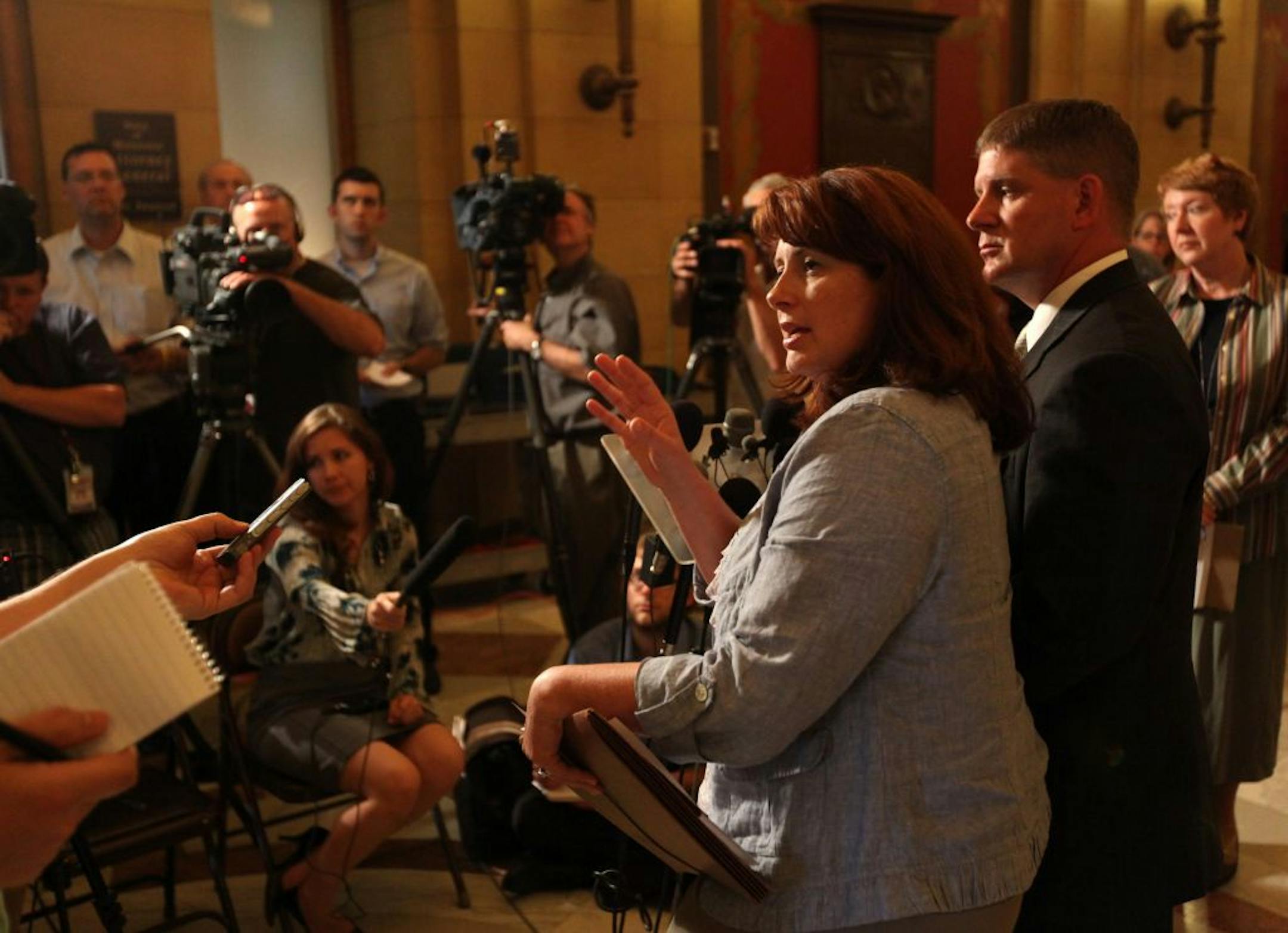
State Senate Majority Leader Amy Koch, R-Buffalo, and House Speaker Kurt Zellers, R-Maple Grove, talked to the media about their latest budget proposal Thursday afternoon.
State Senate Majority Leader Amy Koch, R-Buffalo, and House Speaker Kurt Zellers, R-Maple Grove, talked to the media about their latest budget proposal Thursday afternoon. (Star Tribune/The Minnesota Star Tribune)

Minnesota legislative Republicans are dropping their call for about $200 million in tax cuts in hopes they can avert a government shutdown and get DFL Gov. Mark Dayton to abandon his call for $1.8 billion in tax increases.

"This is a major compromise," said House Speaker Kurt Zellers, R-Maple Grove. Both he and Senate Majority Leader Amy Koch. R-Buffalo, said relinquishing the tax cuts, a bedrock campaign promise, was a tough move that some of their GOP colleagues do not support.

Gov. Mark Dayton will share his reaction at 3 p.m. Thursday.

Although it was hard for Republicans to give up their call for tax cuts, the limited time offer -- it expires on Monday at 5 p.m. -- does not increase overall state spending from their bottom line $34 billion goal. Dayton wants to spend about $2 billion more.

Their continuing stalemate may lead to government shutdown if they cannot come together by the end of the month.

But Republicans said their offer Thursday was an example of how hard they are working to avoid that.

Koch and Zellers said there were "extremely" tough conversations inside Republican circles about dropping the measures to cut taxes. Koch said that her number two -- Deputy Senate Majority Leader Geoff Michel -- told her that he may not vote for the measure when if it came to the Senate floor.

"I'm going to get that vote," she said with a smile.

The offer would add money to the higher ed, public safety, education and environment budgets and add money for spending on aids and credits. The offer still leaves Republicans and Dayton about $1 billion apart on spending on human services and about $1 billion apart on spending for aids and credits, much of which is state aid to local governments.

about the writer

about the writer

rachelsb

More from No Section

See More
FILE -- A rent deposit slot at an apartment complex in Tucker, Ga., on July 21, 2020. As an eviction crisis has seemed increasingly likely this summer, everyone in the housing market has made the same plea to Washington: Send money — lots of it — that would keep renters in their homes and landlords afloat. (Melissa Golden/The New York Times) ORG XMIT: XNYT58
Melissa Golden/The New York Times

It’s too soon to tell how much the immigration crackdown is to blame.