
Opinion | Minnesota should be fighting to build data centers

The state can either lead the digital economy or watch it pass us by.

December 9, 2025 at 8:15PM
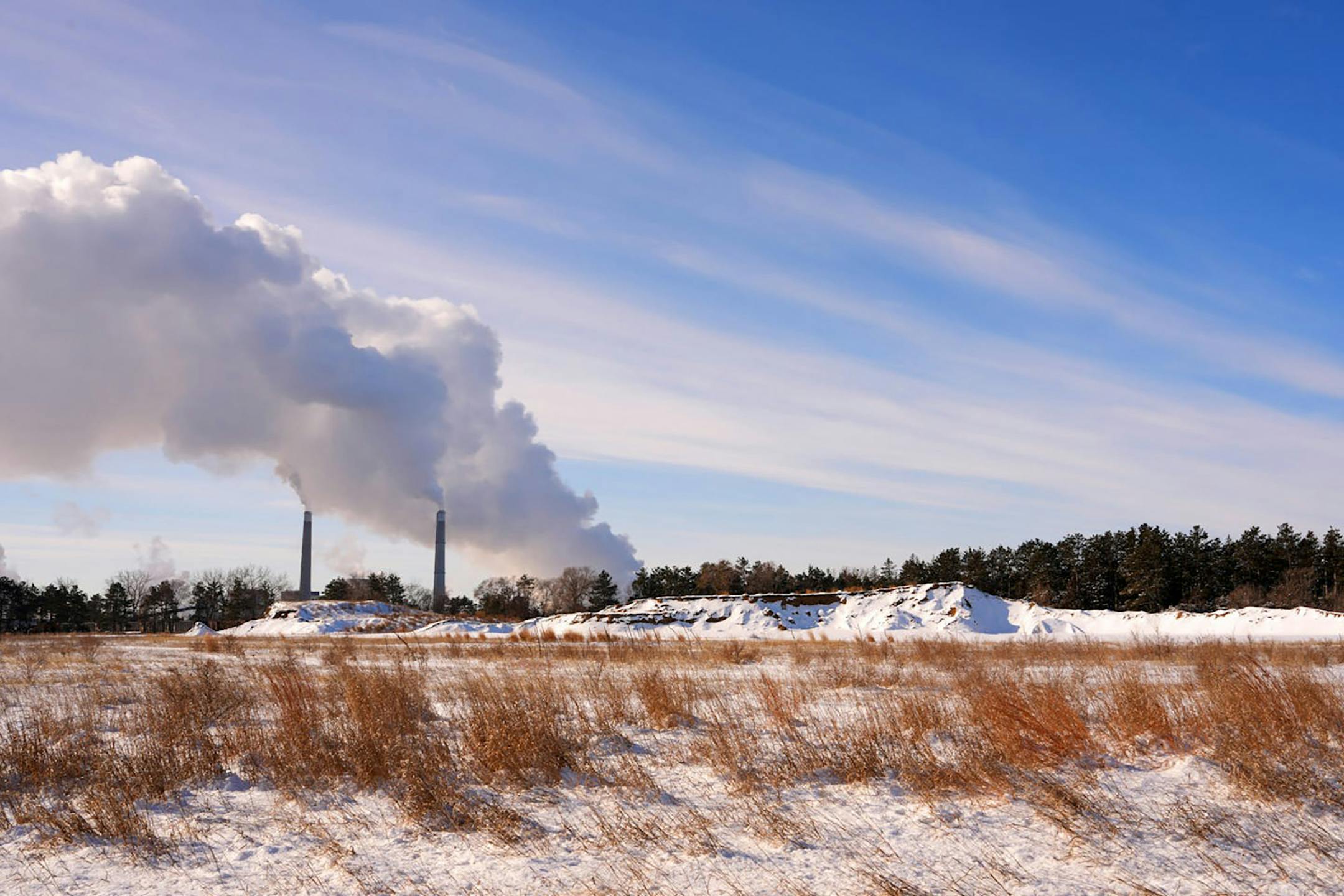
Amazon proposed a data center on a parcel of land near the Xcel Sherco coal-fired power plant in Becker, Minn. "The project represented a multibillion-dollar investment, supported up to 15,000 construction job-years, and would have created hundreds of permanent, high-skill positions," Joe Ryan writes. (Anthony Souffle/The Minnesota Star Tribune)

Opinion editor’s note: Strib Voices publishes a mix of guest commentaries online and in print each day. To contribute, click here.

•••

Minnesota faces a critical choice right now.

A once-in-a-generation economic opportunity is unfolding across the country as companies race to build the infrastructure that powers artificial intelligence, cloud computing and the broader digital economy. States that move decisively are securing billions in private capital, thousands of high-wage jobs and new anchors for long-term tax stability.

Minnesota ought to be leading this race. Instead, we are watching it slip away.

Becker wasn’t only a miss — it was a warning

The clearest example is a failed project in Becker, Minn. Amazon Web Services purchased roughly 350 acres near the soon-to-be closed Sherco coal plant. The project represented a multibillion-dollar investment, supported up to 15,000 construction job-years, and would have created hundreds of permanent, high-skill positions. For a community recovering from the phase-out of Sherco, it would have been transformative. Additionally, Xcel energy had obligated itself to spur economic development, via their IRP, for all the jobs lost to the closing of Sherco.

Then the permitting process started.

State regulators determined that the data center’s backup power system — roughly 250 diesel generators designed to run only during outages and routine testings — would be treated the same as a new, utility-sponsored power plant as if it were the project’s primary power source or providing consistent power to the grid. States like California, Virginia and Maryland all have created permitting paths that separated new power plants and data center back-up generation. That single determination triggered years of uncertainty for this project and data centers throughout the state.

Minnesota already has robust air permitting, through the MPCA, around any industry that uses diesel generators as part of operations. These existing standards, and EPA standards, apply to new hyperscale data center projects, and this is standard across the country. This same permitting may also include additional environmental review around bulk fuel storage.

Amazon paused their project, and developers nationwide looked elsewhere for opportunities to invest.

And Becker wasn’t an isolated incident. Major data center developments in Hampton and North Mankato are now also stalled in regulatory limbo.

Minnesota should be dominating this sector

Every Minnesotan should be frustrated by this because Minnesota has every natural and structural advantage needed to build a regional data center hub.

Axios identified the Upper Midwest as an emerging national corridor for AI-driven data expansion — with Minnesota squarely in the center of it. Our cold climate cuts cooling costs and our energy grid is stable. Xcel Energy’s integrated resource plan anticipates precisely the type of load growth over the coming decade data centers will require. And we have elite building trades, deep fiber networks and have historically had a mature regulatory tradition that — at its best — pairs high standards with dependable outcomes.

The Minneapolis Fed notes that at least a dozen large-scale data center sites are planned across the Ninth District (the Upper Midwest stretching from Wisconsin to Montana), with Minnesota uniquely well-positioned because of climate, workforce and infrastructure advantages.

In other words, the table is set for Minnesota to seize this immense opportunity, and the state is frittering it away.

Address real concerns without halting progress

Opposition to data centers usually focuses on three issues: confidentiality, water use and energy demand. These concerns deserve a serious hearing — and thoughtful answers — but none justify shutting the door on an entire sector.

Sometimes communities raise concerns on confidentiality, but early-stage confidentiality is standard across advanced manufacturing, semiconductor fabrication and major energy projects. It protects competitive site negotiations, while Minnesota’s permitting rules ensure full disclosure of water and energy use once a project enters the public process.

Water use also warrants scrutiny, especially during drought cycles. That’s precisely why the Legislature now requires early coordination with the Department of Natural Resources for large water users and why modern data centers increasingly recycle cooling water or rely on air-based systems that sharply reduce consumption.

Energy demand is the hardest issue, and it deserves clear-eyed discussion. Minnesota has begun exploring tools to protect residential ratepayers — including new rate structures and, in some cases, fees on very large facilities — though any final approach should ensure competitiveness while maintaining fairness. Minnesota’s 2040 carbon free-energy pledge aligned with the energy-use goals of most hyperscalers.

Strong oversight is entirely achievable. What drives investment away isn’t environmental standards — it’s uncertainty, delay and a process that never reaches a clear “yes” or “no.”

This is not the first time Minnesota has had to balance development with environmental stewardship. We created some of the nation’s most stringent mining and water-quality standards, and those industries adapted. We expanded agriculture while maintaining some of the strongest conservation rules in the Midwest.

The formula has always been the same: set clear expectations, enforce them and decide in a timely manner. Data centers require the same.

A path forward

Minnesota doesn’t need to compromise its values to compete. The state simply needs to offer clarity, speed and consistency.

Here’s what would make an immediate difference:

  1. A defined permitting timeline — with clear checkpoints and transparent criteria.
    1. Standardized environmental requirements for water efficiency and backup generation.
      1. A dedicated data-center permitting track within state agencies to prevent multiyear delays.
        1. Full public reporting of water and once projects enter permitting.

          These steps would protect natural resources and give companies the certainty needed to commit billions in private capital.

          The clock is ticking

          Developers across the country are watching what happens in Becker and North Mankato. If Minnesota projects continue drifting into indefinite review, investment will simply go somewhere else — often to states with weaker environmental protections, not stronger ones.

          We can lead the next era of the digital economy. Or we can watch billions of dollars, thousands of jobs and long-term tax stability move to states willing to act faster.

          Minnesota has the assets. We now need the urgency. The window is open — but not for long.

          Joe Ryan is founder and CEO of Oppidan, a Minnesota-based real estate development company.

          about the writer

          about the writer

          Joe Ryan

          More from Commentaries

          See More
          card image
          Anthony Souffle/The Minnesota Star Tribune

          The state can either lead the digital economy or watch it pass us by.

          card image
          card image