

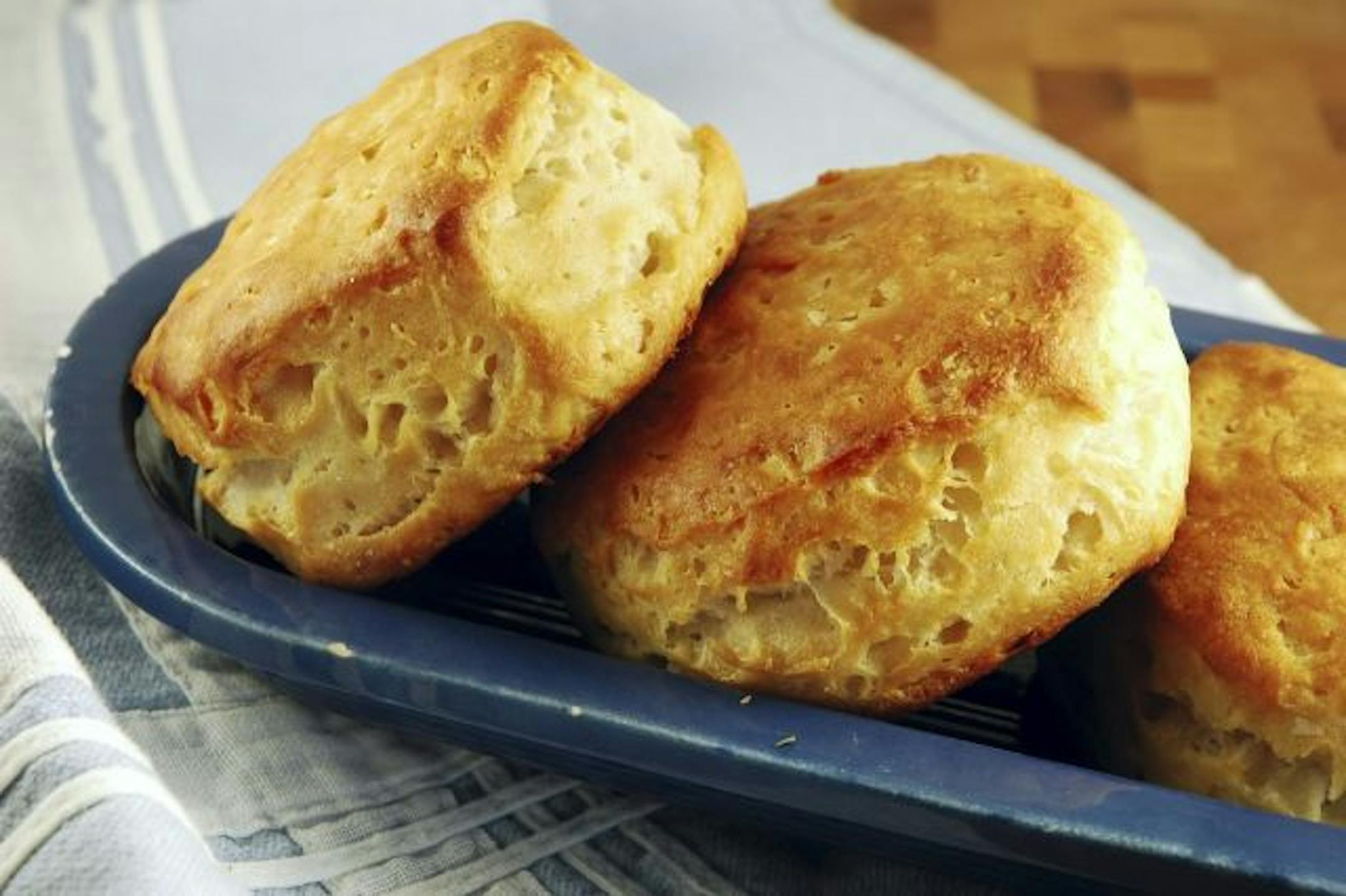
Baking from scratch is a phrase that conjures images of aprons, rolling pins and buttermilk biscuits. Yet, seduced by slim tubes of refrigerated dough that we whack against the counter -- undeniably satisfying on certain days -- we lost track of the ease, and the pride, of turning out a simple baking powder biscuit.
We're talking about the sort of biscuit that can support a serving of beef stew, a ladle of chicken a la king, or a cloak of sausage gravy. It's a biscuit to drizzle with honey, or split and fill with a scrambled egg and strip of bacon for a hearty breakfast. It's the perfect quick accompaniment -- less than 30 minutes, start to finish -- to a bowl of soup.
So why don't we make them more often? Probably because we don't know how easy they are.
The path to great biscuits is built on a couple of key concepts. The first is to mix them not too much, nor too little, but just enough. Determining this is easier than it sounds, once you have the dough in front of you. After the buttermilk is added, you want to mix the dough until it just holds together in the bowl, then knead it briefly, only about 30 seconds. Too much handling will result in tough biscuits.
When you cut them, you'll have the best luck using a round biscuit cutter with a thin, sharp edge. But if you don't need another gadget in the kitchen, you can also use a clean tuna or soup can (although you'll want to open both ends and can technology has made this a bit tricky with little or no "lip" on the can's bottom, so be careful).
In any case, but especially with "homemade" cutters, place the cut round of dough upside-down on the baking sheet. Even a biscuit cutter will compress the top layers of dough just a bit, so they stick together. Placing them bottom-side up will enable them to rise higher in the oven.
Along the same lines, don't twist the cutter when you cut the biscuits. That additional friction can seal the layers so they won't separate as well as they rise in the oven's heat, resulting in a less lofty biscuit.
Shortening vs. butter


