Not a single major leaguer in today's game was in the major leagues in 1994, when a strike ruined a season and canceled a World Series. Every player on the field this season has known nothing but labor peace, nothing but an economic system that helped make players rich and owners richer.
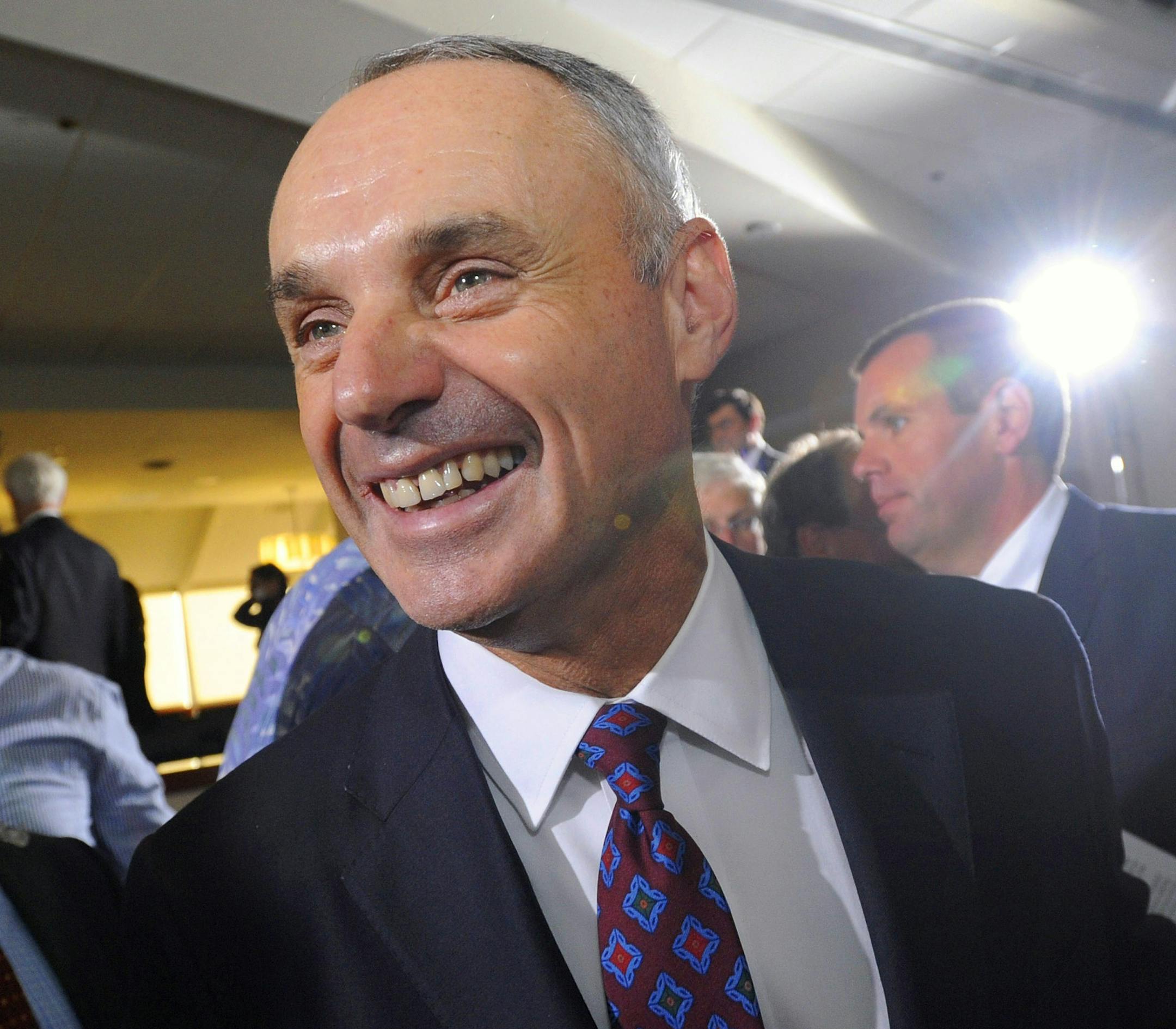
And that's why the election of Rob Manfred this week was good news for baseball fans.
For an entire generation of fans, like this entire generation of players, the nonstop rancor of the 1970s, 80s and first half of the 90s was disheartening and exhausting. Eight work stoppages, some minor but some lengthy and disastrous, kept negotiators in the news as much as pitchers and hitters. The race to the wire meant a negotiating deadline as often as a pennant race.
The nonstop bickering has largely been ended, drowned under an ocean of money that now flows into the game, more than $9 billion last year. It's difficult for owners to threaten the health of their game when their franchises keep doubling in value, for players to consider a unified shutdown when their average union member is a multimillionaire in his 20s.
But good times don't last forever, and even now, some owners harbor a desire to bring the players to heel, to erect a salary cap like those that artificially limit paychecks in the NBA, NFL and NHL. Witness the stubborn opposition to Manfred's election, which required a half-dozen votes to ratify; a clique of big-market owners exists with designs on damming up the river of cash that flows to today's athletes.
Commissioner Bud Selig was once one of them; he presided over the 1994 slugfest that devastated his sport, believing that the only way franchises like his Milwaukee Brewers, which he owned at the time, could compete was through salary limits. The players held firm in their opposition, even at the price of half a season of games (and paychecks), and the owners lost.
But as the digital age began to make live sporting events — even ones criticized as slow, dull and out-of-date — almost priceless to broadcasters, Selig changed the model for small-market survival. Revenue sharing quietly became one of Selig's biggest triumphs, forcing big-market franchises to help sustain the teams without such deep pools of fans. The program has been expanded, and while not as extensive as the NFL's socialism, it's keeping well-run franchises competitive. Along the way, the players were convinced to allow a tax on overspending franchises, with the proceeds again being directed toward small-market underdogs.
Manfred was the architect, or at least the project manager, of much of this. His relationship with the players union is solid, and his instincts appear noncombative. The danger from the massive disparity in local broadcast rights looms as far more explosive than any financial issue from the old days of labor war. The new commissioner faces many challenges, from on-field issues to connecting with new fans. But no issue is bigger than labor peace.