

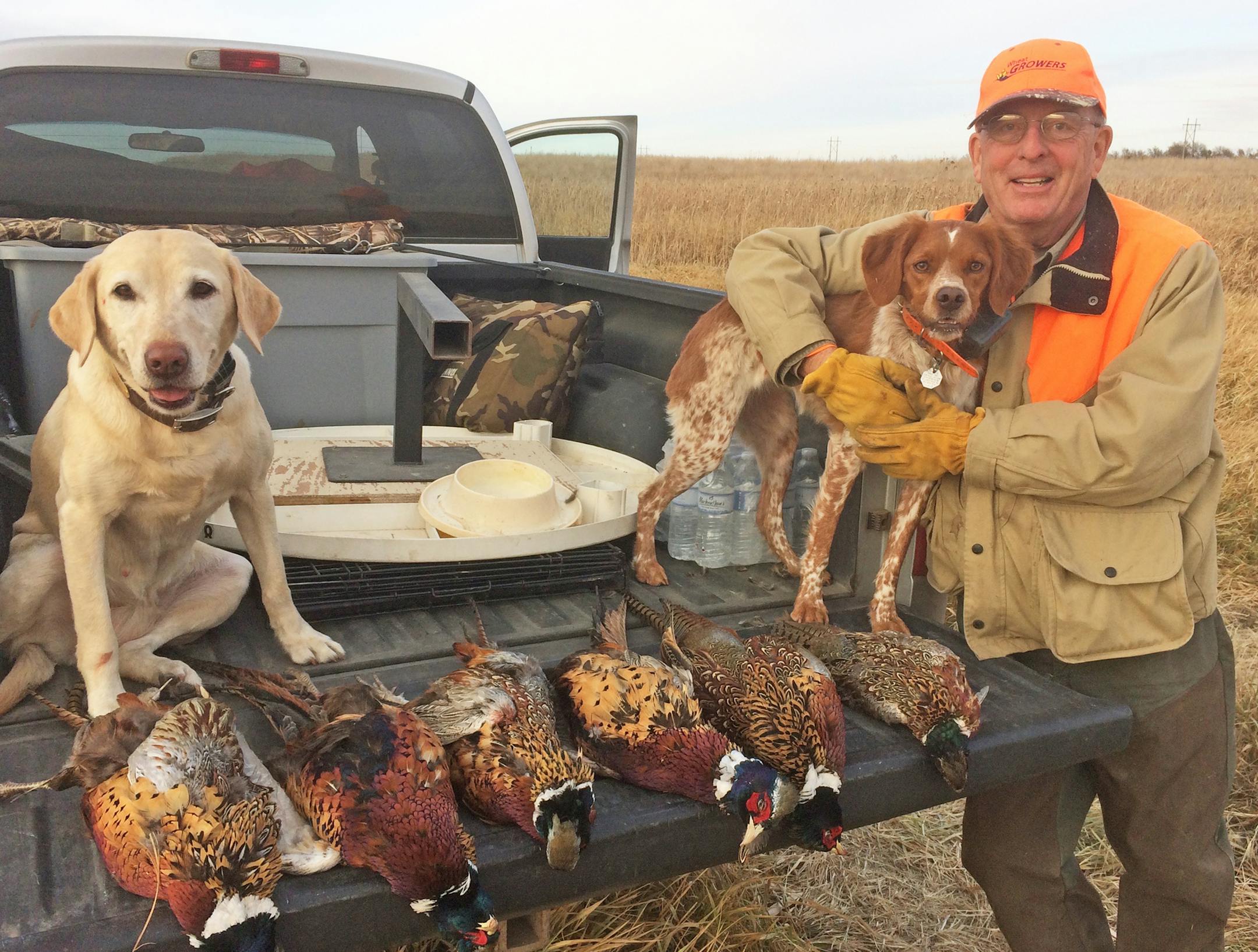
My dog's quivering tail screamed that she was hot on the trail of a pheasant.
She tracked the scent through thick prairie grass to a clump of shrubs and trees next to a small pond. Then a rooster exploded from cover with a raucous cackle.
I shouldered my .12-gauge and fired once through a tangle of branches — a desperate, ruffed grouse-type shot. To my surprise, some pellets found their mark and the bird fell.
Bailey, my 8-year-old Lab, proudly toted the ringneck to me.
It was just 9:30 a.m. on Dec. 1, and the bird already was the second I had bagged on a pretty piece of public hunting land in southwestern Minnesota.
Despite bleak forecasts for pheasants in Minnesota and neighboring South Dakota this fall, some pheasant hunters — myself included — found surprisingly decent hunting. But thousands of hunters didn't show up at all this fall, apparently scared off by the dire forecasts.
Minnesota's ringneck population was down 26 percent from 2016 and 62 percent off the long-term average. South Dakota was worse: down 45 percent from 2016 and off 65 percent from the 10-year average.
Hunters took note.


