

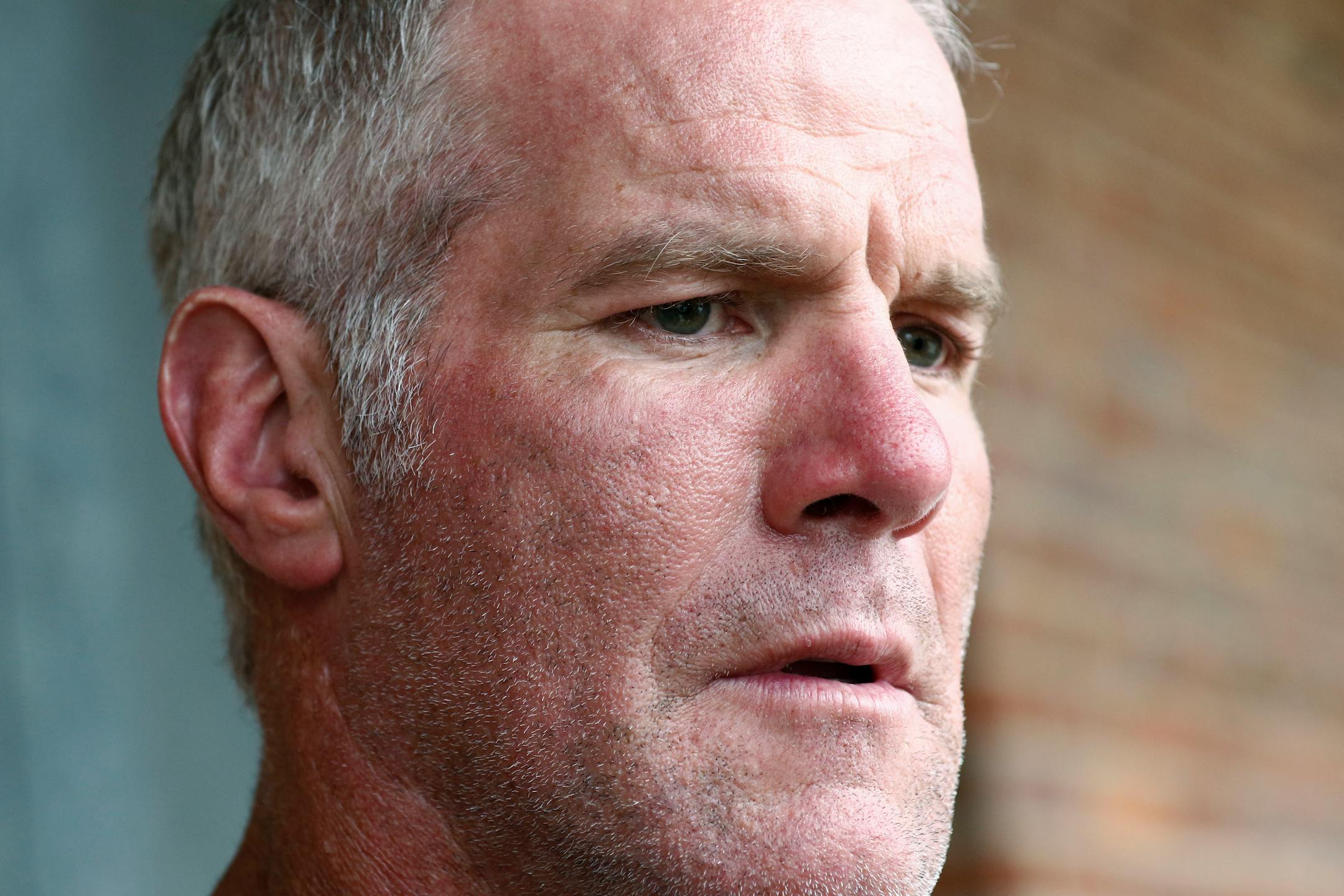
As he became further enmeshed in a scheme that diverted federal welfare money to build a volleyball stadium that cost more than $5 million at the University of Southern Mississippi, former football star Brett Favre texted a question to the head of a nonprofit doling out funds meant to go to welfare recipients in the nation's poorest state.
"If you were to pay me," he wrote in 2017 of a $1.1 million proposal for promotional efforts that would actually be funneled toward building the stadium, "is there any way the media could find out where it came from and how much?" Several years of text messages about the project came to light when they were filed in court last week and were first published by Mississippi Today, a small nonprofit news site that has consistently led reporting on the story.
Far more than that payment has been exposed in a billowing scandal that has stretched considerably beyond Favre. A motley assortment of political appointees, former football stars, onetime professional wrestlers, business figures and various friends of the state's former Republican governor all stand accused of pocketing or misusing money earmarked for needy families.
On Thursday, John Davis, who served as executive director of the Mississippi Department of Human Services under former Gov. Phil Bryant, pleaded guilty to federal and state charges of embezzling federal welfare funds. Millions of dollars were transferred to friends and relatives, court documents say.
According to a lawsuit filed by the state in May, around $5 million was diverted to Ted DiBiase, a flamboyant retired wrestler once known as "The Million Dollar Man," and two of his sons, as well as various entities connected to them, including a ministry. Much of the money went to fictitious services, bogus jobs, first-class travel arrangements and even one son's stay at a luxury rehab center in Malibu, California, that cost $160,000, the suit claims.
Similarly, the state claims that Marcus Dupree, a former high school football phenom and professional running back, who was paid to act as a celebrity endorser and motivational speaker, did not perform any contractual services toward the $371,000 he received to purchase and live in a sprawling residence with a swimming pool and adjacent horse pastures in a gated community.
Favre, who earned more than $140 million in his Hall of Fame career, was paid $1.1 million for speeches he never gave, the suit said. He also orchestrated more than $2 million in government funds being channeled to a biotechnology startup in which he had invested, according to the suit.
None of the three have been charged with crimes and all have denied wrongdoing. But even the most cynical observers in Mississippi have been dumbfounded by the brazenness of the activity in the allegations and how deeply it reflected the inequities baked into the history of a state with the nation's highest poverty rate.


