

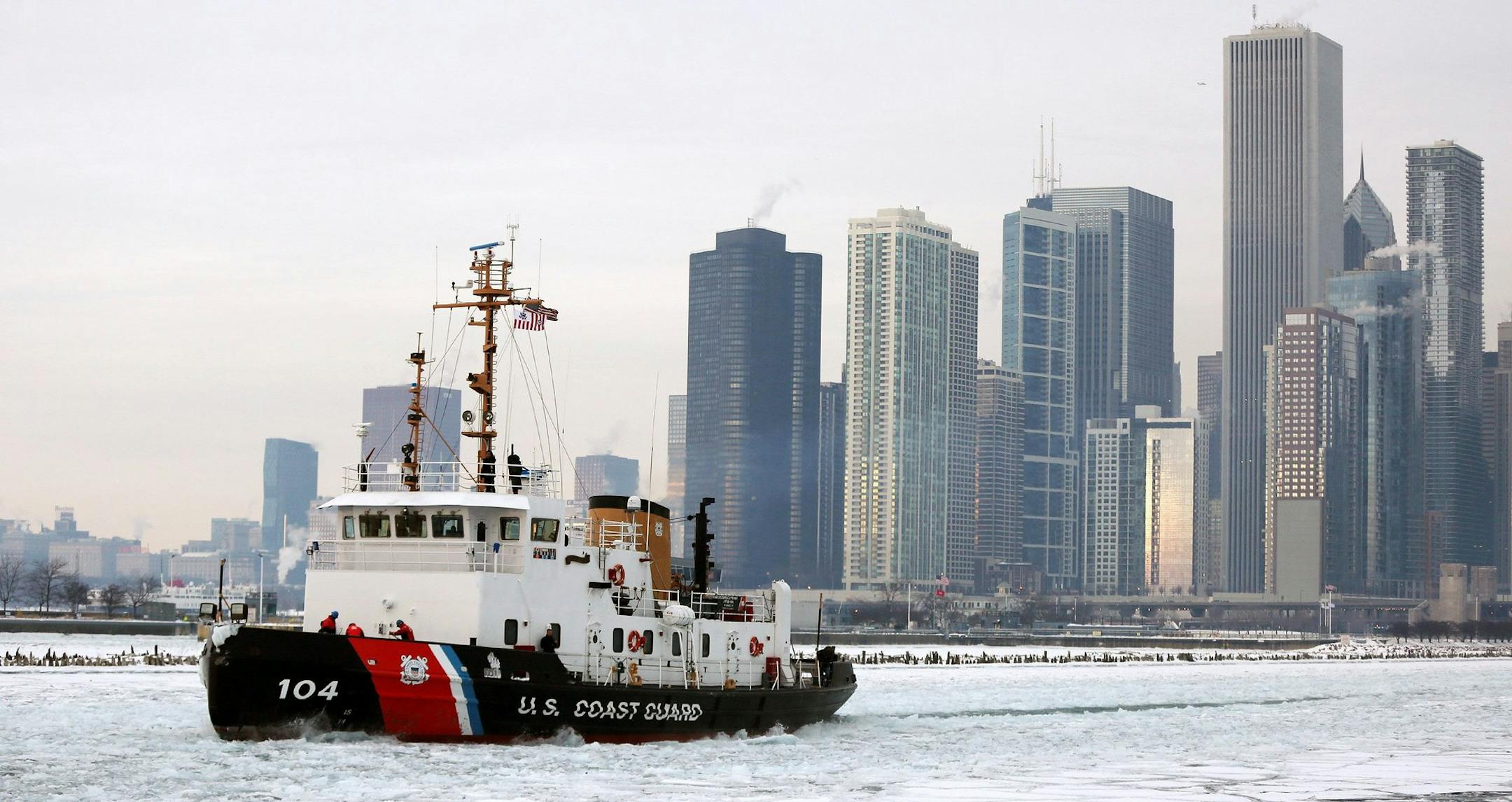
CHICAGO – Most years, the Coast Guard's vessels start spending their nights in Calumet Harbor around the end of February. This year, they remained in heated garages until recent weeks, safely away from the shrinking but still formidable ice cover on Lake Michigan that has been moving with the wind in and out of Chicago's harbors.
"Yesterday it looked clear," Mark Stevens, commanding officer at the Coast Guard's Calumet Harbor, said recently. "Then this morning, when I got to the office, there was all this ice blown back."
Farther out on the Great Lakes, while the Soo Locks that connect Lake Superior to the lower Great Lakes opened on schedule last week to make way for commercial ships, ice breaking that started earlier than ever this season on Dec. 6 is also expected to extend well into May, said Glen Nekvasil, president of the Lake Carriers' Association.
"With the ice being as thick as it is, we're going to need more than a couple of sunny days to loosen it up," Nekvasil said. "If this is like 1994, the Coast Guard would be breaking ice in St. Mary's River until May 18, and this looks to be every bit as bad as '93-'94."
"We'll see the effect of this harsh, snowy winter play out over the next several months," said Keith Kompoltowicz, chief of watershed hydrology at the Army Corps of Engineers Detroit District.
As the record-breaking 93.29 percent ice cover that peaked on Lake Michigan in March breaks, and as the snowpack around the Michigan Basin that was 30 percent higher this year than any time in the past decade melts, water levels will undergo a stronger-than-usual seasonal rise, according to Kompoltowicz.
The lake is expected to rise 14 inches by August, according to predictions by the Corps of Engineers, announced last month. The Corps predicted Superior would reach 13 inches higher than a year ago.
The rise comes after water levels on the Great Lakes have languished below their long-term average for 14 years. Water levels have never in their 95-year recorded history remained below average for so long.


