

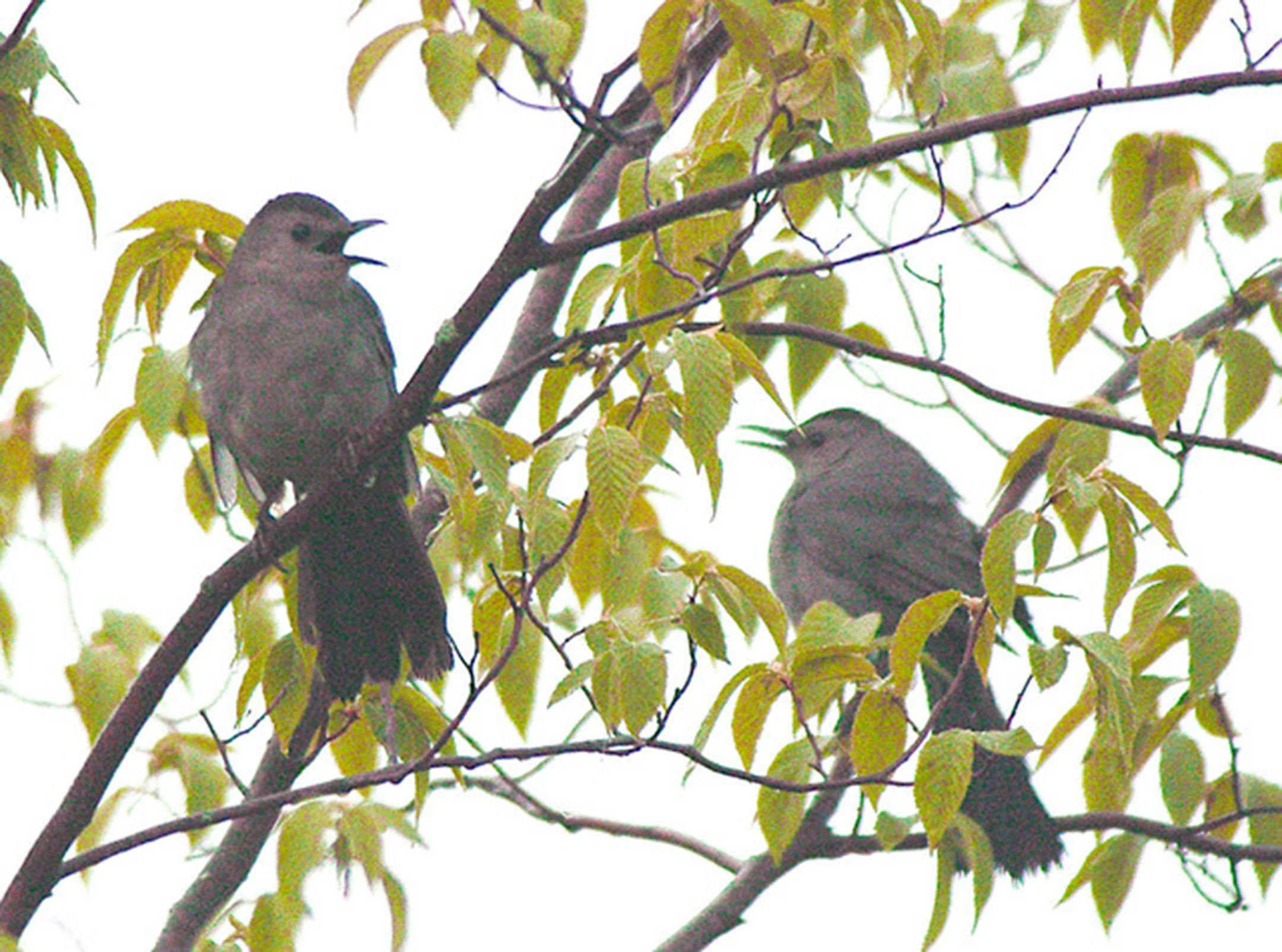
Q: I've enjoyed my catbirds all summer long and am going to miss their gurgles and burbles when they're gone. Where do they spend the winter?
A: If you spend time in Florida in the winter, you'll likely spot a catbird in the same kind of tangled vegetation they enjoy in our area in the summer. Wintering catbirds are also found all along the Gulf Coast, in Central America, in Cuba and the Caribbean and up the Eastern seaboard. I agree with you, it's nice to have catbirds raising their family in the backyard.
Confused cardinal?
Q: I know that cardinals nested in my or my neighbor's shrubs, but when I saw the cardinal later, he was feeding some chocolate brown birds. Did he get confused about which youngsters were his?
A. No, that cardinal knew exactly what he was doing — he was feeding one of his own fledglings. Young cardinals start out as dark brown birds and gradually attain their adult plumage later in the year.
Is poison OK?
Q: I have a big problem with raccoons drinking all the liquid in my hummingbird and oriole feeders. I sometimes forget to bring these indoors at night, and my husband suggested putting mouse poison in the feeders. Would that harm the birds?
A: It certainly would kill any birds that sipped the poisoned fluid, so please do not do this, never, ever! The mouse poisons I'm familiar with work as blood thinners, and whatever would kill a mouse will kill a bird. Please remember to bring those feeders in at night and never, ever put poison in them.
Hummer mystery
Q: I have a hummingbird mystery: I keep four feeders for hummingbirds and had six or more of them visiting the feeders. But then we had a big rainstorm one night in the summer and the hummingbirds disappeared. Do you have any idea why?
A: I'm so envious of the number of hummingbirds your feeders attract, and I don't think the rain had anything to do with their departure. Instead, it had to do with the calendar: Earlier in the season multiple hummingbirds are more tolerant of other hummingbirds, while they fatten up after migration and decide on territories. As nesting season approaches, they became more territorial and a dominant bird drives off most of the others, while females became busy with nest building and egg brooding just at the time of that rainstorm. They'll likely appear again as their return migration date approaches.


