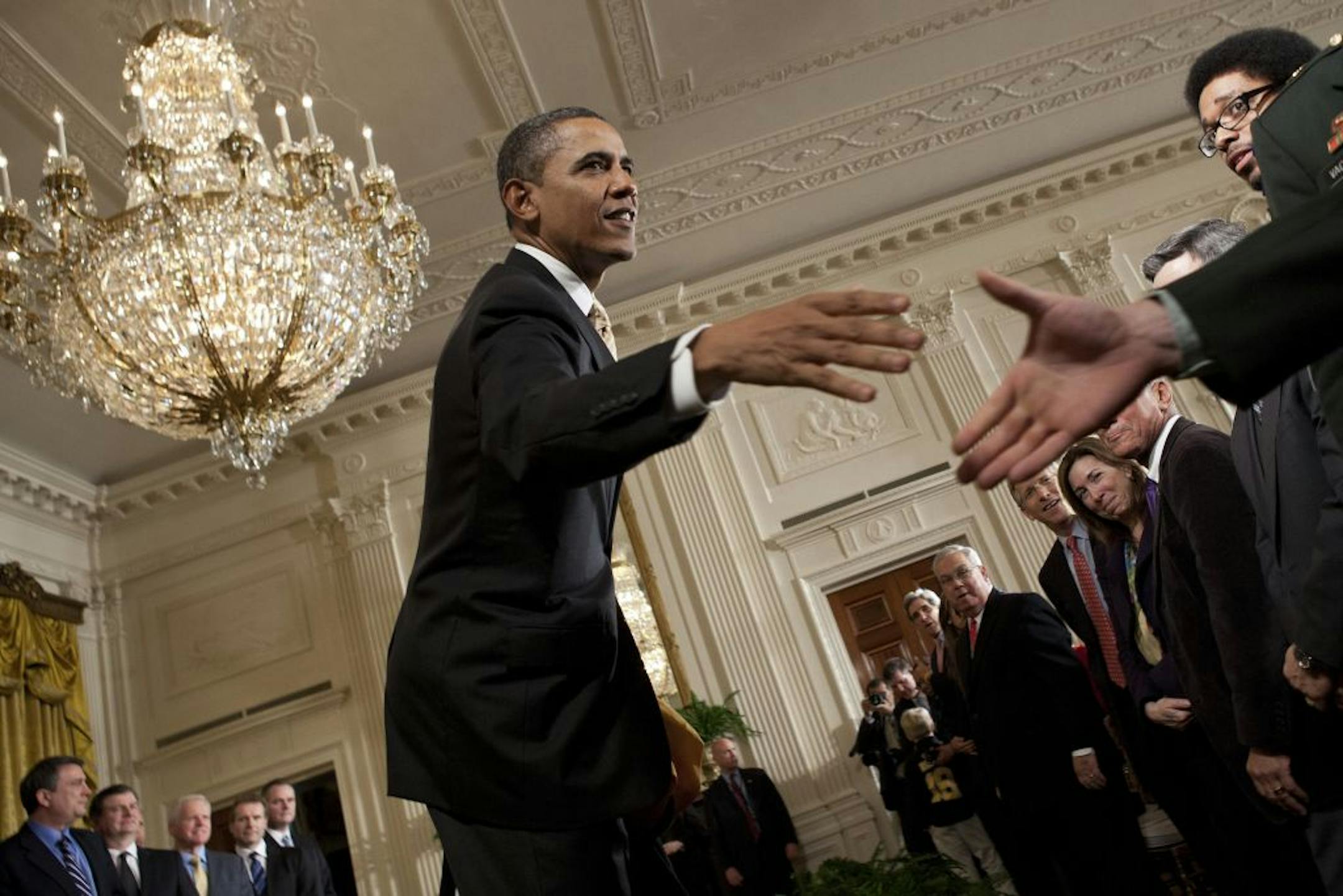
WASHINGTON - President Obama will frame an election-year agenda Tuesday night in his third State of the Union speech, but some Minnesotans in Congress are already talking about a "lame-duck" session.
That's political-speak for the legislative session that follows the Nov. 6 elections, which could upend control of the White House and both chambers of Congress.
While Minnesota lawmakers in Washington say they will press ahead on projects from the St. Croix River bridge to tax relief for the state's medical device makers, they face a headwind of low expectations for election-year legislative accomplishments.
"It's no secret to anybody that it's a presidential election year and politics are going to start dominating things," said Rep. John Kline, the most senior of the four Minnesota Republicans in the U.S. House, which has been in session just three days so far this month.
Ramping up slowly after last year's bruising showdowns over taxes and spending, members in both parties are approaching 2012 warily, struggling to find even a sliver of common ground on the growing national debt problem that shadows the elections.
That may leave Minnesotans in Congress nibbling at the edges of a limited legislative agenda that will be eclipsed by a hard-fought and potentially historic presidential election. For Kline, who chairs the House Education and Workforce Committee, it adds uncertainty to his efforts to lead the overhaul of the federal No Child Left Behind law.
Minnesota's Collin Peterson, the ranking Democrat on the House Agriculture Committee, is only "relatively optimistic" about renewing major farm legislation this year, while Tim Walz, another rural Minnesota Democrat, sees little prospect of "doing a farm bill of any type."
Expectations for long overdue transportation projects are being tamped down. An energy bill that would funnel revenues from expanded oil and gas exploration to road and infrastructure projects has bipartisan support in the House, including from Walz and Minnesota Republican Erik Paulsen. But it is being given little chance in the Democratic-controlled Senate.