

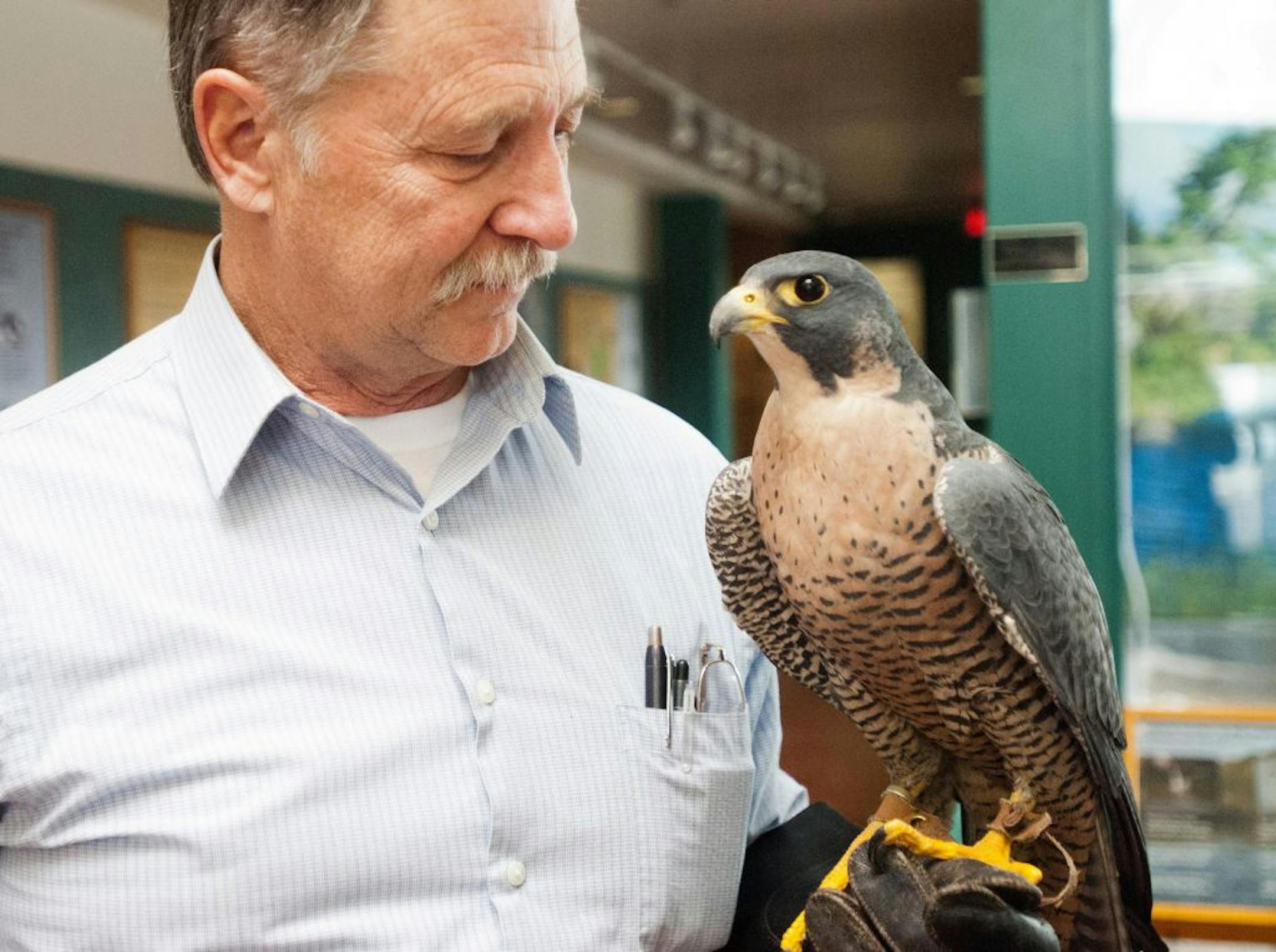
Patrick Redig talks about Midwest peregrine falcons like they're his children. His passion for the falcons began in adolescence, and it saddened him when he learned they were on the verge of extinction.
"Not only could I not conceive of the peregrine coming back, I had no conception that I would be involved," said Redig, the University of Minnesota Raptor Center's founder and director emeritus.
The Midwest peregrine falcon nearly went extinct in the early 1960s, but the contributions of university professors over the past few decades helped restore the population through both natural and urban nesting sites.
Beginning in 1982, Redig and the late Harrison Tordoff, former Bell Museum of Natural History director, collaborated to breed the falcons in captivity and release them.
Now, the peregrine population has surpassed the number of falcons that existed before they became endangered.
"No matter how you look at it, the peregrine falcon is just one of the most amazing creatures on the face of the Earth," Redig said
Peregrine falcons are lightweight, bird-eating raptors that can reach speeds of more than 200 mile per hour when diving in the air for prey, said Amber Burnette, a Raptor Center program associate.
They nest on high cliffs and tall buildings, including sites in downtown Minneapolis and St. Paul, as well as on campus, Burnette said.


