

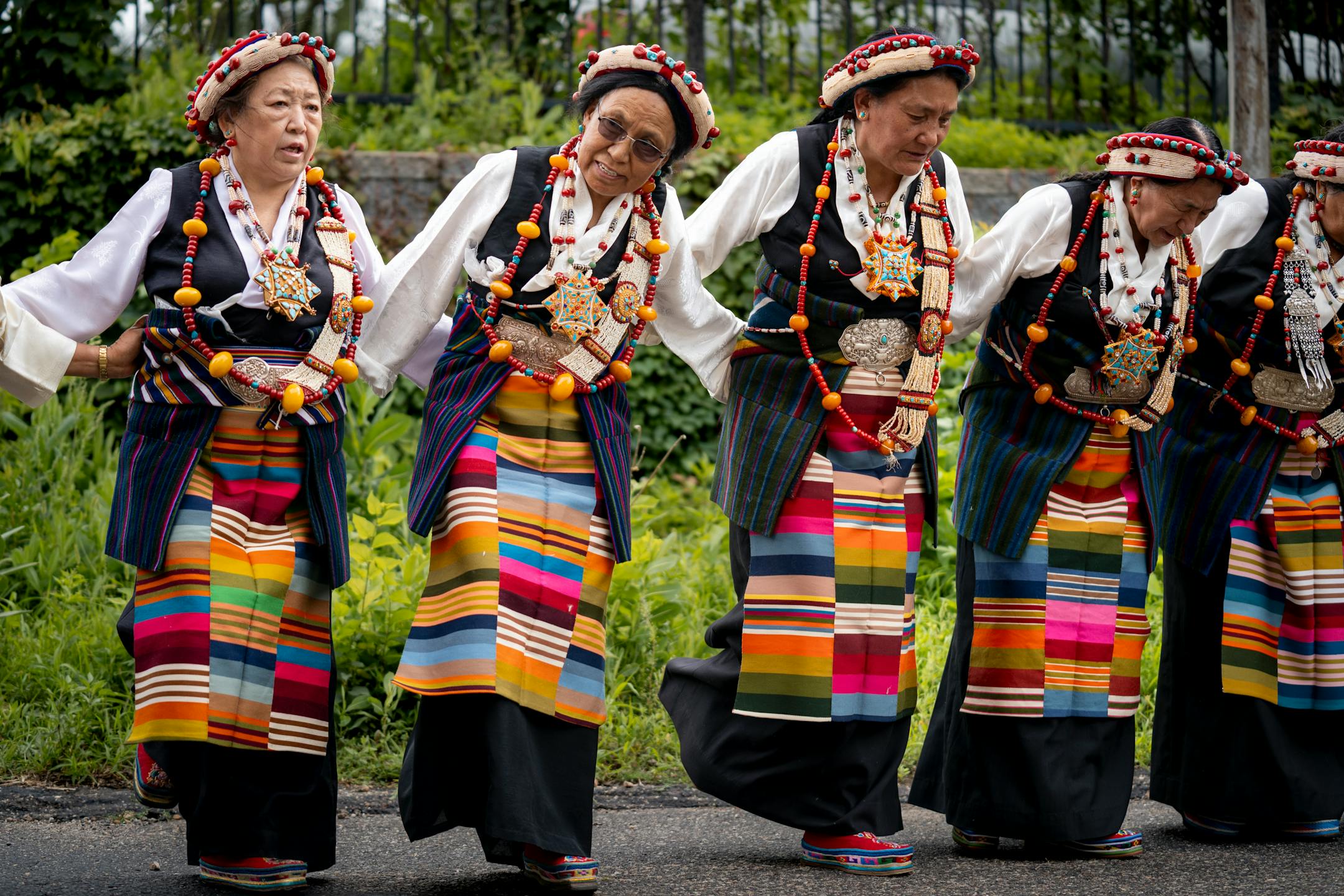
Thupten Dadak has spent the past three decades preserving and celebrating Tibetan culture in Minnesota. And a new exhibit at the Hennepin History Museum is latest of his efforts.
Through artifacts and displays, "Faraway Home: Tibetans in Minnesota," which opened July 7 and runs through spring 2024, chronicles the arrival of the state's first 160 Tibetan refugees and the myriad ways the community has maintained their culture since 1992.
The Tibetan American Foundation of Minnesota estimated there were about 3,500 people of Tibetan descent living in the state as of 2019, the second-largest settlement in the nation. Dadake believes that number is closer to 5,000 today. The exhibit is yet another way to strengthen the ties young Tibetans have to their culture, Dadak said.
"This will be a benefit to the younger generations who grow up and can say, 'This is my history,' " said Dadak, who was appointed by the U.S. representative for the Dalai Lama to help settle Tibetans in Minnesota.
The exhibit will feature local Tibetan photography, including stills of the Dalai Lama's many visits to the Twin Cities over the years. Launch events included a traditional Tibetan dance performance and the creation of a mandala — an intricate geometric piece of art — by Buddhist monks from India.
The museum exhibit is partly an extension of a play about the Dalai Lama that wrapped its final show at Washburn Fair Oaks Park on Sunday. As Markell Kiefer planned to put on her production of "The Buddha Prince" in the greenspace across the street, museum officials and local Tibetan leaders began discussing how to further celebrate the community.
"It was a great piece of serendipity," said John Crippen, the museum's executive director.
Museum officials have spent the past five years looking for ways to shine a light on marginalized groups across the state. In 2018, the "Owning Up" exhibit explored redlining and other ways state and city governments discriminated against Black Minnesotans.


